Search This Blog

Friday, June 2, 2017

Historical research; Real-life counterfeiting in the Regency Era.

By guest blogger K. C. Bateman

Many of the events in my regency-era novels are based on real-life historical facts. The heroine of my new release, A Counterfeit Heart, is a Napoleonic French counterfeiter, and I unearthed some amazing real-life stories of wartime forgery during my research.
Napoleon really did employ a team of forgers to print fake currency to ruin his enemies. Letters written by him survive to prove the existence of a counterfeiting operation set up on his orders. He used fake currency to pay his own soldiers in Russia, and sent large quantities of fake Austrian banknotes into the country to try to destabilize the Austrian economy. Napoleon’s counterfeiting of Austrian currency put him in an awkward position a few years later when he married his second wife, the Austrian archduchess Marie-Louise. He was forced to issue a public ban on printing counterfeit money against her country, but of course, by then it was rather too late!
The use of counterfeit money has been a strategy in warfare for centuries. The idea is to flood the enemy's economy with fake money, devaluing the real money and causing an economic collapse.
During the American Revolutionary War the Continental Congress decided to create a new Continental currency to fund the fighting. Among the people enlisted to print this new currency was Paul Revere. To counter this, Great Britain enlisted teams of counterfeiters to travel throughout the American Colonies, placing their counterfeits into circulation in the hopes that it would cause an economic disaster. These counterfeiters were known as "shovers," presumably for their ability to "shove" the fake money into everyday use.
Counterfeiting was a problem in Georgian England, too. The Bank of England took it very seriously and employed a team of lawyers at great expense to ensure prosecutions. The statistics are dramatic: the period 1783-1797 saw only four prosecutions for forgery, but 1797-1821 saw over 2000 prosecutions and over 300 executions. The Bank spent thousands of pounds to secure these executions, and in some years, such as 1819, this amounted to more than was lost through forgery. Almost one third of all executions at this time were for forgery, the vast majority concentrated in the post-Napoleonic war period, when economic depression and the demobilization of thousands of troops and sailors produced ever greater incentives for the forger. In 1818, when almost 30,000 fake banknotes were in circulation, public sympathy for the hapless plebeian forger led to numerous acquittals.
Doubts were regularly expressed about the competence of the Bank of England in recognizing a fake from the real banknote, and the topic features in many of the satirical cartoons of the time. This anonymous caricature called A Peep into the Rag Shop in Threadneedle Street, dated 1814, shows a poor forger pleading with Bank of England directors who are examining a bank note. As the speech bubbles make clear, behind their callous bluster is dire ineptitude:
“Upon my soul I have my doubts but at all events—we had better declare it bad.”
“Take him out Thomas !!! he has a d——d hanging look.”
“Away with the Vagabond! Do you think we sit here for nothing!”

../../../../../../Desktop/A%20Peep%20into%20the%20old%20rag%20shop%20in%20Threadneedl

And this cartoon, by the well-known satirical illustrator George Cruickshank, also shows forged notes, and hints at the fact that paper currency was often considered untrustworthy in comparison to solid gold coins.

../../../../../../Desktop/Johnny%20Bull%20and%20his%20Forged%20Notes%20-%20George%20Cru
George Cruikshank, Johnny Bull and his Forged Notes!! or Rags and Ruin in the Paper Currency Published by J. Sidebotham, January 1819. (British Museum Satires 13197. Courtesy Trustees of the British Museum.)
In France, too, forgery was a very serious offence. Note what it says on the very top line of this French Assignat: ‘the law punishes the counterfeiter with death’. (La loi punit de mort le contrefacteur)
../../../../../../Desktop/French%20Assignat.jpg


Here are some examples of both real and forged early 19th century banknotes:

    
A forged GB banknote of 1812.


A real British Banknote from 1811: one pound note with printed serials and date, signed in ink by the cashier.
And just to prove that ‘plus ça change,’ almost a hundred years after Napoleon’s attempts, another leader, Adolf Hitler, tried something very similar during the second World War, forcing prisoners to fake thousands of British banknotes in a plan called Operation Bernhart. The initial plan was to drop the notes by plane over Britain to bring about a collapse of the British economy. It was directed by, and named after, SS-Sturmbannführer (Major) Bernhard Krüger, who set up a team of 142 counterfeiters from inmates at Sachsenhausen concentration camp at first, and then from other camps, to forge British currency.
    So as you can see, history is full of extraordinary examples of counterfeiting, and for A Counterfeit Heart I employed the age-old authorial tactic of wondering ‘what if . . ?’ What if Napoleon were defeated before he could put his plans to flood Britain with counterfeits into action? What if one of his forgers was a feisty young woman named Sabine de la Tour? What would she do with a fortune in fake money? A Counterfeit Heart is my answer.

A Counterfeit Heart (Secrets & Spies Series)

Blurb:

A feisty counterfeiter and a cocky British agent clash in this sultry Secrets and Spies novel by K. C. Bateman, whose witty, intelligent, and sexy historical romances have become her signature.

As Sabine de la Tour tosses piles of forged banknotes onto a bonfire in a Paris park, she bids a reluctant farewell to her double life as a notorious criminal. Over the course of Napoleon’s reign, her counterfeits destabilized the continent and turned scoundrels into rich men, but now she and her business partner must escape France—or face the guillotine. Her only hope of surviving in England is to strike a deal with the very spy she’s spent her career outrunning. Now after meeting the arrogant operative in the flesh, Sabine longs to throw herself upon his mercy—and into his arms.

Richard Hampden, Viscount Lovell, is prepared to take any risk to safeguard England from the horrors of the French Revolution. To lure the insurgents out from the shadows, he’s even willing to make a pact with his archenemy: Philippe Lacorte, the greatest counterfeiter in Europe. But when a cheeky, gamine-faced beauty proves herself to be Lacorte, Richard is shocked—and more than a little aroused. Unlike the debutantes who so often hurl themselves at him, this cunning minx offers a unique and irresistible challenge. Richard will help her. But in return, he wants something that even Sabine cannot fake.

Keep scrolling down for the first chapter of A Counterfeit Heart.

 Genre: Historical / Regency Romance

Heat level: Medium

Author biography:

Kate Bateman (writing as K. C. Bateman) wrote her first historical romance in response to a $1 bet with her husband who rashly claimed she'd 'never finish the thing.' She gleefully proved him wrong with a historical set in the Italian Renaissance. Now writing for Random House Loveswept, her latest 'Secrets & Spies' Regency-era series features her trademark feisty, intelligent heroines, wickedly inappropriate banter, and heroes you want to alternately strangle and kiss—all mixed up in the intrigue and turmoil of the Napoleonic wars.

When not traveling to exotic locations 'for research', Kate leads a double life as a fine art appraiser and on-screen antiques expert for several TV shows in the UK, each of which has up to 2.5 million viewers. She splits her time between Illinois and her native England and writes despite three inexhaustible children and a husband who has flatly refused to read any of her books 'unless she hits the NY Times Bestseller list.' It is—naturally—her fervent desire to force the semi-illiterate, number-loving cynic to do so. He still owes her that dollar.

Author photo:


Social media connections:

Kate loves to hear from readers. Contact her via her website: www.kcbateman.com
Find her on Twitter @katebateman

Buy Links to A Counterfeit Heart:

ASIN: B01LKCM1IK

AMAZON. com

KOBO

B & N (NOOK)

iTunes

Google play


 Excerpt:

A Counterfeit Heart

Chapter 1

Bois de Vincennes, Paris, March 1816.

It didn't take long to burn a fortune.
“Don't throw it on like that! Fan the paper out. You need to let the air get to it.”
Sabine de la Tour sent her best friend Anton Carnaud an exasperated glance and tossed another bundle of banknotes onto the fire. It smoldered then caught with a bright flare, curling and charring to nothing in an instant. “That's all the francs. Pass me some rubles.”
Another fat wad joined the conflagration. Little spurts of green and blue jumped up as the flames consumed the ink. The intensity of the fire heated her cheeks so she stepped back and tilted her head to watch the glowing embers float up into the night sky. It was a fitting end, really. Almost like a funeral pyre, the most damning evidence of Philippe Lacorte, notorious French counterfeiter, going up in smoke. Sabine quelled the faintest twinge of regret and glanced over at Anton. “It feels strange, don’t you think? Doing the right thing for once.”
He shook his head. “It feels wrong.” He poked a pile of Austrian gulden into the fire with a stick. “Who in their right mind burns money? It's like taking a penknife to a Rembrandt.”
Sabine nudged his shoulder, well used to his grumbling. “You know I’m right. If we spend it, we'll be no better than Napoleon. This is our chance to turn over a new leaf.”
Anton added another sheaf of banknotes to the blaze with a pained expression. “I happen to like being a criminal,” he grumbled. “Besides, we made all this money. Seems only fair we should get to spend it. No one would know. Your fakes are so good nobody can tell the difference. What’s a few million francs in the grand scheme of things?”
“We'd know,” Sabine frowned at him. “‘Truth is the highest thing that man may keep.’”
Anton rolled his eyes. “Don't start quoting dead Greeks at me.”
“That’s a dead Englishman,” she smiled wryly. “Geoffrey Chaucer.”
Anton sniffed, unimpressed by anything that came from the opposite—and therefore wrong—side of the channel. He sprinkled a handful of assignats onto the flames. “You appreciate the irony of trying to be an honest forger, don't you?”
It was Sabine's turn to roll her eyes.
Anton shot her a teasing, pitying glance. “It’s because you're half-Anglais. Everyone knows the English are mad. The French half of you knows what fun we could have. Think of it, chérie—ballgowns, diamonds, banquets!” His eyes took on a dreamy, faraway glow. “Women, wine, song!” He gave a magnificent Gallic shrug. “Mais, non. You listen to the English half. The half that is boring and dull and—”
“—law-abiding?” Sabine suggested tartly. “Sensible? The half that wants to keep my neck firmly attached to my shoulders instead of in a basket in front of the guillotine?”
She bit her lip as a wave of guilt assailed her. Anton was only in danger of losing his head because of her. For years he’d protected her identity by acting as Philippe Lacorte’s public representative. He’d dealt with all the unsavory characters who’d wanted her forger’s skills while she’d remained blissfully anonymous. Even the man who'd overseen the Emperor's own counterfeiting operation, General Jean Malet, hadn't known the real name of the elusive forger he’d employed. He’d never seen Sabine as anything more than an attractive assistant at the print shop in Rue Pélican.
Now, with Napoleon exiled on St Helena and Savary, head of the Secret Police, also banished, General Malet was the only one who knew about the existence of the fake fortune the Emperor had amassed to fill his coffers.
The fortune Sabine had just liberated.
Anton frowned into the flames. The pink glow highlighted his chiseled features and Sabine studied him dispassionately. She knew him too well to harbor any romantic feelings about him, but there was no doubt he had a very handsome profile. Unfortunately, it was a profile that General Malet could recognize all too easily.
As if reading her mind he said, “Speaking of guillotines, Malet would gladly see me in a tumbril. He’s out for blood. And I'm his prime suspect.”
“Which is why we’re getting you out of here,” Sabine said briskly. “The boat to England leaves at dawn. We have enough money to get us as far as London.”
Anton gave a frustrated huff and pointed at the fire. “In case you hadn’t noticed, we have a pile of money right—”
She shot him a warning scowl. “No. We are not using the fakes. Its high time we started doing things legally. This English lord’s been trying to engage Lacorte’s services for months. One job for him and we’ll be able to pay for your passage to Boston. You’ll be safe from Malet forever.”
“It could be a trap,” Anton murmured darkly. “This Lovell says he wants to employ Lacorte, but we've been on opposite sides of the war for the past ten years. The English can’t be trusted."
Sabine let out a faint, frustrated sigh. It was a risk, to deliver herself into the arms of the enemy, to seek out the one man she'd spent months avoiding. Her heart beat in her throat at the thought of him. Richard Hampden, Viscount Lovell. She'd only seen him once, weeks ago, but the memory was seared upon her brain.
He, of anyone, had come closest to unmasking her. He'd followed Lacorte’s trail right to her doorstep, like a bloodhound after a fox. She’d barely had time to hide behind the back-room door and press her eye to a gap in the wood before the bell above the entrance had tinkled and he'd entered the print shop.
 It had been dark outside; the flickering street lamps had cast long shadows along Rue Pélican. Sabine had squinted, trying to make out his features, but all she could see was that he was tall; he ducked to enter the low doorway. She raised her eyebrows. So this was the relentless Lord Lovell.
Not for the first time she cursed her short-sightedness. Too many hours of close-work meant that anything over ten feet was frustratingly blurry. He moved closer, further into the shop—and into knee-weakening, stomach-flipping focus.
Sabine caught her breath. All the information she'd gleaned about her foe from Anton's vague, typically male attempts at description had in no way prepared her for the heart-stopping, visceral reality.
Technically, Anton had been correct. Richard Hampden was over six feet tall with mid-brown hair. But those basic facts failed to convey the sheer magnetic presence of his lean, broad-shouldered frame. There was no spare fat around his lean hips, no unhealthy pallor to his skin. He moved like water, with a liquid grace that suggested quietly restrained power, an animal at the very peak of fitness.
Anton had guessed his age as between twenty-eight and thirty-five. Certainly, Hampden was no young puppy; his face held the hard lines and sharp angles of experience rather than the rounded look of boyhood.
Sabine studied the elegant severity of his dark blue coat, the pale knee breeches outlining long, muscular legs. There was nothing remarkable in the clothes themselves to make him stand out in a crowd, and yet there was something about him that commanded attention. That drew the eye, and held it.
Her life often hinged on the ability to correctly identify dangerous men. Every sense she possessed told her that the man talking with Anton was very dangerous indeed.
Sabine pressed her forehead to the rough planks and swore softly. The Englishman turned, almost as if he sensed her lurking behind the door, and everything inside her stilled. Something—an instant of awareness, almost of recognition—shot through her as she saw his face in full. Of all the things she'd been prepared for, she hadn't envisaged this: Viscount Lovell was magnificent.
And then he’d turned his attention back to Anton, and she’d let out a shaky breath of relief.
She'd dreamed of him ever since. Disturbing, jumbled dreams in which she was always running, he pursuing. She’d wake the very instant she was caught, her heart pounding in a curious mix of panic and knotted desire.
Sabine shook her head at her own foolishness. It was just her luck to conceive an instant attraction to the least suitable man in Europe. The thought of facing him again made her shiver with equal parts anticipation and dread, but he was the obvious answer to her current dilemma. He had money; she needed funds. Voilà tout.
At least now she was prepared. One of the basic tenets of warfare was ‘know thine enemy,’ after all. Sabine drew her cloak more securely around her shoulders and watched Anton feed the rest of the money to the flames. The embers fluttered upwards like a cloud of glowing butterflies.
When this was all over she would be like a phoenix. Philippe Lacorte would disappear and Sabine de la Tour would emerge from the ashes to reclaim the identity she'd abandoned eight years ago. She would live a normal life. But not yet. There was still too much to do.
Sabine brushed off her skirts and picked up the bag she'd packed for traveling. There was something rather pathetic in the fact that her whole life fit into one single valise, but she squared her shoulders and glanced over at Anton. “Come on, let's go. Before someone sees the smoke and decides to investigate.”
They couldn't go home, to the print shop on Rue Pélican. Malet had already ripped the place apart looking for ‘his’ money. Her stomach had given a sickening lurch as she’d taken in the carnage. Books pulled from the shelves, paintings ripped from the walls, canvases torn. Old maps shredded, drawers pulled out and upended. Their home, her sanctuary for the past eight years, had been utterly ransacked.
But there had been triumph amid the loss. Malet had found neither Anton nor the money. And if Sabine had anything to do with it, he never would.
Anton hefted the two bags of English banknotes that had been spared the flames as Sabine turned her back on Paris. For the first time in eight long years she was free.
It was time to track down Lord Lovell.


Friday, May 26, 2017

Treasure Houses of England: Chatsworth

The Duke of Devonshire's Chatsworth House
Editor's Note: Each month Cheryl Bolen will be highlighting one of England's 10 Treasure Houses, selected for their grandeur of architecture, furnishings, landscape and historical significance.

©Cheryl Bolen

Bess of Hardwick (1527-1608) built the original home on the site in 1552. The house passed to her son William Cavendish, who became the first Earl of Devonshire in 1618. The 4th Earl of Devonshire, William Cavendish (1640-1707), became the 1st Duke of Devonshire for his part in bringing William of Orange to the English throne. The first duke is responsible for the house visitors see today. He pulled down Bess’s house in 1686, and with architect William Talman, started construction on the palatial house that stands today. It took more than 20 years to build and was completed the year of his death.

The 4th Duke, by marrying the heiress daughter of Lord Burlington (Palladian prophet, builder of Chiswick), brought even greater wealth and properties into the family.

Among the most famous occupants of the house were the 5th Duke and his glamorous duchess, Georgiana, daughter of the 1st Earl Spencer. (A biography of Georgiana was the number one bestselling book of 1999 and was the basis of the popular 2008 move. It chronicled her husband’s affair with her best friend and the two illegitimate children born of that affair, making for one of the most interesting menage a trois in history.)

Since the time of its completion, Chatsworth has had “open days” for public viewing. It is said to be the inspiration for Mr. Darcy’s estate in Jane Austen’s Pride and Prejudice and actually serves as Darcy’s Pemberley in the 2005 movie.

The home’s five original state apartments were never visited by William and Mary, for whom they were intended, but Queen Victoria visited Chatsworth during the reign of the 6th, or Bachelor Duke (1790-1858), who was the first to make substantial changes to Chatsworth. In addition to adding a new wing, his most substantial changes were brought about by landscape designer Joseph Paxton, who also built the Crystal Palace in Hyde Park. Like the Crystal Palace, his great conservatory at Chatsworth is now gone, but his rockeries and fountains remain.

During World War II Chatsworth was occupied by a girls’ school. The rooms and corridors were dormitories, and the drawing rooms and larger bedrooms were classrooms.

The 11th Duke inherited Chatsworth in 1950 following the sudden death of his father. (His elder brother, who had married President Kennedy’s sister Kathleen, had been killed in the war.) It would take him 17 years to pay off the 80 percent death duties and would require selling off some of the estate’s art collection and deeding Hardwick Hall to the National Trust. Chatsworth, too, needed substantial repairs and modernization. By opening Chatsworth to the public and establishing the Chatsworth House Trust, the 11th Duke was able to preserve Chatsworth for future generations. When he died in 2004, the Guardian said the 11th Duke was able to turn his magnificent stately home in Derbyshire “into a public resource without compromising its dignity or losing it as a family home.” His son, the 12th Duke, continues living at Chatsworth.
Chatsworth's Painted Hall

HOUSE

The baroque palace of Chatsworth with its surrounding 12,000-acre estate in the Derbyshire hills has repeatedly been selected as England’s favorite country house. Despite its fairly remote location, it draws 300,000 visitors a year. The colonnaded, pedimented view of the house that is most photographed is not the entrance through which visitors enter.

The portion of the house built before the addition of the 1820s wing is constructed around a central courtyard. Only a portion of the home’s 297 rooms are open to the public. Perhaps the most recognizable of these is the painted hall, so named for the 17th-century paintings of Julius Caesar that adorn the ceiling and walls. Floors here are of black and white checkered marble, and the hall’s focal point is a broad central staircase balustered in gilt iron and carpeted in red.
Chatsworth's library


After climbing stairs in the painted hall and the great stairs, visitors come to the five original state apartments: the great chamber, the state drawing room, the state music room, the bedchamber and the state closet. Each features ceilings painted in the 17th century, as well as fine woodworking craftsmanship on the walls. It is thought the state bed which retains its 1700 coverings belonged to George II.

The library is roped off but can be viewed by visitors before they stroll into the ante library and its adjacent dome room, which features a windowed alcove flanked by polished marble columns.

The 1820s wing houses the crimson dining room where Queen Victoria was feted while she was still a princess. Other rooms on the public tour include the 6th Duke’s oak room, a grotto, sculpture gallery, and the chapel.

Treasures (paintings, sculpture, and furnishings) from London’s Devonshire House, sold in the 1920s, and from Lord Burlington’s Chiswick House melded with those already at Chatsworth to give Chatsworth what is said to be the finest art collection of any English country home.

Chatsworth has been selected as one of England’s 10 Treasure Houses.

GROUNDS

It is difficult to separate the palatial house of Chatsworth from the stunning grounds in which it is set. The 35,000-acre agriculture estate offers a 1,000-acre park that is open free to the public. Wooded hills with footpaths rise above the house, and the River Derwent rushes alongside the property’s pastoral sheep pasture. One day is really not long enough to explore all this property has to offer.

In earliest times, the house, which sits at the foot of the Derbyshire hills of the Peak District, was surrounded by formal gardens. The 4th Duke, however, demolished the 1st Duke’s formal gardens when he chose Capability Brown to landscape the parkland around the house in 1756. Fortunately, the 1st Duke’s cascade and the temple above it, voted Best Water Feature in England, has survived, along with his Willow Fountain, canal pond, and Flora’s Temple.
The Cascade at Chatsworth


Capability Brown’s scheme to make the grounds around Chatsworth look natural included the planting of broad lawns and a variety of American trees.

Landscape architect Joseph Paxton’s (1803-1865) mark on Chatsworth is the most distinct today. Trained at Kew Gardens, Paxton is responsible for the huge rockeries, the pond their water flows into, the Azalea Dale and ravine, and the Bamboo Walk.

In modern times a maze constructed of 1,209 yew trees, flower gardens, and a serpentine hedge have been added. The original stable block, constructed to house 80 horses, is now used for the farmyard demonstrations, and the 6th Duke’s carriage house now serves as a restaurant. For children, there is an Adventure Playground.


One thing remains from Bess of Hardwick: the 16th century hunting tower, nestled in the verdant foothills.--Cheryl Bolen's Newest release is Miss Hastings' Excellent London Adventure.

Wednesday, May 24, 2017

British Prison Hulks--Floating Coffins

by Guest Blogger Laurie Alice Eakes
http://www.lauriealiceeakes.com


“It is difficult to account for the fact that so interesting a page of our history should have remained unwritten. Even authors of fiction, who have pressed every department of history into their service, have, with about half a dozen exceptions, neglected it as a source of inspiration…
“Yet the sojourn among us of thousands of war prisoners between the years 1756 and 1815 must have been an important feature of our national life …”

~ Francis Abell from Prisoners of War in Britain, 1756 to 1815; a record of their lives, their romance and their sufferings.

Having discovered this lack of fiction about prisoners of war myself nearly 100 years after this heavy tome was written, I set out to find what I could about American prisoners in Britain during the War of 1812.

Dartmoor was easy. The Dartmoor Prison Massacre of 1815, months after the war between the United States and Great Britain ended, is infamous, if one looks into prisons during the American and Napoleonic wars. But the prison hulks were something not much mentioned except in passing in The Age of Fighting Sail books abundant twenty years ago or so.

Hulks are, in short, a disgrace to British history. The were often referred to as “floating coffins” because the death toll was so high and the conditions so appalling.

So of course I had to put my American hero into one.

Prison hulks were ships taken out of condition because they were no longer sail-worthy. They were anchored in harbors and tidal rivers, especially the Thames Estuary, where getting to shore from the hulk, even if a prisoner did manage to slip over the side and swim, was difficult because of mud flats. Many a man escaped only to find himself stuck in mud and unable to move; thus, he was left to die stranded, his corpse sticking up when the tide ebbed, a warning to others who might try to get away.
Dr. Fontana, French Officer of Health to the Army of Portugal, Wrote a treatise on the diseases suffered by prisoners on the hulks that sums up the conditions in a few blunt words.

“(1) External, arising from utter want of exercise, from damp, from insufficient food especially upon the 'maigre' days of the week and from lack of clothing. Wounds on the legs, which were generally bare, made bad ulcers which the 'bourreaux' of English doctors treated with quack remedies such as the unguent basilicon. He describes the doctor of the Fyen prison hospital- ship as a type of the English ignorant and brutal medical man.

(2) Scorbutic diatesis, arising from the ulcers and tumours on the lower limbs, caused by the breathing of foul air from twelve to sixteen hours a day, by overcrowding, salt food, lack of vegetables, and deprivation of all alcohol.

(3) Chest troubles naturally the most prevalent, largely owing to moral despair caused by humiliations and cruelties, and deprivations inflicted by low-born, uneducated brutes, miserable accommodation, the foul exhalations from the mud shores at low water, and the cruel treatment by doctors, who practised severe bleedings, prescribed no dieting except an occasional mixture, the result being extreme weakness. When the patient was far gone in disease he was sent to hospital, where more bleeding was performed, a most injudicious use of mercury made, and his end hastened.”

Hulks were so bad that incorrigible prisoners from the land prisons were sent to the hulks as an extra punishment for fighting against Great Britain.

Prisoners did escape and with relative ease. Sometimes they forced Englishmen to help them and sometimes Englishmen helped them voluntarily. Ladies organized aid for the prisoners, trying to ease their burden. Other not so genteel females also went aboard to ease the burdens of the prisoners. Some enterprising souls managed to become merchants aboard the hulks, selling items like tobacco. Reports of drunken orgies aboard the hulks are not uncommon. Once, when a fire started aboard by such a party, the captain of the prison ordered prisoners shot rather than to allow them to escape the flames and thus the blazing prison.

The reports on the hulks led to the building of land prisons such as Dartmoor in 1809. Despite these structures, despite the horrors aboard these floating coffin prisons, and despite raised objections amongst even military men, the hulks remained in use until 1815, when the wars with France and America were conclusively ended.

True as Fate
by Laurie Alice Eakes


Lady Chloe Ashford detests going to balls, loathes social pretense, and finds the very idea of hunting for a husband obscene. But she has an even more scandalous secret: she once helped an American—the enemy—escape from Dartmoor Prison. Now, nearly three years later, Ross Trenerry is back—and in trouble again. So is her traitorous heart. He doesn’t know she’s the one responsible for sending him to a second prison, and she has no intention of telling him.

A former privateer, Ross has finally run out of his legendary luck. Only one woman lies between him and freedom. He desperately needs Chloe’s help to prove he hasn’t committed treason, but he’s distracted by the passion that flares between them.

They set out on a cross-country adventure together to prove Ross’s innocence, but peril soon dogs their heels. As they race to reach their appointed rendezvous on time, they must fight their growing attraction and focus on discovering who is behind this deadly plot. Will they finally admit their love and put the pieces together before it’s too late?

Order True as Fate on Amazon here.

About Laurie Alice Eakes:
“Eakes has a charming way of making her novels come to life without being over the top,” writes Romantic times of  bestselling, award-winning author Laurie Alice Eakes. As a child, Eakes began to tell herself stories. Since then, she has fulfilled her dream of becoming a published author, with more than two dozen books in print. Accolades for Eakes’s books including winning the National Readers Choice Award and is Rita finalist.

She has recently relocated to a cold climate because she is weird enough to like snow and icy lake water. When she isn’t basking in the glory of being cold, she likes to read, visit museums, and take long walks, preferably with her husband, though the cats make her feel guilty every time she leaves the house.

You can read more about Eakes and her books, as well as contact her, through her Web Site:
http://www.lauriealiceeakes.com
Follow her on Facebook: http://www.facebook.com/AuthorLaurieAliceEakes/
Follow her on Twitter: http://www.twitter.com/@LaurieAEakes


Wednesday, May 17, 2017

"A droll! A droll! Tell me a droll!" Cornish Folktales, Legend and Lore ~ Katherine Bone

The Cornish are descendants of Druids, Celts, and the Welsh, ancestors typically referred to as the ‘old ones’ with a fifteen hundred year history of mining ore, copper, and tin. Living and working in harsh conditions—influenced by Welsh saints who settled throughout Cornwall, and later Methodist Evangelist John Wesley—the Cornish were enthralled by supernatural folklore, tales of ghosts and legend. Nights spent around a hearth of blazing furze and turf was never wasted. Especially if a droll teller—a storyteller traveling hamlet to hamlet across the moors to tell stories, play the fiddle, and sing old ballads about Cornwall's past—ventured near.

“In Cornish dialect a ‘droll’ is an oral story.” Visits by a droll teller—or ‘old crowder’ because they attracted a crowd—happened but once or twice a year as a means of keeping the old ways alive.

Our Cornish drolls are dead, each one;
The fairies from their haunts have gone:
There’s scarce a witch in all the land,
The world has grown so learn’d and grand.
~ Poet Henry Quick

In Cornish Folk Tales by Mike O’Connor, droll teller Anthony James of Cury and his son traveled throughout Cornwall in the late 18th- to early 19th Centuries to pass on legends and lore.

The Legend of Tamara offers a theory on how Cornwall became distinct from England. The tale also offers two interesting morals. The first, beware those who live in darkness. Second, a warning to allow young people to make their own decisions.

The Legend of Tamara

"Once there was a bad-tempered troll who lived high up on the moors in the north of Cornwall. This troll had a beautiful daughter called Tamara. Now this old troll hated the light, so he slept during the day and would only venture out of his cave at night time. And Tamara, she was forbidden to go out during the day and only allowed out after sunset. But you’ll soon learn about young women! You will find they are independent and inquisitive, just like many other people, perhaps more so. Well, Tamara was like that. One bright day, when her father was fast asleep, she crept out of the cave to see what it was like.
As soon as she came out of the cave she was enchanted by the bright light, the colours, the reflections. There was the blue of the sky, the brilliance of the sun, the rich green of the moors, the silver streams and the sparkling, shimmering sea. And on the side of the hill there she found two young giants enjoying a friendly wrestling match, and I can tell you she was even more enchanted by these two strong, handsome young men.
And those two young men were friendly and courteous. They introduced themselves as Davy and Terry, and Tamara enjoyed their wit and their good company. She was fascinated by their knowledge of the world that lay beyond her close horizons. So next day she joined them again, and the next day, and the day after. And gradually she realized she was falling in love, not only with her young giants, but with life outside the cave, life in the light.
One day Tamara was sitting in the sunshine on the hillside between her two young friends. She was wondering which, if either, she preferred when she heard a howl of rage. She looked towards the entrance of the cave and there was her father. The old troll had woken and found that his daughter was gone. From the shadows of the cave entrance he ordered Tamara to come back to the darkness at once. Tamara looked at the dark cave and her angry father. Then she looked at the bright land outside the cave and the two genial giants. Finally, weeping with fear, Tamara refused to do what the old troll said. Then her father’s rage was so great that he was almost incapable of speech. Finally, screaming with anger, he uttered a great curse in a tongue no one else could understand.
Then Tamara felt her blood run cold and her limbs become stiff. Tears began to flow from her eyes as she realised that the curse was turning her into stone. Soon she was a lifeless rock, but from that rock the tears still flowed. At the base of the rock formed a pool of tears, tears that flowed forever, forming first a brook, then a stream, then a river that flowed down to the sea.
Then Davy cried out for the bad-tempered old troll to undo his terrible curse. At first the troll refused. Davy was insistent. But then the troll admitted that the curse could not be undone. So Davy threw himself to his full height and demanded that he too should be cursed, so that he could suffer the same fate as his sweetheart and share her course to the sea. So for a second time, and now himself trembling with fear, the troll uttered his great curse. Then Davy too felt his blood run cold and his limbs become stiff. Tears flowed from Davy’s eyes as he was turned to stone by the troll’s curse. From that stone the tears continued to flow. At the base of the rock formed a pool of tears, tears that flowed forever, forming first a brook, then a stream, then a river that flowed down to the sea; a river that joined with his beloved Tamara and flowed with her to the sea, far away to the south.
Then Terry roamed the hills seeking solace or diversion. But, wherever he went, he was haunted by the memories of his brother and his friend. Eventually from far across the moors he gave a great cry, demanding that he too should share the same fate. And far away the old troll heard his cry borne on the wind and for the last time uttered his terrible curse. In turn Terry heard the troll’s faint words on the wind. Soon Terry felt his blood run cold and his limbs become stiff. Tears flowed from his eyes as the third curse turned him to granite; a stone that like the others wept an eternity of tears. At the base of the rock formed a pool of tears, tears that flowed forever, forming first a brook, then a stream, then a river. But he was far away across the moors, so his river did not flow to the south and join Tamara and Davy. Instead his river flowed to the north, eventually joining the Bristol Channel.
That’s how the granite kingdom of old Cornwall defined its borderlands—three curses, three tears and three rivers: the Tamar, the Tavy, and the Torridge. That’s what they call them now."

Cornwall. Corn stems from the Iron Age tribe Cornovii, later pronounced ‘Kernow’, possibly meaning people of the horn. Wall comes from old English, ‘w(e)alh’ meaning foreigner. Corn Walum dates back to 891 A.D.

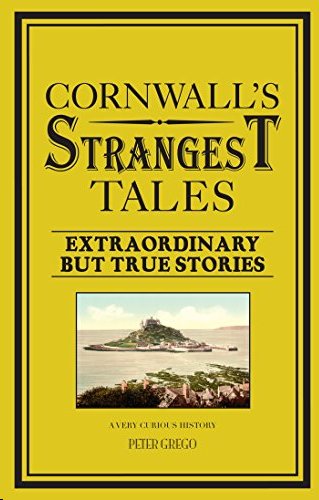
From sunbathed paradise to Jurassic coastlines, Cornwall according to Peter Grego in Cornwall’s Strangest Tales, Extraordinary but True Stories, is ‘a land of dream and mystery’. A land of Arthurian legend, an unconquerable fortress where smugglers reigned, where naval fleets sailed off to victory and folk tales spoken around a hearth prevent the loss of the old ones.


Friday, May 12, 2017

Spring in Regency England and the Social Season

In the Pacific Northwest where I live, it's spring! Everywhere I look, something is in bloom. Every shrub, tree, and bulb has burst out in full color. It's magical!

Spring in Regency England meant not only flowers, but, more importantly, the Social Season. Usually a week or two after Easter, families in the upper classes headed to London to enjoy the biggest parties, soirees, and balls of the year. Many mamas went to find husbands for their daughters of marriageable age.

The Season began as a way of providing entertainment for families of those who served in Parliament. Regina Scott has a comprehensive list of when Parliament was in session, which varied from year to year. You can find that here. Parliament usually opened in February however, generally the Season only ran from ran from a few days after Easter until mid June or July when Parliament was no longer in session. This was because travel in Spring could be lengthy and difficult, and though men and women were in town when Parliament opened in February or when the Queen celebrated her birthday, they usually went home before Easter in time for Lent and to enjoy local and family Easter traditions. 

During Lent, they didn't hold balls and dances but did have dinners and routs and other entertainment.  Theatres had a abridged schedule and many oratorios and concerts were held.

Many did not come to London until after the Season began. Daughters didn't usually come up to London before Easter unless she had been out for awhile and had made her curtsy to the Queen. The week after Easter, the gentry and aristocracy came into town en masse.  There was no formal opening for the Season; it began when the first invitations went out. There were often three or four activities an evening so lots of people party hopped.

A number of ladies and gentlemen made matches during and after the Season, and was the goal of most mamas and their daughters. But for me, I will just enjoy the flowers and write about my heroines enjoying (or not) their social Season.

What do you enjoy most about Spring?


Friday, May 5, 2017

REGENCY IN COLORADO: The Denver Art Museum


by

Sheri Cobb South

When one thinks of Regency England, I’ll admit that Denver, Colorado doesn’t exactly leap to mind. Still, while it’s no substitute for a trip to London or Bath, the Denver Art Museum contains sufficient pieces from the period to keep Regency aficionados happily engaged for a few hours—and with an admission charge of ten dollars per person, the price is certainly right.

The Denver Art Museum comprises two buildings; those interested in its Regency and Georgian holdings will want the North Building, specifically the sixth floor. Here you’ll find one room of the gallery is dedicated to the “Golden Age” of British portraiture, generally considered to encompass the 1720s to the middle of the 19th century. (Please note that most, perhaps all, of these portraits are part of the very extensive Berger Collection, on long-term loan to the museum, and the ones on display are rotated through the gallery; therefore, different paintings may be on display at the time of your visit. If there is a particular painting or paintings that you especially wish to see, it might be a good idea to contact the museum first.)
One of my favorites was this portrait, Master Roger Mainwaring, by Henry Thomson, RA, from about 1810. A nearly life-sized representation, it shows young Roger at about eight years old (give or take a year or two) ready to go fishing, with his rod in his hand and his creel at his feet. The museum’s information panel notes, charmingly, that the rod is too big for him—as is the balustrade he’s trying, not entirely successfully, to sit on.
Another I especially liked was Master Page, Anne Page, and Slender, by John Downman, ARA. This painting, also from about 1810, depicts a scene from one of the amateur theatricals that were a popular entertainment at house parties. In this case, the play being performed is William Shakespeare’s The Merrie Wives of Windsor. Because this painting came to the Berger collection from the descendants of the sitters, we know exactly who is portrayed here: John Dawkins (left) is playing the part of Slender, with his sister Susannah in the role of Anne Page and her husband, lawyer Sir Edward Dodsworth, as Master Page. There’s certainly no question as to who is having the most fun, is there? “Slender” appears to be having a blast, while poor Sir Edward looks like he’s just praying for the curtain to fall!

A doorway leads from this gallery into a large room where Georgian and Regency furniture is on display. The star of the show, at least in my opinion, is this gorgeous chaise longue from about 1810, but other pieces are well worth a look, including this gracefully curved chair from about 1825 

and this work table from about 1820.
According to the information panel, the raised center section of the table could be removed to reveal a chess board beneath, or lowered for use as a writing desk. The silk bag hanging below provided a place for ladies to store their needlework. There are more pieces, of course, but space doesn’t permit me to show them all.
Take the elevator down to level four, and you’ll find a collection of Spanish Colonial art, which includes several pieces from the Regency period (although of course the Spanish didn’t call it that!).
Here you’ll find more home furnishings, including this 18th-century settee. Unlike the green chaise longue we saw earlier, whose silk upholstery was a modern reproduction, this one still has its original silk damask cushions, hence its rather worn appearance.
There are also paintings in the Spanish Colonial collection, including this Portrait of Francisco Javier Paredes by Francisco Aguirre from about 1800. Its subject was a Spanish gentleman who served as a colonel stationed in Mexico. The information panel cites his luxurious accessories: a diamond ring on the little finger of his right hand; numerous gold buttons on his double-breasted waistcoat; the elaborate medal and chain pinned to his hat; the sword he wears, the hilt of which is just visible; and the walking stick he carries.


The Portrait of a Lady  by an unknown artist is from Argentina or Chile, and dates from the 1820s or 1830s, but the gold jewelry she wears reflects the earlier Neoclassical style favored by the Empress Josephine Bonaparte. I confess, when I saw this painting I immediately thought of the Marchesa in Georgette Heyer’s The Grand Sophy!
Finally, one of my favorite items in the Spanish Colonial collection was this fan. Although it depicts people in 18th-century dress, the panel cites a date in the 19th century, so this was apparently a “historical” scene at the time it was made. The sticks are made of mother-of-pearl, and although it’s part of the Spanish Colonial exhibit, the panel says it is probably of French manufacture. I couldn’t help wondering how it traveled from France into the hands of some long-ago lady living in what is now South America. That, to me, is what museums are for: telling (or at least hinting at) the stories of those long gone, as revealed by the things they left behind.

* * *

Sheri Cobb South is the author of the John Pickett series of Regency-set mysteries, as well as the critically acclaimed Regency romance The Weaver Takes a Wife. For more of her unique stateside take on the Regency, see her blog entry “Regency in Alabama” at http://lesleyannemcleod.blogspot.com/2011/08/regency-in-alabama-vine-olive-colony-of.html?m=1