 | |
Nara or Heijo was Japan's first permanent capital established in the year 710. Before that date, the capital moved to a new location whenever a new emperor ascended to the throne.
However, as the influence and political ambitions of the city's powerful Buddhist monasteries grew to become a serious threat to the government, the capital was moved away to Nagaoka in 784 and a few years later to Kyoto, where it stayed for over 1,000 years.

The Todai-ji (the Great Eastern Temple) is Nara's most iconic temple (above). It was constructed in 752 and houses one of Japan’s largest statue of the Buddha – the 16 metre bronze Dainichi Buddha.

The 16-metre-bronze statue of Dainichi Buddha.
According to the records, more than 2,600,000 people helped to construct the Great Buddha and its hall. The project was so ostentatious that consumed most of the available bronze of the country and nearly bankrupted the economy.
The Buddhism entered Japan in the 6th century, transmitted from China and Korea. It became one of the main religions of the country but faced initially rejection from the conservative Shintoists.
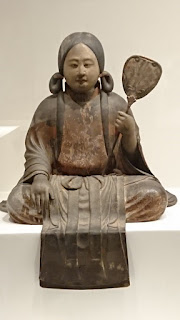
Prince Shotoku (574 – 622 CE) was the early champion of Buddhism. He served as regent under his aunt Empress Suiko (554 – 628 CE). The picture below is the oldest sculpted portrait of the prince currently known, showing him as an adolescent.
 |
Showing posts with label Empress Suiko. Show all posts
Showing posts with label Empress Suiko. Show all posts
Friday, February 14, 2020
Nara – Relics of a historical cultural capital of Japan


Subscribe to:
Posts (Atom)

 Posts
Posts


