Search This Blog

Showing posts with label english history. Show all posts

Wednesday, May 17, 2017

"A droll! A droll! Tell me a droll!" Cornish Folktales, Legend and Lore ~ Katherine Bone

The Cornish are descendants of Druids, Celts, and the Welsh, ancestors typically referred to as the ‘old ones’ with a fifteen hundred year history of mining ore, copper, and tin. Living and working in harsh conditions—influenced by Welsh saints who settled throughout Cornwall, and later Methodist Evangelist John Wesley—the Cornish were enthralled by supernatural folklore, tales of ghosts and legend. Nights spent around a hearth of blazing furze and turf was never wasted. Especially if a droll teller—a storyteller traveling hamlet to hamlet across the moors to tell stories, play the fiddle, and sing old ballads about Cornwall's past—ventured near.

“In Cornish dialect a ‘droll’ is an oral story.” Visits by a droll teller—or ‘old crowder’ because they attracted a crowd—happened but once or twice a year as a means of keeping the old ways alive.

Our Cornish drolls are dead, each one;
The fairies from their haunts have gone:
There’s scarce a witch in all the land,
The world has grown so learn’d and grand.
~ Poet Henry Quick

In Cornish Folk Tales by Mike O’Connor, droll teller Anthony James of Cury and his son traveled throughout Cornwall in the late 18th- to early 19th Centuries to pass on legends and lore.

The Legend of Tamara offers a theory on how Cornwall became distinct from England. The tale also offers two interesting morals. The first, beware those who live in darkness. Second, a warning to allow young people to make their own decisions.

The Legend of Tamara

"Once there was a bad-tempered troll who lived high up on the moors in the north of Cornwall. This troll had a beautiful daughter called Tamara. Now this old troll hated the light, so he slept during the day and would only venture out of his cave at night time. And Tamara, she was forbidden to go out during the day and only allowed out after sunset. But you’ll soon learn about young women! You will find they are independent and inquisitive, just like many other people, perhaps more so. Well, Tamara was like that. One bright day, when her father was fast asleep, she crept out of the cave to see what it was like.
As soon as she came out of the cave she was enchanted by the bright light, the colours, the reflections. There was the blue of the sky, the brilliance of the sun, the rich green of the moors, the silver streams and the sparkling, shimmering sea. And on the side of the hill there she found two young giants enjoying a friendly wrestling match, and I can tell you she was even more enchanted by these two strong, handsome young men.
And those two young men were friendly and courteous. They introduced themselves as Davy and Terry, and Tamara enjoyed their wit and their good company. She was fascinated by their knowledge of the world that lay beyond her close horizons. So next day she joined them again, and the next day, and the day after. And gradually she realized she was falling in love, not only with her young giants, but with life outside the cave, life in the light.
One day Tamara was sitting in the sunshine on the hillside between her two young friends. She was wondering which, if either, she preferred when she heard a howl of rage. She looked towards the entrance of the cave and there was her father. The old troll had woken and found that his daughter was gone. From the shadows of the cave entrance he ordered Tamara to come back to the darkness at once. Tamara looked at the dark cave and her angry father. Then she looked at the bright land outside the cave and the two genial giants. Finally, weeping with fear, Tamara refused to do what the old troll said. Then her father’s rage was so great that he was almost incapable of speech. Finally, screaming with anger, he uttered a great curse in a tongue no one else could understand.
Then Tamara felt her blood run cold and her limbs become stiff. Tears began to flow from her eyes as she realised that the curse was turning her into stone. Soon she was a lifeless rock, but from that rock the tears still flowed. At the base of the rock formed a pool of tears, tears that flowed forever, forming first a brook, then a stream, then a river that flowed down to the sea.
Then Davy cried out for the bad-tempered old troll to undo his terrible curse. At first the troll refused. Davy was insistent. But then the troll admitted that the curse could not be undone. So Davy threw himself to his full height and demanded that he too should be cursed, so that he could suffer the same fate as his sweetheart and share her course to the sea. So for a second time, and now himself trembling with fear, the troll uttered his great curse. Then Davy too felt his blood run cold and his limbs become stiff. Tears flowed from Davy’s eyes as he was turned to stone by the troll’s curse. From that stone the tears continued to flow. At the base of the rock formed a pool of tears, tears that flowed forever, forming first a brook, then a stream, then a river that flowed down to the sea; a river that joined with his beloved Tamara and flowed with her to the sea, far away to the south.
Then Terry roamed the hills seeking solace or diversion. But, wherever he went, he was haunted by the memories of his brother and his friend. Eventually from far across the moors he gave a great cry, demanding that he too should share the same fate. And far away the old troll heard his cry borne on the wind and for the last time uttered his terrible curse. In turn Terry heard the troll’s faint words on the wind. Soon Terry felt his blood run cold and his limbs become stiff. Tears flowed from his eyes as the third curse turned him to granite; a stone that like the others wept an eternity of tears. At the base of the rock formed a pool of tears, tears that flowed forever, forming first a brook, then a stream, then a river. But he was far away across the moors, so his river did not flow to the south and join Tamara and Davy. Instead his river flowed to the north, eventually joining the Bristol Channel.
That’s how the granite kingdom of old Cornwall defined its borderlands—three curses, three tears and three rivers: the Tamar, the Tavy, and the Torridge. That’s what they call them now."
Cornwall. Corn stems from the Iron Age tribe Cornovii, later pronounced ‘Kernow’, possibly meaning people of the horn. Wall comes from old English, ‘w(e)alh’ meaning foreigner. Corn Walum dates back to 891 A.D.

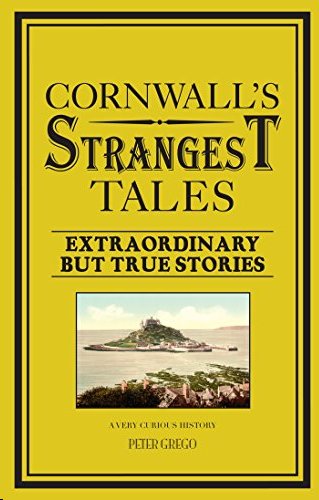
From sunbathed paradise to Jurassic coastlines, Cornwall according to Peter Grego in Cornwall’s Strangest Tales, Extraordinary but True Stories, is ‘a land of dream and mystery’. A land of Arthurian legend, an unconquerable fortress where smugglers reigned, where naval fleets sailed off to victory and folk tales spoken around a hearth prevent the loss of the old ones.


Friday, September 30, 2016

London Season in Regency England

by Historical Romance Author Donna Hatch
www.donnahatch.com

If you've ever read a Regency or Victorian Romance novel, or even any British historical novel set in the 18th or 19th century, you've probably come across the word "Season" (capitalized). Season does not refer to winter or spring but rather to the social whirl among the upper crust of British society during the spring. The Season originally began as a way for the families of men serving in Parliament to amuse themselves while staying in London, and so it remained for generations. Most families did not travel to and from their country estates to London during the autumn or winter months due to the difficulty of travel. However, after Easter, they seemed to be ready for society.

The dates which Parliament met varied from year to year. According to noted Regency researcher and author, Regina Scott, the dates parliament met were as follows: Parliament was in session during the following times:
  • 1 November 1810 to 24 July 1811
  • 7 January 1812 to 30 July 1812
  • General election: 5 October to 10 November 1812
  • 24 November 1812 to 22 July 1813
  • 4 November 1813 to 30 July 1814
  • 8 November 1814 to 12 July 1815
  • 1 Feb 1816 to 2 July 1816
  • 28 January 1817 to 12 July 1817
  • 27 January 1818 to 10 June 1818
  • General election: 15 June to 25 July 1818
  • 14 January 1819 to 13 July 1819, before the 16 August 1819 Peterloo Massacre
  • 23 November 1819 to 28 February 1820 (special session because of the massacre but ending early because of the death of George III)
  • General election: 6 March to 14 April 1820
  • 21 April to 23 November 1820 (including a special session beginning the third week of August for the trial of Queen Caroline).
Parliament always went into recess for Lent, which precedes Easter, a time when the members of Parliament, also referred to as MPs, retreated to their country homes. When they returned to London after Easter, they often brought their families, especially if they had sons and/or daughters of marriageable age to participate in what was often referred to as the "marriage mart."

The focus was not always to find a spouse. Some families simply came to renew acquaintances and amuse themselves after wintering in the country. Regardless, the ton descended on London en masse. Activities varied but popular amusements were dinner parties, balls, musicales, attending the theater or the opera, visiting museums, going riding in the park, visiting private zoos, and riding in hot air balloons, to name a few.

Almack's Assembly Rooms
There were also the coveted vouchers for weekly balls at Almack's Assembly Rooms where the Patronesses kept a tight rein over who would and would not be granted entrance based on family connections and behavior. Young ladies wishing to dance the scandalous waltz had to first receive permission from the Patronesses. According to Regency researcher and author Candice Hern, the Patronesses were, Lady Jersey, Lady Cowper, Countess Leiven, Mrs. Drummond-Burrell, Lady Castlereagh, Lady Sefton, and Princess Esterhazy.

The Season in London was also a crucial event for the working class. People arriving in London needed servants for their London homes because they typically transported very few of their servants from house to house. If a family did not own a house in London, they rented a townhouse. They also shopped. A lot. Ladies absolutely had to have fine gowns as well as shoes, hats, gloves, reticules—you name it. The wealthy also went to the theatre and opera, which meant more performers were needed. As you can imagine, the cost to attending a Season in London was staggering, but most considered it a worthwhile investment if their children got married to a good match.

In short, much of the prosperity of London depended on the Season and the beau monde who peopled it. Merchants and craftsmen earned a living, and the wealthy amused themselves and secured the future of their line. It seems to have worked pretty well for most.
The London Season plays a major role in my upcoming book, Heart Stringsbut not in the usual way.
When forced to choose between marrying a brutish oaf or becoming another man’s mistress, Susanna flees to London with dreams of becoming a professional harpist. Entangling herself with a handsome violinist who calls himself Kit may be more problematic than sleeping in the streets.
With peril lurking in the shadows, Susanna’s imminent danger not only forces Kit to choose between his better judgment and his heart, but he must also embrace the life to which he swore he would never return.
Heart Strings is available now for pre-order Kindle and paperback.


Friday, December 18, 2015

The Cato Street Conspiracy, a Source of Inspiration


The Cato Street Conspiracy

The murder plot in my newest Regency Romance, The Suspect’s Daughter was inspired by a true event in England known as the Cato Street Conspiracy.

The early 1800’s in England was a time of social and economic upheaval. Upon the ending of the long-term Napoleonic wars, unemployed career soldiers and sailors flooded the workforce. Industrial change was taking England from a largely agricultural country to one of large industry. Many of the working class were hungry and feeling oppressed. Riots erupted which the government crushed. Laws grew more and more restrictive.

In 1820, a group of ten Londoners decided the government needed to be overhauled, and came up with a radical and brutal idea. They planned to storm a house where the prime minister and his cabinet would be having dinner, shoot and behead the leaders, and then parade around the slums with the heads.

Thankfully, this mass murder was averted largely in part due to an undercover government agent whom some believe was a Bow Street Runner. I never learned his name. Government agents stormed the meeting, which was held in a flat on Cato Street, and arrested the conspirators. But the radicals didn’t go peacefully. They fought back, killing one of the officers.
Newgate Prison

The conspirators were tried for high treason. Five were transported, and the rest were hanged at Newgate Prison (pictured) and then beheaded. I guess they authorities wanted to be thorough.

Though the events are different in my story, and the characters are fictitious, the case inspired the conspiracy plot (with my own spin, of course) in my newest Regency Romance, The Suspect’sDaughter, book 4 of the award-winning Rogue Hearts Series, with Grant Amesbury as the hero.


The Suspect’sDaughter, book 4 of the Rogue Hearts Series

Determined to help her father with his political career, Jocelyn sets aside dreams of love. When she meets the handsome and mysterious Grant Amesbury, her dreams of true love reawaken. But his secrets put her family in peril.

Grant goes undercover to capture conspirators avowed to murder the prime minister, but his only suspect is the father of a courageous lady who is growing increasingly hard to ignore. He can’t allow Jocelyn to distract him from the case, nor will he taint her with his war-darkened soul. She seems to see past the barriers surrounding his heart, which makes her all the more dangerous to his vow of remaining forever alone.

Jocelyn will do anything to clear her father’s name, even if that means working with Grant. Time is running out. The future of England hangs in the balance...and so does their love.
The Suspect’sDaughter, is available from Amazon

Wednesday, November 12, 2014

A Knight’s horses...and a book giveaway


by guest blogger Regan Walker

When I was doing the research for my new medieval, THE RED WOLF’S PRIZE, set in England two years after the Norman Conquest, I learned a lot of surprising things about the horses the Norman knights rode. For example, horses were not so much distinguished by breed as by use. There were highly trained warhorses like destriers, strong coursers, smooth-gaited palfreys for lords and ladies, and general purpose rounceys. Knights did not, for the most part, ride their warhorses around the countryside, at least not very often. They rode palfreys, high-status riding horses.


Warhorses—the destrier and coursers—were reserved for battle. The courser was preferred over the destrier as it was light, fast, steady and strong—and less expensive. You can get a rough idea of the warhorses from illustrations of the period, such as the Bayeux Tapestry, which is actually an embroidery sewn in the 11th century and meant to depict the events that surrounded the Conquest.


 Destriers and coursers were stallions trained for charging and putting up with the shock of impacts. They had to be maneuverable, too, but with the strength to bear a knight’s weight in battle. (Though the chain mail was much lighter in the 11th century than the mail and plate armor that would come later.) 

While the origin of the medieval warhorse is not clear, it is thought they had some Barb and Arabian blood through the Spanish Jennet, a forerunner to the modern Friesian and Andalusian horse. Today, breeds that have similar bloodlines include the Welsh Cob, the Friesian, the American Quarter Horse, a stocky Morgan and the Andalusian.

The Spanish-Norman horse, like both the Percheron and the Andalusian, is predominantly gray in color, and is the horse Sir Renaud (“the Red Wolf”) rides in THE RED WOLF’S PRIZE. It is known that William the Conqueror was gifted a Spanish stallion at one point and so it occurred to me that a favored knight might also receive one as a gift from his lord.
In addition to palfreys, nobles rode the general purpose rounceys, but not typically knights, although knights might use them in a pinch. There were also horses for the hunt and the race that were fast and had stamina. And there were workhorses (common plough horses), and carthorses bread for hauling things.

Interestingly, William the Conqueror shipped horses across the English Channel when he invaded England in 1066—as many as thousand or more. Unlike the English, who rode their horses to battle and then dismounted to fight on foot, the Normans fought on horseback. It is also why they fought using longer swords than the English. The outcome of the Battle of Hastings has been described as “the inevitable victory of stirrupped cavalry over helpless infantry.”


When the battle was over, the knight would leave his warhorse and his helm with his squire and ride off on a palfrey, a much more manageable horse than his often mean-spirited warhorse, and one that had a smoother gait making for a better ride. Hence, the Red Wolf rides his Spanish horse when going to the Siege of Exeter and the Battle of York, while his squire leads his destrier.


Ladies rode the smooth-gaited palfrey, too, often riding either astride or pillion (sitting sideways and having their horse led by a groom). In THE RED WOLF’S PRIZE, Lady Serena rides a white palfrey her father had given her.

Here's the blurb for Regan's new historical romance, THE RED WOLF’S PRIZE:

HE WOULD NOT BE DENIED HIS PRIZE
Sir Renaud de Pierrepont, the Norman knight known as the Red Wolf for the beast he slayed with his bare hands, hoped to gain lands with his sword. A year after the Conquest, King William rewards his favored knight with Talisand, the lands of an English thegn slain at Hastings, and orders him to wed Lady Serena, the heiress that goes with them.

SHE WOULD LOVE HIM AGAINST HER WILL
Serena wants nothing to do with the fierce warrior to whom she has been unwillingly given, the knight who may have killed her father. When she learns the Red Wolf is coming to claim her, she dyes her flaxen hair brown and flees, disguised as a servant, determined to one day regain her lands. But her escape goes awry and she is brought back to live among her people, though not unnoticed by the new Norman lord.

Deprived of his promised bride, the Red Wolf turns his attention to the comely servant girl hoping to woo her to his bed. But the wench resists, claiming she hates all Normans.

As the passion between them rises, Serena wonders, can she deny the Norman her body? Or her heart?

To celebrate the release of her new book, Regan is giving away the eBook of The Red Wolf's Prize to one winner.  To enter the random drawing, simply enter in the rafflecopter below. It's super easy! 


Regan Walker - Author Bio:

Bestselling author Regan Walker loved to write stories as a child, particularly those about adventure-loving girls, but by the time she got to college more serious pursuits took priority. One of her professors encouraged her to pursue the profession of law, which she did. Years of serving clients in private practice and several stints in high levels of government gave her a love of international travel and a feel for the demands of the “Crown” on its subjects. Hence her romance novels often involve a demanding sovereign who taps his subjects for “special assignments.” And in each of her novels, there is always real history and real historic figures.
Regan lives in San Diego with her golden retriever, Link, whom she says inspires her every day to relax and smell the roses. 


Friday, November 7, 2014

Circulating Libraries in Regency England

by Regency Romance Author, Donna Hatch

Today, the word "library" generally creates in a person's mind an image of big building full of books that one can check out for free. Or sometimes, people will refer to their bookshelf (or shelves) as their personal library which, obviously, is not open to the public. But circulating libraries during the Regency were a bit different.

Possibly as early as the late 1600's, when books were still expensive enough that the even wealthy people could not afford to buy very many books, yet no longer the impossibly expensive, hand-illuminated volumes of ages past, the fairly well to do person embraced the idea of borrowing books for a nominal fee from a circulating library. During the mid 1700's, as a growing number of people bought subscriptions to circulating libraries, they became profitable enough that more libraries cropped up, gaining wide popularity among the wealthy and growing middle class alike. Prior to that, subscription libraries and social libraries did exist but they typically offered a limited number of books and periodicals to their select group of members. Circulating libraries offered a huge range of interests that appealed to the general literate public.

Patrons, both ladies and gentleman, paid subscriptions to have access to libraries both large and small and could borrow an unlimited number of books of every topic, many in other languages such as French and Italian, as well as periodicals. Subscriptions ranged from annual to monthly. Typically, a person could borrow up to two books at a time and had a limited number of days in which to read. One source suggested that for an additional fee, a person could borrow multiple books. Since many novels came in at least three parts, such a temptation would be hard to resist since I'm sure many readers share my dislike of waiting for the next part in a story to become available.

Besides being a place to borrow books, or simply sit and read in the reading room, circulating libraries became a fashionable place to see and be seen. They sprang up in resorts towns like Brighton where the locals and visitors mingled and relaxed.

In addition to offering a selection of books printed by publishers, circulating libraries also became their own publishers and were friendly to female authors. Minerva Press, so well known for printing Gothic novels, was one such publisher who gave voice to a number of women who penned novels. Such publishers changed to course of publishing and really opened the door to the social acceptability of female authors, as well as created a better variety of fictional novels.

As books became less expensive to print, partly due to the paperback cover and using cheaper materials making it more affordable to readers, and as public libraries were created which offered books for free, the circulating library fell out of popularity. But their influence shaped the future for readers, authors and publishers. And I, for one, am eternally grateful for them paving the way for me to realize my dream of becoming a published author.


Sources:
http://britishcirculatinglibraries.weebly.com/history.html
http://news.lib.uchicago.edu/blog/2011/05/05/circulating-libraries/
http://janeaustensworld.wordpress.com/2010/08/30/the-circulating-library-in-regency-times/
http://eduscapes.com/history/modern/1725.htm


Friday, June 7, 2013

How to Tie a Cravat

Any well dressed, fashionable man living in Regency England prided himself on having a perfectly tied cravat, or necktie. Some were so fussy about their cravats that they went through a dozen starched neckcloths until they got exactly the look they desired. Of course, having a skilled valet who specialized in knots would be a great commodity. After achieving the perfect knot, the trick was not to move one's head enough to muss the creation.  Some gentlemen changed the knots for the occasion, others prided themselves on having one particular signature look. The kind of knots a man used often said much about him--the more difficult knots would tell people that this man was very fastidious, and prided himself on his appearance.

A really great illustration of the various types of knots can be found at Nekclothitania  along with instructions.  Here is a picture I found on Wikimedia Commons showing the most popular knots for a Regency gentleman's cravat.


Each type of knot had a name; for example, the Mathematical, the Waterfall, the Oriental, etc. I have read that the Waterfall, also called the Mail Coach, consisted of taking a very starched tie, wrapping it around the neck and lowering the chin so the creases fell into a uniform pattern, and tucking the ends into the waistcoat. Supposedly Beau Brommell, (pictured below) accredited with making cravat knots an art form, preferred this type of type because it catered to his fussiness--apparently this style was so difficult  to achieve that he went through dozens of ties until he got exactly the right look. Talk about a dandy, right?

Some knots require the waistcoat (which looks like a vest) to be off, while others clearly must be left outside the waistcoat in order to achieve the right look. It also depended on the waistcoat. Some had high, attached collars which would pretty much require the cravat be tied first and tucked inside.

Most cravats were white, but some called for colors, and some informal gentleman's clubs also called for a certain color or cravat to distinguish them as members.

For those of you looking for something more modern, there is a great tutorial on how to tie a Windsor Knot on You Tube here

For once, I'm glad as a woman, I will probably never have to tie something this complicated :-)


Friday, April 5, 2013

Does Historical Accuracy Really Matter?


File:View on Egeskov Castle from english garden.JPGOn my on-line writing group for those of us who write Regency Romance novels, some of us were bemoaning the fact that so many novels labeled historicals are historically inaccurate. In the 80’s, historicals were pretty much anything goes. A few authors did a great job of blending a great story with historical accuracy, but many best-selling authors didn’t seem to worry about it. Unfortunately, publishers let them get away with it and readers swallowed it. Now don't get me wrong, they crafted wonderful stories with wonderful characters, but they created their own rules which many readers accepted as fact but were, in fact, myth.


A prime example of this is the myth that in Regency or Victorian England, marriage could be quietly annulled if it wasn’t consummated. I don’t know who started that, but it is unarguably false. There was an ancient Scottish tradition that allowed for annulment in certain circumstances if the marriage was not consummated, but for all intents and purposes, marriage in England was permanent--especially in England. Furthermore, in England, annulment was messy and scandalous and never, ever happened quietly. It also socially ruined both the husband and the wife. Even divorce was difficult to obtain until King Henry VII legalized divorce in England, and even then, never became an easy thing to do until late in the 20th century.

Today, more and more publishers are looking for historical accuracy, but still not enough to satisfy many history geeks. The winner of a nationally recognized historical contest began her Regency Romance novel with a grand wedding full of descriptions that are modern inventions which never happened in that era. Why did she win? Probably because it was a lovely fantasy that blended history with modern-day traditions, and she was a good writer. Too bad the judges overlooked the fact that it was historically inaccurate. A few hours spent in research would have won her not only the contest, but the respect of other regency authors and the well-informed readers who know better. However, she probably understood that readers have a certain expectation and wanted to meet that instead of rely upon historical accuracy.

Why do I care about historical accuracy? Several reasons.

First, because it’s true. The fiction comes from the plot and the characters, not the setting.

Second, it helps preserve our heritage. Though I am a true American mutt, I have strong English lineage on both sides of my family--and so does my husband who can trace his ancestry back to William the Conquerer--and holding fast to the facts helps me stay in touch with my roots.

Third, we can learn from the past. The good old days weren’t all that good which helps me appreciate our day. But aspects of the good old days really were wonderful and should be treasured--and remembered.

Fourth, many readers (and writers) are fascinated with that era and want sources to guide them through it so they can explore it without having to turn to a history book. When readers connect with characters, history is lived, rather than simply read about.

Fifth, keeping an accurate backdrop helps shape the characters. Research is more than just learning about the clothing or what kind of carriages they drove; it’s about society and people, how they behaved and what their expectations and frustrations were. It’s a realm long gone and our only doorway back is through painstaking research.

Some say, “Oh, well, it’s the story we want and the fantasy that entertains us.” To that I say, “Well, fine, then label it a fantasy, not a historical.” If you’re going to call a novel Historical, or Historical Fiction, do the research. I know it's a pain. For years ago, characters nagged me to write their stories but I resisted because I didn't want to do the amount of research that would be required. Finally, when they wouldn't leave me alone, I broke down and began researching. It's hard, and frustrating, and very time consuming. But it was worth it. The fruits of my labor became the Rogue Hearts series, beginning with The Stranger She Married and The Guise of a Gentleman. Now, I love the research aspect of writing historicals.

In the midst of the on-line ranting that occured on our writers group, one of the published authors in my group shared with us her philosophy:

As a writer, my job is threefold:


1) do my homework well enough to please my fellow history geeks,

2) make the story compelling enough to hook readers who don't care whether or not it's accurate, and

3) don’t stress over writers/readers who prefer the fairytale.

It resonated within me. I hope it helps you, too.


Image found on Wikimedia common
http://commons.wikimedia.org/wiki/File:View_on_Egeskov_Castle_from_english_garden.JPG

Friday, March 1, 2013

The Language of Fans

by Historical Romanced Author Donna Hatch
www.donnahatch.com

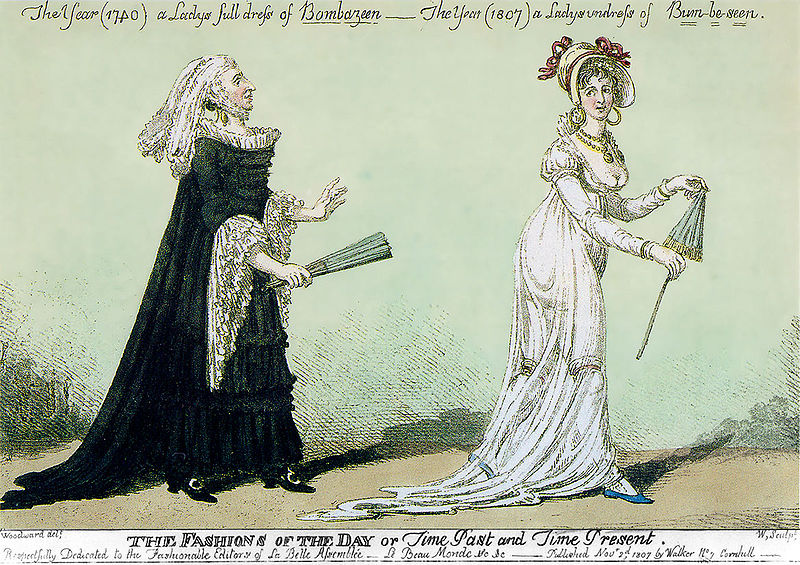
File:1807-pseudo1740 Fashion-contrast Bombazine-pun.jpgFans have been used as both a fashion accessory and a useful tool of staying comfortable for hundreds of years. Nearly every culture has a fan of some sort and the Regency Era, the time period in which I base all my romance novels, is no exception.


Unfortunately, the sources I read don't agree on what each action means. For example,  according to one source,* to fan slowly means "I am married." But according to another** to fan slowly means, "Don't waste your time; I'm not interested."

Likewise, according to one***, fanning oneself quickly means "I am married." But yet another ****says the same action means" I love you so much."

Shrug.

Also, the modern reader might wonder why go to all the trouble of learning such an elaborate language? But I think it might work well for the very shy, the very tongue-tied, or the person who needs to get the message across but fears coming on too strong. Also, telling a man she's not interested in him might be easier to say in fan language than in speaking. How many times have you told a guy who asked you out that you were busy when you really wanted to tell him to buzz off?

So, unless I can make friends with Dr. Who and jump into his time machine to find out what, exactly, these gestures really meant during the Regency Era, we may never know. Still, here are a few hand signals on which my sources seem to agree:

Touching right cheek: yes
Touching left cheek: no
Touching finger to tip of fan: I wish to speak with you.
Running fingers through the fan's ribs: I want to talk to  youResting the fan over the heart: my love for you is breaking my heart
Resting fan NEAR the heart: you have won my love
Resting fan on lips: I don't trust you.
Twirling in left hand: we are watched
Twirling in right hand: I love another
Open and shut: you are cruel
Open wide: wait for me
Presented shut: do you love me?
With handle to lip: Kiss me
In right hand in front of face: Follow me
Drawing across the cheek: I love you
Placing on left ear:  Leave me alone
Placing closed fan to the right eye: When may I see you?
Covering left ear with open fan: Do not betray our secret.
Changing fan to left hand: I love another.

So far, all the heroines in my Regency Romance novels have done with a fan is to keep cool or use it as a shield behind which they speak quietly to another. I admit, however I'm intrigued by the subtle, demure way a woman might have communicated to a man without speaking a word. She'd just have to time it when he's looking and not one else is, or her secret feelings would no longer be secret.


Sources:
*http://www.allhandfans.com/handfans/levels/language_of_the_fan.htm
**http://myhandfan.com/language.htm,
***Minute Company
****myhandfan.com

Saturday, October 1, 2011

Regency Historical, or Regency make-believe?

In my on-line writing group for Regency Writers, some of us were bemoaning the fact that so many novels labeled historicals are historically inaccurate.

Which begs the question: does it matter?

In the 1980’s, the attitude toward historical novels was pretty much anything goes as long as it's a good story. A few authors did a great job of blending a great story with historical accuracy, but many best-selling authors just wrote whatever they wanted and didn’t worry too much about research. Unfortunately, publishers let them get away with it and readers swallowed it. A lot of those stories had situations that readers believed were truth, many of which are still accepted as truth today.

A prime example of this is the myth in Regency romance novels is that marriage could be quietly annulled if it wasn’t consummated. I don’t know who started that, but it is unarguably false. There was an ancient Scottish tradition that allowed for annulment in certain circumstances if the marriage was not consummated, but for all intents and purposes, marriage was permanent, especially in England. Annulment was messy and scandalous and never, ever happened quietly. It also socially ruined both the husband and the wife. Even after King Henry VII legalized divorce in England, divorce was difficult to obtain and still had a huge social and legal backlash.

Today, more and more publishers are looking for historical accuracy, but still not enough to satisfy some history geeks. The winner of a nationally recognized historical contest began her Regency romance novel with a grand wedding full of descriptions that are modern inventions which never happened in that era. Why did she win? It was a lovely fantasy that blended history with modern-day traditions, and she was a good writer. Too bad the judges overlooked the fact that it was historically inaccurate. A few hours spent in research would have won her not only the contest, but the respect of other regency authors and the well-informed readers who know better.

Why do we, the authors of Regency Romance novels care about historical accuracy? Several reasons.

First, it’s true. The fiction comes from the plot and the characters, not the setting.

Second, accuracy helps preserve our heritage.

Third, we can learn from the past and see that maybe the good old days weren’t all that good, or that they were wonderful and should be treasured.

Fourth, many readers (and writers) are fascinated with the Regency era and want sources to guide them through it, meaning, they want to know what it was really like. That's part of why the read Regency romance novels.

Fifth, keeping an accurate backdrop helps shape the characters. Research is more than just learning about what the clothing looked like, or what kind of carriages they drove; it’s about society and people. It’s a realm long gone and our only doorway back is through painstaking research.

Some say, “Oh, well, it’s the story we want and the fantasy that entertains us.”

To that I say, “Well, fine, then label it a fantasy, not a historical.” If you’re going to call a novel Historical, or Historical Fiction, or Regency, do the research. I know it's a pain. I've had characters nagging me to write their stories for years but I resisted because I didn't want to do the amount of research that would be required. Finally, when they wouldn't leave me alone, I broke down and began researching. It's hard, and frustrating, and very time consuming. But it's worth it. The end result was my first ever Regency romance novel entitled, The Stranger She Married, published in 2008, Book 1 of the Rogue Hearts Series.

Now I'm hooked on the Era so much that I read research books on Regency England just for fun. Okay, well, it's continuing research and all that, but really, I read those research books because I'm a Regency geek.

In the midst of the on-line ranting, one of the published authors in my group shared with us her philosophy:

As a Regency romance author, my job is threefold:

1) do my homework well enough to please my fellow history geeks,

2) make the story compelling enough to hook readers who don't care whether or not it's accurate, and

3) don’t stress over writers/readers who prefer the fairytale.

It resonated within me. I hope it helps you, too.

Wednesday, October 13, 2010

Robert Chambers's THE BOOK OF DAYS


I've always enjoyed the newspaper's This Day in History feature. Imagine my delight when I discovered Robert Chambers's The Book of Days.

The Book of Days: A Miscellany of popular antiquities in connection with the calendar, including anecdote, biography & history, curiosities of literature, and oddities of human life and character (now there's a TITLE) is This Day in History plus, a la 1864 England.

Organized by the days of the calendar, each entry provides multiple tidbits of information about events that occurred on that day. The two volumes of the book are available in Google books Volume 1 here and Volume 2 here, but an easier-to-read, online searchable version is here.

As an example, here's some information from the entry for today, October 13. Each article starts, as my newspaper feature does, with those who were born and died on this date. Then, because The Book of Days is Victorian, the Feast Days come next.

On October 13, 1630, Sophia, Electress of Hanover and mother of George I of England was born. Also on this day in 1815, of interest to Regency authors like me, Joachim Murat, Bonapartist king of Naples, was shot and killed. Saints Faustus, Januarius, and Martialis, martyrs who died in 304, celebrate their Feast Day today.

Three essays follow: First, NOTES FROM AUBREY: ON ENGLISH MANNERS IN OLD TIMES, where we learn "The use of 'Your humble servant,' [as a greeting] came first into England on the marriage of Queen Mary, daughter of Henry IV of France to King Charles I." This article also explains the origin of the boar's head custom at Christmas and why certain dishes are eaten on feast days.

Next is the TRAGEDY OF THE GALAS FAMILY, a sad tale of French justice gone wrong, followed by the story of Mrs. Elizabeth Fry, who improved conditions among the prisoners at Newgate prison in London.

Today's entire entry is here: http://www.thebookofdays.com/months/oct/13.htm

Too bad I didn't blog on October 14, because the Battle of Hastings, which changed England from Saxon to French, was fought on October 14, 1066.

You learn something new every day. Enjoy.

Thank you all,
Linda
Welcome to My World of Historical Hilarity!
http://www.lindabanche.com

Tuesday, March 2, 2010

Interview with Regency Romance Author, Sarah M. Eden


Sarah Eden's new book is a must-have among readers who like historical, and anyone who loves funny, quirky, lovable characters. Her new book, "Courting Miss Lancaster" pairs her deliciously snarky humor with her gift for raising the heart rate of her readers.
But I'll let Sarah explain.

Donna: Your wit kills me. Does it have a traceable source, like family?

Sarah: My family has lived in the arid deserts of Arizona since before the invention of air conditioning. So insanity runs in my family. Not something most people would include on a resume, but it's great for an author. Writing requires a certain degree of mental instability. And a tendency toward insomnia. I write a lot at night and while my kids are at school and any time I am supposed to be cleaning my house. My 6-year-old describes my books this way: “Kissy, romantic books where the people lived a long time ago and talked funny.” Yep, pretty much. I write clean romances that take place in Regency England (think the first two decades of the 1800s: Napoleon, Jane Austen, Mad King George). The endings are always happy, the characters are usually funny and my mom thinks they are amazing.

Donna: So do I, and so do a whole bunch of other people! So, where do you get your inspiration for your stories?

Sarah: Perhaps the single greatest source of inspiration for me lies in the fact that writing gives me an excuse to avoid responsible things. “Wow, I have very large piles of dishes on the counters (yes, plural) of my kitchen. Sorry. I need to write.” “The PTA is hoping I will bake 6 dozen cupcakes for the bake sale in a half-hour. Sorry. I need to write.” “What is that, children? You want dinner? There are frozen waffles in the freezer. Mom needs to write.” Inspiration? Check.

Donna: Do you have any challenges to getting your thoughts on paper?

Sarah: I have a deep and unshakable need to consume large quantities of unnecessary and useless calories (and by this I mean Cheetos). This need creates another need—to exercise my backside, hips and gut off. These very real needs often get in the way of my writing. To my joy, I have managed to invent, in many different versions, a contraption made up of very large books, packing tape and the back of the sofa in my living room which allows me to type while spending some quality time with my elliptical machine while burning calories to which I'd rather not become too permanently attached. I would take a picture, but it's pretty embarrassing. Embarrassingly awesome! I am also developing a system by which I can type and eat at the same time. I call it “Click, click, click, chew.” Fascinating. I'm thinking of writing a book about it.

Donna: Where do you begin a book, plot or character?

Sarah: My books always begin with a character, oddly enough. The plot and setting develop around him or her. I write romances, so the next step is deciding what kind of person would be the love-interest for that character. Then I flesh out where and exactly when within my time period these people live, their circumstances, etc. Those things which come in the way of their being together are usually obvious at this point—if not, I figure that out. So, my ideas come from people. This is probably the primary reason I have no friends — everyone is afraid they'll end up in my next book. It probably doesn't help that I tell them about this possibility.

Donna: Tell us about your most recent Regency Romance novel, Courting Miss Lancaster.

Sarah: About 200 pages.
Oh... wait. I get what you mean. Let me refer to the oh-so-handy back of the book:
Harry Windover adores blonde, green-eyed Athena Lancaster, but alas, a penniless man like himself has no hope of winning a young noblewoman's hand. To add insult to injury, Athena's brother-in-law and guardian, the Duke of Kielder, has asked Harry to assist Athena in finding the gentleman of her dreams. But the lovesick Harry is cunning as well: as the weeks pass, he introduces Athena to suitors who are horrifically boring, alarmingly attached to their mothers, downright rude, astoundingly self-absorbed, and utterly ridiculous.
Athena can't comprehend why she is having so little success meeting eligible and acceptable gentlemen. Indeed, her circle of admirers couldn't be less admirable--nothing like the loyal, gentle friend she's found in Harry.
But how long can Harry's scheme be hidden before it is discovered? And what will Athena do when she uncovers Harry's deception?

Donna: I love it!! Tell me, what are you working on right now?

Sarah: I am currently writing a sort-of-sequel to Courting Miss Lancaster. It follows the misadventures of another Lancaster sister — timid and uncertain Daphne — as she attempts to find love despite almost overwhelming obstacles. She comes up against snooty Peers, selfish matrons and even the dreaded “Love Triangle!” Now, that's gonna be an amazing story!

Donna: Oooh, that sounds great. Other than writing, what else do you do with your time.

Sarah: When my daughter was in preschool, she made me a Mothers Day card in which she answered several questions about me. Her answer to the question “What does your mom like to do most?” was “Not cook.” So, there you go.
I also enjoy reading and music and not sleeping (though “enjoy” isn't precisely the right word for that last one—more like “accept begrudgingly”).
In all my free time, (rolling my eyes), I am a regular contributor at mormonmommyblogs.blogspot.com, a presenter at various writing conferences, a Mommy-Taxi and an interviewer-extraordinaire for my recurring blog segment “I Need Friends Friday” at www.sarahmeden.com.

Donna: Where can readers buy Courting Miss Lancaster?

Sarah: Courting Miss Lancaster can be found at Deseret Book stores and Seagull bookstores. A link to purchase online can be found at my website, www.sarahmeden.com.

Donna: "Courting Miss Lancaster" sounds like great fun and I hope people will hurry and get a copy. I know they'll be glad. The trailer is at

Monday, September 21, 2009

Regency Reticules


Reticules, pronounced (rett i kyoòl) were sometimes called ridicules, because people thought it ridiculous to carry one’s valuables on one’s arm rather than hidden inside a belt or pocket. The etymology dictionary places the origin upon the French word réticule, and the Latin word reticulum, meaning a small mesh bag.

Reticules were small purses carried by ladies, and became a fashion accessory, as well as a necessity, in the late 1790s. Before then, women carried their purses around their waist, hidden by the panniers and wide hooped skirts. When the Empire style gown came into fashion, that practice was no longer possible. So, ladies began carrying them on their wrists.

Made of fabric or crocheted, often with silk or metallic thread, reticules were often created by ladies at home. Therefore, they greatly varied in style and color. They were usually held together with a small clasp or drawstring. The more elaborate purses which were beaded or made with elaborate needlepoint didn’t crop up until the mid Victorian Era.

And when I say they were small, they typically measured between 2 inches and 5 inches from the top of the clasp or drawstring, to the bottom where the seam or tassel was found. They were barely large enough to carry a few coins, a handkerchief, the ever-important calling card, perhaps a Vinaigrette and maybe a tin of breath mints, but little else. It was possible to carry a very small handgun inside a larger reticule, but it would have made the reticule quite heavy and there wouldn’t have been room for much else. A regency lady would be shocked at the size of our handbags today, and by what ladies carry in them!

Tuesday, June 2, 2009

Being Presented to the Queen


Despite what Regency authors often write in their  novels, it was not a requirement that any one be presented to the queen before dancing at Almack's or being considered "out." Some of the patronesses of Almack's felt they were more exclusive than court, giving and denying permission almost at whim only young ladies of spotless character and connections. A girl could have any number of seasons before being presented to the queen. Some never were presented until after they married. Of course, not attending a drawing room could imply that if the family had money problems; those gowns combining the feathers and hoop skirts of the Georgian era with the high waists of the Regency era thereby making a lady's figure look as terrible as possible were expensive and couldn't be worn anywhere else!

Only the daughters of peers would have been presented at Court when the queen held her "drawing room" for that specific purpose. There's a great book about this topic, "GILDED BUTTERFLIES: The rise and fall of the London season" by Philippa Pullar. By the way, the term debutante is Victorian, so it was never used during the Regency period.

The girls could attend social gatherings before being presented. When a young lady was about the right age, normally about 17 or 18, her mother sent in a notice to the Chamberlain that she wished to present her daughter at the next “drawing room.” The chamberlain sent her the date and a list of requirements as for dress and number of feathers.

In Gilded Butterflies, Pullar says that court required feathers as soon as society decided they didn't want them any more. The girl went with her mother on the proper day. The queen kissed the daughters of the peers. She often spoke to them as well. All brides of peers and men who attended court had to be presented as well, even if they had been presented before marriage. Also the wives of the diplomatic corps were presented.

April 30.1812 “The Queen held a drawing room at St. James's Palace. It being the first which her Majesty has held since the King's birth day in 1810, and there having been no Court for the ladies during a lapse of nearly two years, great preparations were made by the higher ranks for their appearance on this occasion.”

Though Queen Charlotte scheduled drawing rooms fairly frequently up until 1811, after that date they were irregular and spread apart. The sponsor-- the female who was sponsoring the girl -- the sponsor had to have already been presented herself, of course-- inquired as to the next drawing room and asked permission to present the girl ; she had her name and the name of the girl listed with the Lord Chamberlian's office. This office would send out the invitations and the information as to what people were supposed to wear to those who had requested permission for a presentation. At the presentation the girls went forward as called out. She knelt to the queen. The queen kissed the daughters of peers on the forehead but gave her hand to be kissed by anyone else. The girl then stood and backed away from the queen. She could not look behind her and could not turn her back on the queen. Then they usually went home.

Queen Caroline never gave drawing rooms. It was always Queen Charlotte who did it until her death in 1818. Then the Prince Regent/George IV had his sisters hold the drawing rooms.

Monday, April 20, 2009

Interview with Historical Author Miranda Neville


H.H: What genre or sub-genre do you write? Why did you choose this genre?

I write historical romance. I've always loved historical novels since I was a teenager devouring Georgette Heyer and Jean Plaidy. I guess I've always had a hankering to write one myself. Last year my father was moving out of my childhood home and I found a box of my old high school stuff that included several unfinished regencies. (They weren't any good!) I've never really considered writing contemporary fiction.

H.H: Tell us about your book, Never Resist Temptation.

Never Resist Temptation, set in Regency England, starts with that old romance staple, the e who is lost at cards by her wicked uncle. Jacobin, being a feisty lady, runs away and goes to work as a pastry cook at the Brighton Pavilion. Then her uncle is poisoned by a dessert she made and she’s on the run again. The good news is she’s been offered another job; the bad that her new employer is the winner of that card game. Anthony, the Earl of Storrington, has his own reasons for employing a pastry chef. He’s unaware of her true identity but things soon heat up between them and he is torn between his growing attraction and his plan to use her for his own ends. Jacobin has to overcome her distrust and team up with Anthony to prove her innocence.

H.H: And it's a great book, too, I must say! So, when did you start to write and how long did it take you get published?

It took about five years between starting my first novel and finding a publisher--for my third. Manuscripts one and two will likely never see the light of day.

Historical Hussies: So, tell us a little about yourself? What is your typical day like?

I grew up in England but I've lived in the United States for almost thirty years. These days my home is a traditional style New England house in beautiful rural Vermont. I own a small business which runs smoothly enough to give me time to write, especially now my daughter is in college.

I wish I could describe a brilliantly disciplined writing schedule. Up at 6 am and four pages before breakfast. That kind of thing. Alas, I am pretty haphazard, though I do try to write SOMETHING, even a paragraph, every day. I do spent a lot of time planning the next section or chapter of my WIP in my head: while driving, walking, making dinner etc. Then, when I'm ready to write it down it comes out pretty easily.

H.H: Tell me, how do you write? Are you a pantser or a plotter? Is it your characters or your plot that influences you the most?

I am very much a plotter. I have a chapter-by-chapter plan before I start a book. Which isn't to say things don't change, a lot. But I prefer to know just where I am going even if I end up taking detours.

I tend to begin with the idea for a story. Then I work on characters who will meet the demands of the plot. Once the characters are set they control things. Changes to my original idea are almost always character driven. "That won't work because he wouldn't behave like that." Most annoying!

H.H: That sounds like a great way to do it. And what are you working on now?

I have a two book contract with Avon for a series surrounding a group of Regency rare book collectors. I used to work in the rare books department of Sotheby's auction house so I'm drawing on my own background here.

H.H. Wow, that’s cool! Well thank you for being our guest here today. It’s been fun chatting with you. I look forward to you next book.


Miranda Neville’s debut romance, Never Resist Temptation, was published by Avon in March.