Search This Blog

Showing posts with label 19th century. Show all posts

Friday, September 20, 2019

The Ayahs of London

How many of us have read and/or watched either The Secret Garden or A Little Princess? Both are about young British girls who grew up in India and were brought back to England/the United States.
In one scene where she's told to get dressed, Mary Lennox admits she's never done it herself since her ayah always dressed her. As a kid, I kinda picked up that an ayah was a servant, but I didn't understand that ayahs were Indian nursemaids. I'm not entirely sure what happened to Mary's ayah, but I'm assuming that she either died in the same epidemic as Mary's parents, or she decided to stay in India.

Sara Crewe most likely had an ayah as well (I don't remember any mention of one), but since she was headed off to boarding school, she didn't need one.

In both of these instances, their families didn't bring their ayah back to England with them, but it was surprisingly common for British families to bring their servants, especially ayahs, with them. "As travelling nannies [ayahs] formed the most valuable adjunct to the whole life style of the Raj between Britain and India. Essential for the memsahib's [an upper-class white woman] household in India, they were considered indispensable for the long voyage home -- either the trusted family ayah or an experienced travelling ayah. Once on board, the ayah took complete charge of the children, the baggage, and the memsahib. Good ayahs were not only meant to be clean, honest and trustworthy with children, but capable as nurses and excellent sailors too." (Visram p 29)

Unfortunately, many of the ayahs were abandoned once the family reached England. Left without money, resources, and frequently with little English-language skills, these ayahs would try to find new employment either in England or on a return trip back to India. Theoretically, their previous employers had already paid for their return tickets when they paid a small fee to bring them in the first place, but often the ayahs didn't have access to that ticket or the money from the fee.

While waiting, they would live in "squalid lodging houses" that were overcrowded and sparsely furnished. Records show that it wasn't uncommon for a lodging home to have anywhere from 20 to 60 women living in the same home at the same time. And these were the ones fortunate enough to pay the 16 shillings/week's rent. Others had to resort to begging.

There were several half-hearted (and a smattering of more sincere) attempts throughout the mid-19th century by various societies and the East India Company to improve conditions for these ayahs.
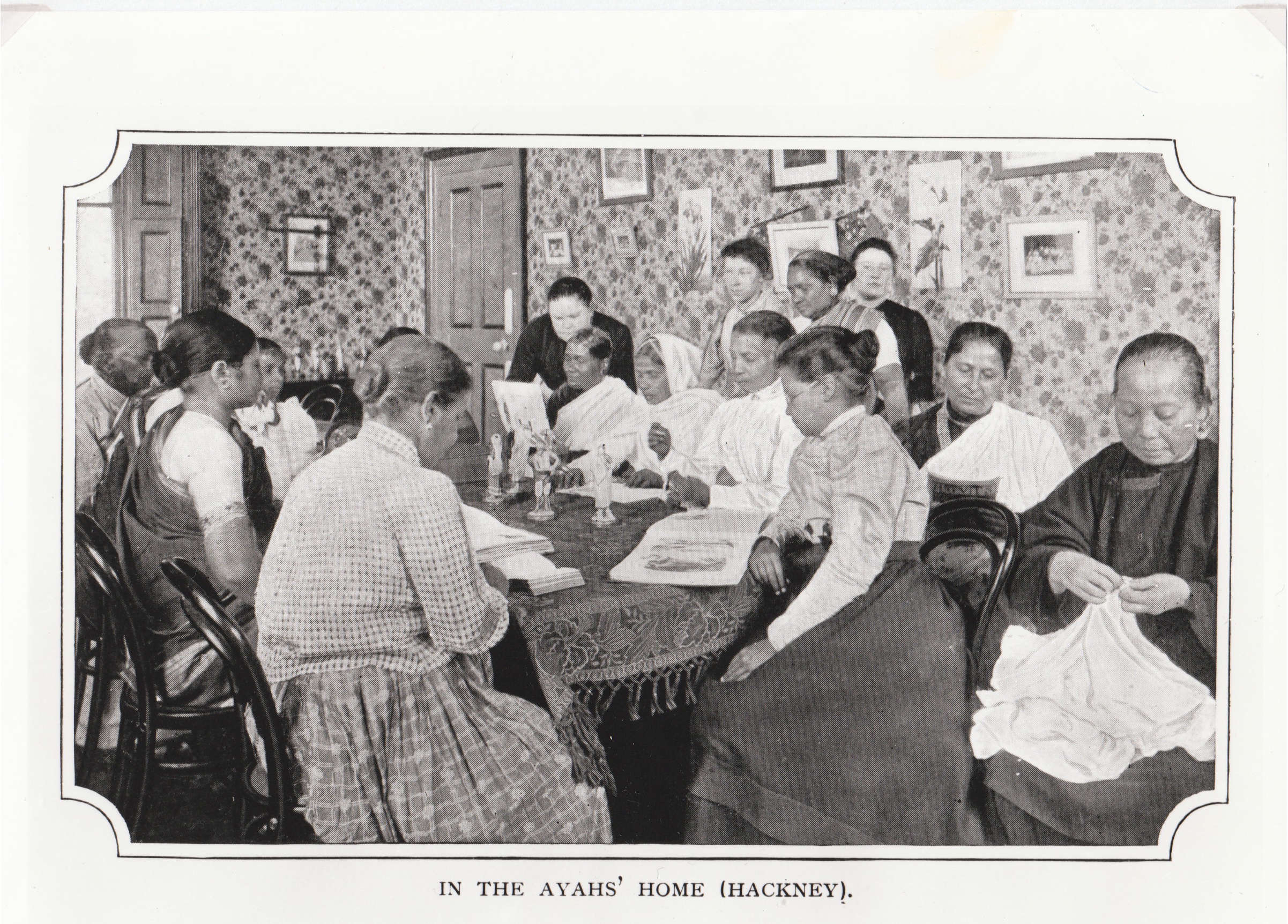
One such effort was the Ayahs' Home in London. It's unclear exactly when the Ayahs'  Home started (one record indicates it was as early as 1825) but there definitely was one established in 1891 at 6 Jewry St, Aldgate in East London. Initially the Home was run by a committee of volunteer women. In 1900, the London City Mission took over and moved the Home to King Edward's Road. Its mission remained the same: to provide refuge and find return employment for abandoned Indian ayahs and Chinese amahs.

The Home would usually receive the return tickets from employers who no longer wanted to employ their ayah and then sell the tickets to families looking to hire an ayah for trips back to India. They would then use the funds from the sale to pay for the ayahs' room and board until they returned. Of course, when the London City Mission took over running the Home, they used it as an opportunity to convert the ayahs to Christianity. While it wasn't an ideal solution, it was more effective than most to help these women.

Sources:
Ayahs, Lascars, and Princes: The Story of Indians in Britain 1700-1947 by Rozina Visram
https://www.thefridaytimes.com/ayahs-home-london-1921/
https://en.wikipedia.org/wiki/Ayahs%27_Home
http://www.open.ac.uk/researchprojects/makingbritain/content/ayahs-home
https://www.ourmigrationstory.org.uk/oms/a-home-for-the-ayahs-https://www.bl.uk/learning/timeline/item124195.html
https://www.andrewwhitehead.net/blog/the-ayahs-home-in-hackney
https://www.ststworld.com/ayahs-home-in-london-where-abandoned-indian-nannies-were-sent-to-live-out-the-rest-of-their-days/

Friday, July 6, 2018

The Englishman’s Ranch in Arizona

Good afternoon to one and all! My name is Sally Britton and this is my first post on the blog! Yay! I'm really excited to be here with everyone, to share my research and talk about history.

While the Regency era is my first and greatest writing love, I’m gearing up for a series set entirely in the American West, specifically in the mining regions of Southern Arizona. I’m uniquely placed for researching the most amazing old towns, from Fort Huachuca with its history of the Buffalo Soldiers to Tombstone, made famous by a disagreement that wound up leading to that infamous gunfight.


As I’ve been studying Arizona history, one ranch has stood out again and again in the history books. The Empire Ranch, founded in the 1870’s by an Englishman and a Canadian who really had no idea what they were getting themselves into. Talk about a fish out of water story! We love the Old West, but how often do we think about Englishmen trying to take it on?


Herbert R. Hislop (now there’s a name for you) came to North America with one goal: to create a cattle empire. He wasn’t a rancher, he had no experience with cattle, but he was a young man with ambition and America was the land of opportunity, even for Englishmen.


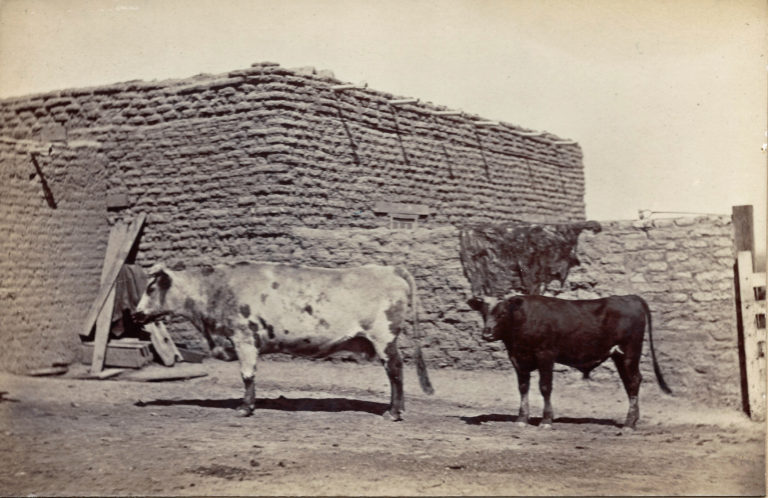
Herbert took the rails out to California, then came back down to Tucson, which isn’t much to look at today but back then was even less impressive. There was one dirt road, with adobe houses lining either side of it. But Herbert and his partner were not daunted and they started riding around looking for land.


He got pretty discouraged at what the desert had to offer. In a letter home, he wrote, “I would sooner have Thames water at London Bridge than the finest water here.”


An excerpt from his letters: “Rested and just looked round the town for horses to buy, but did not succeed. Had more offers of ranches, it is astonishing how quickly one’s business is known in a small place like this. Everybody has the best to sell. It is quite amusing to hear them talk and hear them contradict each other, running down each other as thieves and rascals, but we have our money and intend to keep it unless we get a place suited to our requirements and on reasonable terms.”


But then, in a little piece of undiscovered paradise, Herbert found the perfect land. It had protective mountains around it, was at a higher elevation and stayed cooler morning and night, and beautiful green grass that stretched as far as the eye could see. They bought up the ranch and then some cattle, and Herbert was suddenly learning the business first hand.


Walter Vail, from Canada, wrote about his partner: “I think it is just beginning to dawn on Hislop what roughing it means but I am in hopes he will not give in if he should it would place me in an awkward position.”


This was the age of rustlers, of the western forts springing up, of the calvary riding across the desert after ne’er-do-wells! And Herbert was in the thick of things. He started a tradition at the ranch that held on for many generations, and kept him and those who came after out of harm’s way. The very first time Herbert had a gang of men ride in on one of his camps, instead of bristling up and getting defensive, he invited them all to dine with him. With his good English manners, Herbert charmed the group of men, fed them bread he’d baked himself, and they parted as friends. Later he learned he’d entertained one of the meanest group of rustlers around.


Herbert fed everyone, because his mother had taught him to be hospitable. Whether it was the Native Americans, Mexican vaqueros, or another rancher, they were treated to the best he had to offer. Because of that, the Empire was often spared when one group or another conducted raids.


What survives of Herbert’s experience is a wonderful wealth of letters he wrote back home to England. Those letters are a goldmine of information for researchers, a first-hand source of what life was like before the West was tamed. From adobe brick making to Decoration Day celebrations, Herbert recorded it all for his family living far from Arizona’s monsoon season and rattlesnakes.


Unfortunately, family business called Herbert home and he sold out to his partners. But with the fine start he helped them achieve, the Empire Ranch was founded and remains to this day a working ranch. I went out and toured the beautiful area, seeing the original house where Herbert lived with bats in his bedroom. And for decades after Herbert left, locals continued to call the Empire, “The English Boys’ Outfit.”


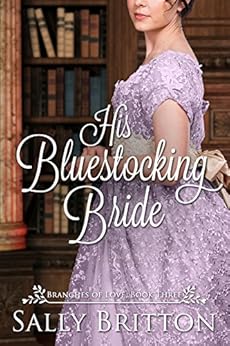
Until I can sink my teeth into these beautiful Arizona stories, I’m enjoying getting my Regency Romance series published. My latest novel, His Bluestocking Bride, spent a lot of time as a #1 New Release and Bestseller on Amazon.


It’s a story of a marriage of convenience that becomes so much more. But just you wait. My Arizona stories are a-comin’!

Wednesday, July 19, 2017

18th Century Herbal Remedies by Katherine Bone!


Katherine, here to talk about some research I've been doing on herbal remedies. Throughout time, herbs have made the difference between life and death on the battlefield and in every day living before the age of antibiotics. It’s hard to believe that people in previous centuries died from simple ailments like colds, fevers, and sinus infections, all minor inconveniences we take for granted every day.

Several of the characters in my historical romance books have needed treatment from medical professionals. (I shiver thinking about a diagnosis which led to bleeding or the application of leeches when we know today that blood cells increased the ability to fight off disease.) Thankfully, medicine has come a long way during the 20th Century, and strides are being made in the 21st Century on a day-to-day basis. But since my books take place during the Napoleonic Wars, 1795-1815, my characters are limited to what was available to them at the time.

Here are just a few herbs I’ve discovered in my research, and their medicinal properties:

Adder’s Tongue: Well-known by country folk. Fresh leaves bring down swelling and limit inflammation. When gathered with morning dew, the leaves can be set in a room filled with fleas. Fleas are drawn to leaf and can then be cast out. Found growing in April and May. Seeds ripened in September.

Archangel/Dead Needle: Heals ulcers and fresh wounds and keeps them from spreading. Helps draw out splinters and soothes burns. Bruise herb with salt, vinegar and hog’s grease. Found almost everywhere, but prefers wet ground.

Bifoil: Sweet herb used for wounds, new and old. Found in woods and copses.

Bird’s Foot: Small herb that cures ruptures. Ingest as a drink or apply to surface. Good when ingested to break up kidney stones. Best used as ointment or plaster on wounds. Found on heaths and untilled land.

Blessed Thistle/Carduus Benedictus: Cures sores, boils, and itch. Drink concoction.

Borage and Bugloss: Well-known to gardeners. Leaves and roots used in fevers to defend the heart and expel poison or venom. Juice is made into a syrup and is used with other cooling, opening, cleansing herbs to open obstructions and cure yellow jaundice, and mixed with fumitory, to cool, cleanse and temper the blood. Found in the wild and grows plentifully near London between Rotherhithe and Deptford by the ditch.

Colewart/Herb Bonnet: Wholesome herb. Good for chest or breast disease, pains, stitches in the side, and expels crude and raw humors from the stomach. Congeals blood resulting from falls and/or bruises. Good for healing wounds. Roots are boiled in wine and imbibed. The herb is also good for washing and bathing wounds to remove infection. Found in the wild, under hedges, and pathways in shadowy fields.

Devil’s Bit: Grows two feet high with narrow, smooth, dark green leaves. Herb or root is boiled in wine and ingested for plague, disease and fever, and poison. Add honey of roses for swelling. Eases a woman’s pain during menses, helps resolves gassy issues, and expels worms. Found in wild dry meadows and fields about Appledore, near Rye, in Kent.

Elecampane Root: Dried root made into powder and mixed with sugar is good for kidney stones, bladder issues, and stopping woman’s courses. Boil root in vinegar, beat afterward, and then make an ointment with hog’s suet or oil of trotters for scabs and itching. Heals putrid sores. Found in shadowy, moist ground in dry open borders and fields. Flowers end of June-July. Seeds ripe in August.

Foxglove: Used by Italians to heal wounds. Bruise leaves and bind wound. Juice used to cleanse sores. Combine sugar or honey to purse/cleanse body, and tough phlegm and to open liver and spleen. Found growing on dry sandy soil. Flowers July. Seed ripe in August.

One Blade Root: Half a drachm/powder of roots. Add to wine or vinegar. Good for poison and infection. Make a compound balsam for wounds and burns.

White Briony Root/Tetter Berries: Wild, rampant in hedges. Leaves, fruit, and root, cleanse old sores, and combat running cankers, gangrenes, and tetters (Called Tetter Berries by country folk) Use powder of dry root. Apply to skin of broken bones, foul scars, scabs, mange, and gangrene.

Wood Betony: Bruise the green herb and apply to wound, or make a juice and ingest. Good for any wound in the head or body. It will heal and close up veins or cuts, and mend splinted broken bones. Found in the woods and shady places.

Or if you’re Cornish, you might prefer to try these remedies:

Mundic ore: Miners applied Mundic to a cut and always washed an injury in water that ran through mundic ore.

Chamomile: Dry flowers and make into a tea to cure an upset stomach.

Mustard: Boil mustard with a pint of beer to cure rheumatism.

Dock Leaf: Rub dock leaf over the stings of nettles.  

Boosening: The cure for madness is to immerse a person in water to the point of drowning, and then repeat.

I pray we never have to resort to picking herbs to combat disease and discomforting ailments. But if we do, I’d like to have these herbs in my garden. Wouldn’t you?

Resources:


Culpeper’s Complete Herbal by Nicholas Culpeper


Are there any herbal remedies you’d like to add?


Friday, October 2, 2015

Carriage Accidents Cliche?


Throughout most of history, travelling, especially long distance, was a dangerous undertaking. Some of the many dangers a traveler in Regency England faced included highwaymen attacks, most of which only resulted in loss of valuables but often injury and death as well. To offset this risk, the wealthy generally had armed outriders who rode horseback in front and behind the carriage to guard and protect them but not everyone could afford that and sometimes highway men attacked in alarming numbers.

Travelers also faced broken down carriages which caused delays and inconveniences and injuries, especially if their coach traveled at high speeds at the time of the malfunction. In addition, weather accounted for difficulty and danger. There are accounts of passengers riding on the top of a mail coach arriving frozen to death. But by far the most dangerous part of travel came from carriage accidents.

Now, don't roll your eyes. I've heard readers complain that it's too easy to kill off a character by arranging a convenient carriage accident so that they have become cliché. However, as cliché as it may seem, carriage accidents were every bit as common as car accidents are today. And since I've been in seven car accidents, either as a passenger or as a driver, ranging from minor fender benders to car-totaling collisions, and several people I love have suffered life-threatening injuries as a result of car accidents, I'm painfully aware how frequently that happens.
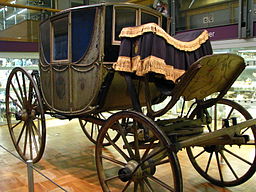
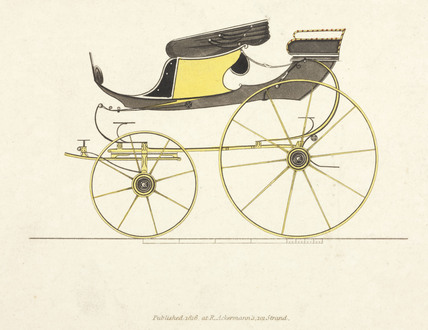
High_flyer_phaeton_carriage,_1816
Just as there are many reasons for car accidents today, carriage accidents could be caused by any number of difficulties. Traveling at high speeds increased the likelihood of a major wipe out. (No, that’s not a Regency term J High-perched carriages such as the High-flyer phaeton were top heavy and easily overturned, especially in the hands of an unskilled driver. But carriages in general were subject to all kinds of problems and breakdowns. Maintenance was up to the coachman, but if he wasn’t especially diligent, there were any number of parts to a carriage that could break and cause accidents.

Roads were another cause of difficulty. They were poorly maintained, often muddy, rutted, narrow and windy. They were also snowy or icy. Toll roads usually fared better, but not always. Also, the horses themselves could throw a shoe or stumble over a rut or uneven ground which posed a threat to the carriage.

Other drivers were some of the greatest perils on the roads. There were no speed limits, and no driver’s licenses, and driving while intoxicated wasn’t policed. Drunk drivers or young dare devils careening around bends caused an alarming number of accidents. And since there were no seat belts or crash safety engineering, passengers could be thrown around or crushed or ejected.

It paints a terrifying picture, doesn’t it? The next time you read a book where the heroine’s parents died in a carriage accident, remember that they were an alarmingly common and therefore very realistic form of premature death. Instead of rolling your eyes and uttering the dreaded C word, nod sagely and applaud the author’s realism.

Friday, March 1, 2013

The Language of Fans

by Historical Romanced Author Donna Hatch
www.donnahatch.com

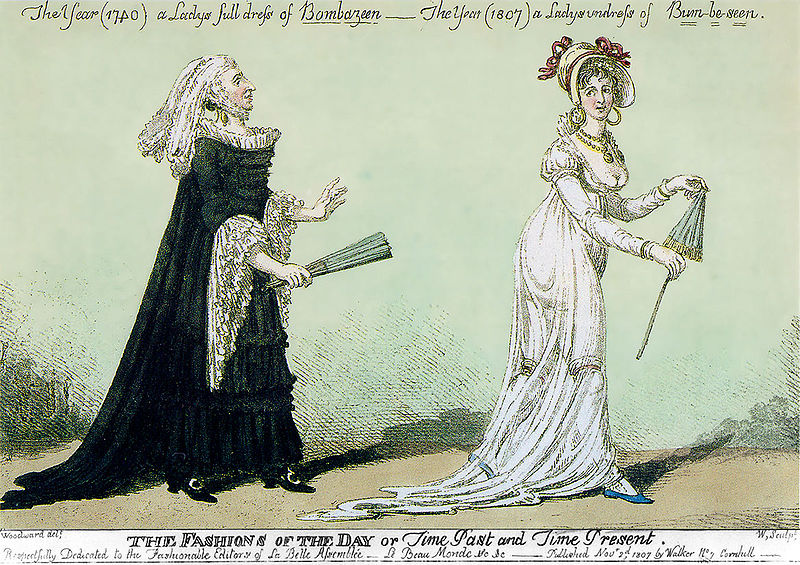
File:1807-pseudo1740 Fashion-contrast Bombazine-pun.jpgFans have been used as both a fashion accessory and a useful tool of staying comfortable for hundreds of years. Nearly every culture has a fan of some sort and the Regency Era, the time period in which I base all my romance novels, is no exception.


Unfortunately, the sources I read don't agree on what each action means. For example,  according to one source,* to fan slowly means "I am married." But according to another** to fan slowly means, "Don't waste your time; I'm not interested."

Likewise, according to one***, fanning oneself quickly means "I am married." But yet another ****says the same action means" I love you so much."

Shrug.

Also, the modern reader might wonder why go to all the trouble of learning such an elaborate language? But I think it might work well for the very shy, the very tongue-tied, or the person who needs to get the message across but fears coming on too strong. Also, telling a man she's not interested in him might be easier to say in fan language than in speaking. How many times have you told a guy who asked you out that you were busy when you really wanted to tell him to buzz off?

So, unless I can make friends with Dr. Who and jump into his time machine to find out what, exactly, these gestures really meant during the Regency Era, we may never know. Still, here are a few hand signals on which my sources seem to agree:

Touching right cheek: yes
Touching left cheek: no
Touching finger to tip of fan: I wish to speak with you.
Running fingers through the fan's ribs: I want to talk to  youResting the fan over the heart: my love for you is breaking my heart
Resting fan NEAR the heart: you have won my love
Resting fan on lips: I don't trust you.
Twirling in left hand: we are watched
Twirling in right hand: I love another
Open and shut: you are cruel
Open wide: wait for me
Presented shut: do you love me?
With handle to lip: Kiss me
In right hand in front of face: Follow me
Drawing across the cheek: I love you
Placing on left ear:  Leave me alone
Placing closed fan to the right eye: When may I see you?
Covering left ear with open fan: Do not betray our secret.
Changing fan to left hand: I love another.

So far, all the heroines in my Regency Romance novels have done with a fan is to keep cool or use it as a shield behind which they speak quietly to another. I admit, however I'm intrigued by the subtle, demure way a woman might have communicated to a man without speaking a word. She'd just have to time it when he's looking and not one else is, or her secret feelings would no longer be secret.


Sources:
*http://www.allhandfans.com/handfans/levels/language_of_the_fan.htm
**http://myhandfan.com/language.htm,
***Minute Company
****myhandfan.com

Sunday, June 24, 2012

History of Ladies' Swimwear


During the 18th century, public bathing in England and France became an accepted leisure activity, as beaches gradually were seen as places of recreation and not just therapeutic treatments for the rich who could afford seaside resorts. Thus, the need for women’s swimwear began.
The first ladies swimwear was probably nothing but a smock. Practicality and modesty governed the design, even though women and men bathed in different areas of the beach. Still, so as not to run the risk of exposing a bare leg, women sewed weights in the lower part of their garments to keep the fabric from floating to the surface.
In the 19th century, even in the U.S., swimming became a popular recreational pastime. When those two railroad tycoons, Henry Plant and Henry Flagler, built railroads in Florida, the beaches became more accessible to the general public, and swimwear became an item in every woman’s wardrobe.
A blouse, bloomers, and black stockings were acceptable beach wear. By the turn of the century, loose, one-piece suits became fashionable, following the lead of the Austrian swimmer, Annette Kellerman, who was arrested in the U.S. for wearing one, deemed immodest and daring. A few years later, though, these same suits came to be accepted.
In the 1950s, the one-piece, snugly fitted “glamour-girl” suits could be seen on beaches throughout the U.S., followed shortly by two-piece suits, which eventually evolved into bikinis, and later, thongs.
The evolution in women’s swimwear was slow in coming, mainly due to our Puritan roots, but there’s precious little we can remove from here on without wearing our birthday suits. Since that was the “earliest” suit, we have almost come full circle.

Wednesday, June 15, 2011

Ladies' Footwear in the 1800s


19th Century Footwear
For my current work-in-progress, I had to research nineteenth shoe fashions, and I learned that during the 1800s, women's shoes became more varied in style than those of men, for the first time (see two-toned shoes in photo to the right, 1860s Balmoral boot).
During Victoria's long period of mourning for Albert, dark shoes came into fashion and remained popular during the latter decades of the century, when women were not supposed to draw attention to themselves. From the images, though, it's clear they found a way to bring attention to a slim ankle, even while wearing the modestly dark colors.
Styles changed with each decade, although boots were pretty much the standard for ladies' footwear. At first, boots had side laces, with sometimes up to sixteen lace holes, like these to the right, (Courtesy Bata Shoe Museum, Toronto). The boots were most often flat-heeled. Later, during mid-century, front lace boots were popular, like the ones in the photo to the right. Later, during the latter part of the century, button boots with openwork were all the craze, allowing the male observer to get a glimpse of the fashionable hosiery worn beneath.
I love shoes, and have too many, as most of us do, but after looking at some of these boots, I almost wish they would come back in fashion, because I love the look, flirty and sensible at the same time.

Wednesday, February 2, 2011

Cosmetics in the Past


Makeup, in one form or another, has been used since before the dawn of Christianity. In ancient tombs, archaeologists have found evidence of the use of unguents to hydrate the skin in the hot, dry climate of Egypt. In addition, Egyptians colored the underlid of their eyes with dark green, and blackened their lashes and upper lids with kohl. The ancient Greeks used mulberry juice to color their cheeks and lips, while other civilizations used concoctions made from beet juice or other berries.
In Rome, during the 1st century AD, citizens used kohl, too, along with chalk to whiten their faces, rouge to color lips and cheeks, and pumice to clean their teeth. Persians preferred henna to stain their hair and faces.
During the Victorian era, it was considered vulgar for women to use coloring on their faces, so when a young lady wanted to make a favorable impression on a suitor, she was inclined to pinch her cheeks and dab a little grease on her lips to make them shine.
Ladies were not the only ones to use makeup. Up until the middle of the nineteenth century, men wore rouge, and of course used talcum to whiten their wigs, when those hairpieces were in fashion.
George IV is said to have spent a small fortune on cosmetics, unguents and cologne.
Here are a few cosmetic recipes used in the late 1800s:
For freckle removal, squeeze the juice of chickweed, and add three times that amount of water to the chickweed juice, then bathe the skin ten minutes morning and evening.
To wash the complexion: Take one teaspoon flour of sulphur, and to that, add a wine glass of lime water well shaken. Mix in one-half glass glycerin and a full glass of rose water. Rub on face nightly before bedtime.