Search This Blog

Showing posts with label bathtubs. Show all posts

Wednesday, September 7, 2022

Bathing in the Middle Ages by Jenna Jaxon

Last month I took a look at bathing and bathtubs in the Regency period. This month I’m going backward in time to examine bathing during the Middle Ages.

The first thing to affirm is that yes, people did bathe during the Medieval period, using several different methods.


A lot depended on your status in life as to how often you took a bath. The lowest classes who did manual labor likely bathed the least. They would probably not have had the means or money to fetch buckets of water, heat the water, and purchase a tub and then bathe in it. Such laborers and the poorer people would have availed themselves of a dip in a pond, lake, or stream during the warmer months. Otherwise, they may have taken wash pan baths, washing as best they could during the colder months.

Middle class people may have had enough money to own a tub and employ a servant to fetch and heat the water. They might also have had the fees to go to public bath houses (a holdover from Roman times). These houses were very popular but had a reputation for lewdness. The sexes weren’t always separated, and prostitutes were known to frequent them.

The nobility would have had a tub for the household to use (perhaps more than one, depending on the


size of the family). Tubs were a status symbol for the wealthy. They would be lined with linen fabric to protect tender skin from splinters if the tub was wooden, or to protect it from seams if the tub was made of metal.

Royal households would certainly have availed themselves of the bath. Documents show that Charlemagne loved taking baths and not just alone. He’d invite relatives, guests, and sometimes servants and attendants to bathe with him. King John of England took a bathtub with him when he traveled.
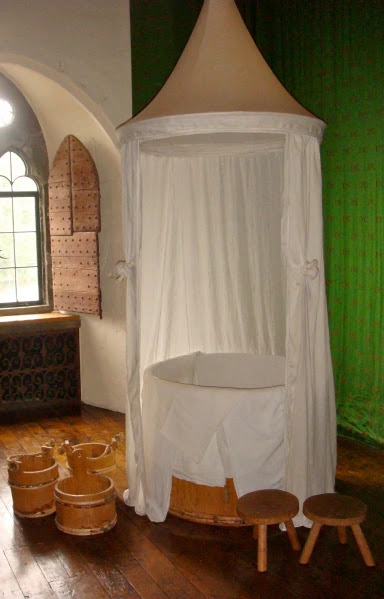

One additional note of interest: men usually bathed naked while women wore a shift or chemise, whether for warmth or modesty is difficult to tell.

So bathing, in all its various forms, was definitely a large part of life during the Middle Ages.


Resources:

Chase, Loretta. “Queen Caroline Takes a Bath.” Two Nerdy History Girls, July 11, 2011.

“Did People in the Middle Ages Take Baths?” Medievalists.net, April 2013.

Peardon, Keri. “Bathing in the Middle Ages.” Vampires, Ladies, and Potpourri, June 14, 2012.

Wednesday, August 3, 2022

Bathtubs in Regency England by Jenna Jaxon


At the end of the 18th century, attitudes toward bathing began to change. Beau Brummel, a Regency fashion plate, was an advocate of bathing often and he was a major Regency “influencer.” About that same time, in 1791, John Wesley gave a sermon “On Dress” in which he made the acclamation, “Cleanliness is next to Godliness.” People took these and other ideas on cleanliness into consideration, making the Regency period of transitioning into good bathing habits.


Basin and Ewer

Actual bathtubs seem to have been rare and in the lower classes--all but non-existent. Instead, they used a basin and  a ball of soap to clean themselves, rather than an immersion, although in summer lakes and ponds served as natural bathtubs. For the middle classes, the basin and ewer were also standard equipment, although the wealthier families who could afford a bathtub would likely have one of metal or wood.

The aristocracy would have certainly had bathtubs,

Shower-Bath at Scarborough

again of copper or wood, that could be set up in a chamber (often a bed chamber), filled by servants who would lug water from a well outside, into the kitchen to be heated, then lugged upstairs and poured into the bathtub. Little wonder none but the wealthiest could afford such a luxury. The tub was usually lined with linen fabric, to keep the bather from getting splinters from a wooden tub or keep from sticking to the surface of a metal tub. Water was often left near the fireplace to warm the water when it cooled or for rinsing off at the end of the bath.

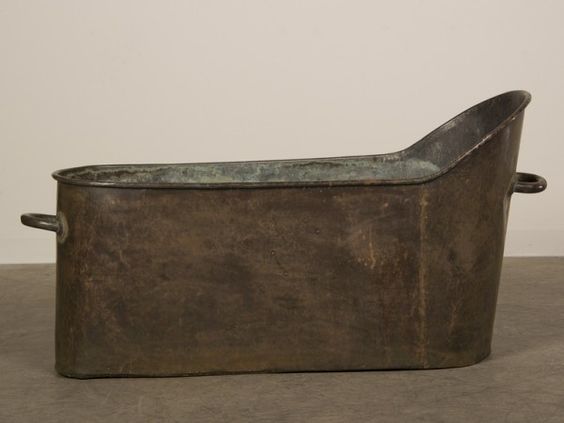
Regency metal bathtub


Some members of the Regency upper classes actually possessed showers. The contraption was first noted around 1810, “around 12 feet high…a fancy bathing apparatus…[a] pump lifted water from tank

Regency Shower

at bottom through pipe to top tank, water could be used over and over again,” according to Life Magazine.

So during the Regency, people were beginning to take the business of cleanliness much more seriously and began to change their bathing habits accordingly.


RESOURCES:

Bourne, Joanna. “Keeping It Clean—Georgian and Regency Bathing Customs.” WordWenches Blog, August 3, 2011.

Chase, Loretta. “Taking a Shower in the 1800s.” Two Nerdy History Girls Blog, June 22, 2015.

Lahildin. “Staying Clean in Regency England.” October 17, 2014.

Life Magazine.

Vic. “A 19th Century Regency Era Shower.” Jane Austen’s World, November 11, 2010.