Search This Blog

Showing posts with label historical romance. Show all posts

Wednesday, August 16, 2017

The Art of Self-Defense by Katherine Bone!


Katherine, here! I’ve been researching historical forms of self-defense for my September 7th release, The Mercenary Pirate. My hero is inspired by Wolverine as part of The Heart of a Hero Series. To create more riveting and historically correct fight scenes, I decided to learn more about language and terms of the times, hand-to-hand fighting techniques, and how women protected themselves in the 19th Century. (My heroine is a combination of Storm and Rogue for this series, which reimagines superheroes in the Regency era! And I'd like to mention that the first book in the series is absolutely FREE!)

Today, I’d like to share some great books I found on the subject.


This book includes ancient systems of salle d’armes (methods of defense) in battle and affairs of honor: Spanish knife, German schlager, French quarterstaff, rapier, sword, bayonet, lance, dagger, cloak, staff, cane, saber, and so forth, originating in Europe and Asia. The antiquated techniques were expanded upon by fencing masters of the times, men like Swedish fencing-master Ling, German born Maȋtre d’Armes Frederick Rohdes, famous boxing champion William Thompson, also known as ‘Bendigo,' and French fencing master Augustin Grisier.

Colonel Monstery trained well-known actors Junius Brutus Booth and his brother Edwin Booth, older brothers of John Wilkes Booth. He also mentored the greatest 19th Century Spanish swordswoman that ever was, Ella Hattan, known as ‘Jaquarina.'

Fighting styles of the era included the German Turner system, British purring (shin-kicking), Welsh jump-kicking, Danish head-fighting, and grappling, kicking, biting, scratching, and eye-gouging that made up the brutal American style. Every technique took incredible physical and mental concentration, vigor and power.

Self-Defense Terms to remember:

Advance: “Double the distance between the feet… And then bring up the rear foot to ‘Guard’ distance.

Chancery: To get an adversary ‘in chancery’ is to get him in a head-lock or a choke hold.

Cutting: “A malicious way of striking,’ effective only when used with gloves, “as it forces aside the padding of the glove, and the blow comes with the edge of the hand, made harder by one fold of leather.”

Espadoning: “An improvement on the moulinets, as it simulates the blows more closely… Espadoning is borrowed from the sword exercise, and is meant to stimulate the blows exactly. It accustoms the pupil to keep his hand high in striking, and to end his blow with the point lower than the hand in all high cuts.” The word ‘espadon’ is taken from the obsolete French, and refers to a broadsword or saber.

Evasion: Moving “out of the line of an enemy’s blow … faster than the blow can be sent,” while at the same time coming “within striking distance of the opponent without danger to yourself.”

Feint: Feints are “simulated attacks made at various points in order to draw the perry, while the real attack is directed at the opening left by it.”

Guard: “This is the position best calculated for attack and defense, and is that which a sparrer assumes in front of an antagonist.” In fencing, this refers to the “position of person and weapon which the most ready for both attack and defence.”

‘The Mark’: “The pit of the stomach.”

Moulinet: A circular cut with the broadsword or saber. Depending upon the type of weapon used and the style of fencing, moulinets could be executed from the wrist, elbow, or shoulder.

Parry: “The movement of the weapon which wards off or stops a thrust or cut.”

Purring: A British style of fighting characterized by shin-kicking, sometimes (but not always) utilizing grappling holds, and typically practiced while wearing heavy clogs or iron-toed boots.

Retreat: “Double the distance between the feet by stepping back with rear foot, then drawing back the forward foot to ‘Guard’ distance.”

Rough-and-Tumble: A no-holds-barred, historical style of American fighting characterized by punching, kicking, grappling, hair-pulling, scratching, biting, and eye-gouging.

Savate: A form of French street fighting that developed in Paris and Marseilles during the 19th Century. Also known as Boxe Française.

Spar: “The correct definition of the word Boxing is striking with the fist. That of Sparring is the practice of improving the art. This term is also applied to those habitual motions of the arms during a contest, while watching an opportunity to strike.” Also, “To make the motions of attack and defense with the arms and closed fists; use the hands in or as if in boxing, either with or without boxing-gloves; practice boxing.”

Whipping: A method of striking, effective only when used with gloves, “executed with the end of the fingers after a blow has been parried, with a flirting motion of the wrist over the guard, so as to catch the opponent’s face with the leather of the glove, and graze the skin.”

Here are some other books I’m digging into:


Old Sword Play, Techniques of the Great Masters by AlfredHutton, a cool little book originally published in 1892.

The Fencing Master, Life in Russia by Alexandre Dumas, originally published in three volumes in 1840. I have yet to read through this masterful work. And another book on my list is Alexandre Dumas’s The Black Count: Glory, Revolution,Betrayal, and the Real Count of Monte Cristo. The book is about Alexandre’s father, General Alex Dumas, and is set in 1806 (my period). Can’t wait to read this! General Dumas was the basis for Alexandre’s Musketeers and Count of Monte Cristo.

Pugilistica: The History of British Boxing Containing Lives of the Most Celebrated Pugilists by Henry Downes Miles, a reprinted version from 1906. This book lists the prize-winning boxers throughout the early to mid-19th Century, 1814-1835.

Pugilistica mentions gambling sums and details where these fights were held (The Fives Court, Castle Tavern, Wimbledon Common are examples). I can’t wait to read this book!

Writing action/adventure romance set in the Regency period, usually involving swashbuckling pirates. And I’m always in the market, as it were, to learn as much as I can about fighting to enhance a reader’s experience.

What are some of your FAVorite fight scenes via movies, television, or books?

Wednesday, June 21, 2017

Pirate Language in the Georgian Underworld by Katherine Bone!


Writing historical romance is a gratifying experience that can oftentimes be difficult too. An author makes choices that help modern readers understand the way people spoke in historical times, but must also season the story with historical words that transport readers to that era. Which words to use and when to use them? Well… that’s a talent every writer must master. Fortunately, several books are available to help authors achieve storyline Zen.

My go-to book for pirate jargon has always been THE PIRATE PRIMER by George Choundas. A fascinating book! A dash of ‘You’re wasting words’ and a smidgeon of ‘What maggot’s burrowing under your periwig?’ goes a long way. (Pirate!)

Most Regency authors tackle stories of the upper crust. Who doesn’t love daring and dashing dukes, marquises, or earls who champion the day? Even historical aristocrats spoke in gentleman’s code. Several of my favorites include ‘Banbury stories’ (falsehoods), ‘befogged’ (confused), ‘dicked in the nob’ (crazy), and ‘land a facer’ (punch in the face).

Word substitutes like these aren’t as difficult for the average reader to understand. But what happens when characters hail from the seedier side of society?

Enter the book CANT, A Gentleman’s Guide, The Language of Rogues in Georgian London. Love this introduction to the book!

“Planning to go to Georgian London? You’ve collected some period money, got yourself kitted out with the appropriate clothes and had your inoculations. If not, go and do it right now.”


In CANT, the language of the London Underworld, readers are taken to places where the poor, thieves, rogues, mayhap pirates and murderers roamed. If one couldn’t speak the speak, one might ‘Catch a Cold’ (get into trouble). Think Charles Dickens’s Oliver Twist, though it takes place 70 miles north of London in 1837, readers can relate to the characters’ accents and seedier environment.

Everyday words used in shabbier districts, not far from where aristocrats dwelt, are definitely contrary to the modern ear, confusing, strange, and oftentimes amusing. Used sparingly modern readers relate to the characters, setting, and plot.

Here are a few that my pirates would enjoy:

Rum Prancer Do you picture a dancing pirate on the deck with rum in hand? Get ready for this. Rum Prancer refers to a fine, beautiful horse.

Rum Kicks Sounds like something a pirate might do while hanging from a noose at Tilbury Point, but we’d be wrong. Rum Kicks refer to gold or silver-brocade breeches.

Rum Clout Something a pirate might have when the rum is never gone. Nope! Rum Clout means a fine silk handkerchief.

Rum Nab The old nab the rum and run trick, eh? Could work, except Rum Nab refers to a good hat.

Rum Nantz A man named Nantz who likes to drink rum? Wrong. Rum Nantz refers to good French brandy.

Words a pirate needs to know in a London Underworld tavern:

Taverns:

Tavern/Ale House: Bowsing Ken

Alehouse/Inn: Touting Ken

Obscure Tavern: Hedge Tavern

Rogue’s Tavern: Flash Ken; Flash Crib

Beggar’s Tavern: Mumpers’ Hall

Rendzvous Tavern: Stop Hole Abbey

Fleet Street: The Mitre

Covent Garden: The Rose Tavern

Whitehall and Charing Cross: The Rummer

Pall Mall: The Star and Garter

Tavern Drinks:

All Nations: Collection of leftovers collected from bottles and bowls

Bragget: Mead and ale sweetened with honey

Cobbler’s Punch: Treacle, vinegar, gin, and water

Grog: Rum and water

Huckle my Puff; Twist: Beer, eggs and brandy, served hot

Kill Devil: Rum

Punch: Spirits, water, lemon and sugar

Purl Royal: Canary wine with a dash of wormwood

Toddy: Rum, water, sugar, and nutmeg

Vessels and Quantities:

Pint or Quart: Gage

Half Pint: Nip; Size of Ale Cogue; Shove in the Mouth

Bottle: Bouncing Cheat

Small Bottle: Bawdy-House Bottle

Large Bottle: Soldier’s Bottle

Quart Bottle: Scotch pint

Drinking Glass: Flicker; Romer

Drinking Bowl: Bubber; Whiskin

Silver Tankard: Clank

Rum Clank: Large silver tankard

Clank Napper: Thief who runs away with tankard

Full glasses or bowls: Bumpers or Facers

Empty bottles: Dead Men or Marine Officers

Drunk much? Here are various ways to say it:

Lightly Intoxicated: Bit by a Barn Mouse; Chirping Merry; Hickey; Mellow; In a Merry Pin; Tipsy

Getting drunker: Drop in His Eye; Half Cut; Half Seas Over; Sucky Boosey;

Drunk: Been in the Sun; Corned; Got into the Crown Office; Cup-Shot; Cut; Disguised; Flawed, Flustered; Foxed; Hocus; In his Altitudes; In the Gun; Nazie; Pogy; Pot Valiant; Bought the Sack; Top Heavy

Drunk Man: Bingo Boy; Ensign Bearer; Guzzle Guts; Piss Maker, Swill Tub; Tickle Pitcher; Toss Pot; and Vice-Admiral of the Narrow Seas (‘a man who urinates under the table into his companion’s shoes’)

Drunk Woman: Mort

Very drunk: Top Heavy Clear; Deep Cut; cut in the Back Leg; Drunk as David’s Sow; Drunk as a Wheelbarrow; Drunk as an Emperor; Floored; Maudlin Drunk; Surveyor of the Highways; Swallowed a Hare

Sick: Cast you your accounts; Cat; Flash the Hash; Cascade; Shoot the Cat; Flay the Flea; Flay the Fox

Hung over: Crop Sick; Womble-Ty-Cropt

Rat: Someone who gets taken up by the Watch and forced into an overnight stay


And there you have it! Adding ‘cant’, ‘Flash Lingo’, ‘St. Giles’ Greek’, and ‘Pedlars’ French’, to stories provides that extra level of depth needed to help readers travel back in time. As a historical author, I’m grateful to George Chaundas, Stephen Hart, and many other researchers for their brilliant and thrilling books. Like good wine before its time, there’s nothing better than ‘Faking a Screen’ (writing) and ‘Snilching’ (learning to behave) in roguish circles.

Wednesday, October 5, 2016

Affaires of Honor and Regency Dueling

by Donna Hatch
www.donnahatch.com

In England, dueling was part of a long-standing code of honor, far beyond mere tradition. Gentlemen took their dueling very seriously; they would rather die than be dishonored. Does your heart go pitter patter just at the sound of that? I admit, at time, mine does. How many man that honorable do you know? Okay, maybe we'd call it misplaced pride, or an overdeveloped sense of vengeance, but hey, that was a different world with a different set of rules. And yeah, I'm glad they don't do it these days.

By the Regency Era, dueling was outlawed. However, duels still happened more frequently than many people knew. The problem was, because courts were made up of peers, they were reluctant to charge another peer with murder as a result of a duel. There is a case where one nobleman was charged with murder and tried, but used the defense that his behavior was gentlemanly and honorable, meaning that he acted within the proper code of conduct. He was acquitted by his peers.

If they were socially equal, or at least similar, the gentleman who was offended would tell the man who’d wronged him that he should choose his “second,” a close friend or family member who would look out for his best interests. If he was really incensed, he might slap him with his glove, but that was considered extreme and beneath gentlemanly behavior, as it was the ultimate insult and probably resulted in a fight then and there.

The procedure for issuing a challenge was very specific. A gentleman never challenged a social inferior. For instance, a gentleman of significance with ties to the aristocracy or nobility would never challenge a commoner, such as a blacksmith or a farmer. Also, if there was a significant age difference, the duel would not be extended.

After the verbal challenge – or perhaps warning would be a better word – was issued, depending on the severity of the offense, the other might have a choice; he could either apologize, or he could accept. Sometimes, the apology would not be accepted, often if there were a third person who’d been wronged such as a lady's honor. (Okay, call me crazy but that almost makes me want to swoon.)

The next day, supposedly after heads had cooled, the wronged man who wished to duel would send his “second” with a written letter challenging the duel. The other may chose to apologize or accept the challenge. If accepted, he would choose swords or pistols and name the time and the place. In my humble opinion, swords was a more more gentlemanly way to duel. If they used pistols, they only used one shot which seems too much like cold-blooded murder. I'm sure they didn't always shoot to kill, but there was some unwritten rule about the shot purposely going wide and that being bad form. *shrug*

When the allotted day arrived, they met, probably in a remote place where they wouldn’t be caught by the law, and the seconds inspected the weapons to be used. A final opportunity for an apology could be given. If not, the seconds decided if the duel should be fought to (a) first blood, or (b) until one can no longer stand, or (c) to the death. Once that was decided, the opponents dueled and the seconds watched to insure that nothing dishonorable happened.
If during a duel fought by swords, one of the duelers becomes too injured to continue, occasionally the second would step in and duel. Sometimes, the seconds were hot-headed or very angry (loyal?) and ended up dueling each other as well. To my knowledge, this never happened is the duel were fought with pistols.

As horrible as it sounds to our modern selves, these gentlemen took their honor very seriously, and considered death preferable to living with the label of a coward, a label that would follow them and their families for years.
And, maybe it’s me, but there a certain romance about a gentleman brave enough and protective enough to be willing to risk death defending my honor from another man who’d besmirched it.

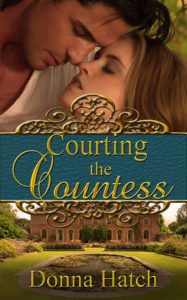
A duel largely part of what leads to all the trouble for my hero in my Regency Romance novel, "Courting the Countess" and causes events he wishes desperately he could change, especially when the duel goes awry and causes pain to an entire family.
I'm sure glad my husband isn't likely to try dueling...


When charming rake Tristan Barrett sweeps Lady Elizabeth off her feet, stealing both her heart and a kiss in a secluded garden, her brother challenges Tristan to a duel. The only way to save her brother and Tristan from harm—not to mention preserve her reputation—is to get married. But her father, the Duke of Pemberton, refuses to allow his daughter to marry anyone but a titled lord. The duke demands that Elizabeth marry Tristan’s older brother, Richard, the Earl of Averston. Now Elizabeth must give up Tristan to marry a man who despises her, a man who loves another, a man she’ll never love.

Richard fears Elizabeth is as untrustworthy as his mother, who ran off with another man. However, to protect his brother from a duel and their family name from further scandal, he agrees to the wedding, certain his new bride will betray him. Yet when Elizabeth turns his house upside down and worms her way into his reluctant heart, Richard suspects he can’t live without his new countess. Will she stay with him or is it too little, too late?

Order now on Amazon for Kindle.

Friday, September 30, 2016

London Season in Regency England

by Historical Romance Author Donna Hatch
www.donnahatch.com

If you've ever read a Regency or Victorian Romance novel, or even any British historical novel set in the 18th or 19th century, you've probably come across the word "Season" (capitalized). Season does not refer to winter or spring but rather to the social whirl among the upper crust of British society during the spring. The Season originally began as a way for the families of men serving in Parliament to amuse themselves while staying in London, and so it remained for generations. Most families did not travel to and from their country estates to London during the autumn or winter months due to the difficulty of travel. However, after Easter, they seemed to be ready for society.

The dates which Parliament met varied from year to year. According to noted Regency researcher and author, Regina Scott, the dates parliament met were as follows: Parliament was in session during the following times:
  • 1 November 1810 to 24 July 1811
  • 7 January 1812 to 30 July 1812
  • General election: 5 October to 10 November 1812
  • 24 November 1812 to 22 July 1813
  • 4 November 1813 to 30 July 1814
  • 8 November 1814 to 12 July 1815
  • 1 Feb 1816 to 2 July 1816
  • 28 January 1817 to 12 July 1817
  • 27 January 1818 to 10 June 1818
  • General election: 15 June to 25 July 1818
  • 14 January 1819 to 13 July 1819, before the 16 August 1819 Peterloo Massacre
  • 23 November 1819 to 28 February 1820 (special session because of the massacre but ending early because of the death of George III)
  • General election: 6 March to 14 April 1820
  • 21 April to 23 November 1820 (including a special session beginning the third week of August for the trial of Queen Caroline).
Parliament always went into recess for Lent, which precedes Easter, a time when the members of Parliament, also referred to as MPs, retreated to their country homes. When they returned to London after Easter, they often brought their families, especially if they had sons and/or daughters of marriageable age to participate in what was often referred to as the "marriage mart."

The focus was not always to find a spouse. Some families simply came to renew acquaintances and amuse themselves after wintering in the country. Regardless, the ton descended on London en masse. Activities varied but popular amusements were dinner parties, balls, musicales, attending the theater or the opera, visiting museums, going riding in the park, visiting private zoos, and riding in hot air balloons, to name a few.

Almack's Assembly Rooms
There were also the coveted vouchers for weekly balls at Almack's Assembly Rooms where the Patronesses kept a tight rein over who would and would not be granted entrance based on family connections and behavior. Young ladies wishing to dance the scandalous waltz had to first receive permission from the Patronesses. According to Regency researcher and author Candice Hern, the Patronesses were, Lady Jersey, Lady Cowper, Countess Leiven, Mrs. Drummond-Burrell, Lady Castlereagh, Lady Sefton, and Princess Esterhazy.

The Season in London was also a crucial event for the working class. People arriving in London needed servants for their London homes because they typically transported very few of their servants from house to house. If a family did not own a house in London, they rented a townhouse. They also shopped. A lot. Ladies absolutely had to have fine gowns as well as shoes, hats, gloves, reticules—you name it. The wealthy also went to the theatre and opera, which meant more performers were needed. As you can imagine, the cost to attending a Season in London was staggering, but most considered it a worthwhile investment if their children got married to a good match.

In short, much of the prosperity of London depended on the Season and the beau monde who peopled it. Merchants and craftsmen earned a living, and the wealthy amused themselves and secured the future of their line. It seems to have worked pretty well for most.
The London Season plays a major role in my upcoming book, Heart Stringsbut not in the usual way.
When forced to choose between marrying a brutish oaf or becoming another man’s mistress, Susanna flees to London with dreams of becoming a professional harpist. Entangling herself with a handsome violinist who calls himself Kit may be more problematic than sleeping in the streets.
With peril lurking in the shadows, Susanna’s imminent danger not only forces Kit to choose between his better judgment and his heart, but he must also embrace the life to which he swore he would never return.
Heart Strings is available now for pre-order Kindle and paperback.


Friday, August 1, 2014

Regency Lady's Companion

by Donna Hatch

Lady's companions play an indispensable role in the proper English lady’s life in Regency England. They act as the guardian of a young lady and her reputation, which can be so easily sullied by even the appearance of untoward behavior. Even the simple act of walking around without a proper chaperon could call into question a lady’s reputation. A mother or father, of course, are preferred guardians. But if a parent is unavailable, a companion is the perfect solution.

A lady’s companion is an overlooked and under-appreciated member of the household. She can be a relative, or a poor relation, perhaps a widowed or maiden aunt who is relying upon the kindness of her family. She must be older than the lady—younger companions simple wouldn’t do for a gently bred young lady.  I have heard of younger companions for old spinsters who are no longer considered marriage material, but young companions are probably more for companionship and help, than truly to guard the reputation of an older lady.

They not be related at all.  They may simple be a member of the gentry, usually educated and have good manners. Since there were paid companions, they could have been ladies whose family has fallen upon hard times which has forced them to find employment. Because there were few acceptable employment options for a member of the gentry or aristocracy, becoming a teacher, a governess, or if they were older, a paid companion were their most likely occupations.

A maid or other lower born servant is never a proper companion. They can be too easily bullied or bribed to disappear and thus no be a reliable guardian for a young lady’s virtue.

So the next time you read in a Regency romance novel about a companion, spare them a kind thought for their vital role to the fragile reputation of their young charges.

Wednesday, August 22, 2012

Giveaway: THE TROUBLE WITH MAGIC by Patricia Rice

Linda Banche here. If you haven't read a Patricia Rice book, now's your chance to win a copy of The Trouble with Magic, the second book of Ms. Rice's paranormal romance Magic series set in Georgian England. The Magic series is the story of the Malcolm sisters, all of whom have magic, and the non-magic Ives brothers.

Sourcebooks has offered a copy of The Trouble with Magic to one of the people who comment on this blog (US and Canada addresses only). And this time, I’m the one who will select the winner. So, leave your comments with your email address in the comment section.

And the winner is phastings! Congratulations, phastings, and thanks to all who came over.

Do you like paranormal in your historicals? I usually don't. The paranormal tends to overwhelm the history, and the book becomes a  paranormal historical rather than an historical paranormal. But some authors, like Ms. Rice, manage to keep the history foremost. I've read the first book in her Magic series, Merely Magic. My review is here.


My first Patricia Rice paranomal was Mystic Guardian, the first book in her paranormal Mystic Isle series, set in France during the French Revolution. The French Revolution isn't my cup of tea, so I took out the library copy. I read the first five pages and then ran out and bought the book and everything else of hers I could find. And then I waited in suspense until the other two Mystic Isles books came out. I have my copy of The Trouble with Magic on my TBR pile.

What are your thoughts about paranormal in historicals?

The Trouble With Magic: August 2012, Casablanca Classics

Is Her Magic a Gift or a Curse...?

All the Malcolms have some magic, but Lady Felicity's ability to read people's emotions simply by touching them or their possessions overwhelms her. She's reached a marriageable age, but how can she ever wed when she can see so clearly a man's guilty secrets?

Only He Can Tell the Difference...

Ewen Ives, itinerant rake and adventurous inventor, knows better than to underestimate the mischief of the Malcolms. But sparks fly when he encounters Felicity, and Ewen can't seem to refuse her plea for assistance...

PRAISE FOR PATRICIA RICE:


“Rice's enchanting book is truly spellbinding.” —Booklist

“You can always count on Patricia Rice for an entertaining story with just the right mix of romance, humor, and emotion.” —The Romantic Reader

“Patricia Rice's historicals are deliciously fresh, sexy fun. Never has the battle of the sexes been more charming!” —Mary Jo Putney, New York Times bestselling author

ABOUT THE AUTHOR:
With five million books in print and New York Times and USA Today bestseller lists under her belt, Patricia Rice’s emotionally-charged contemporary and historical romances have won RT Book Reviews Reviewers Choice and Career Achievement Awards and have been honored as Romance Writers of America RITA finalists in the historical, Regency and contemporary categories. A former CPA, Patricia Rice is a native of Kentucky and New York, a past resident of North Carolina, and currently resides in St. Louis, Missouri. For more information on Patricia’s current releases, please visit www.patriciarice.com.

Now where are those comments?


Monday, November 28, 2011

Guest Emery Lee: Georgian Gambling


Linda Banche here. My guest today is Emery Lee and her lush, exciting Georgian historical romance, Fortune's Son. Prequel and sequel to her previous book, The Highest Stakes, Fortune's Son is set in the London world of high stakes gambling. Here she talks about the types of gambling popular in the Georgian era.

Leave a comment with your email address for a chance to win the copy of Fortune's Son which Sourcebooks has generously provided. Emery will select the winner. Check the comments to see who won, and how to contact me to claim your book. If I cannot contact the winner within a week of selection, I will award the book to an alternate. Note, Sourcebooks can mail to USA and Canada addresses only.

And the winner Emery selected is christinebails! Congratulations, Christine, and thanks to all who came over.

Welcome Emery!

Emery Lee:


Gambling in all its various forms, from horseraces to cockfights, to cards and dice, and spinning wheels, reached a zenith of popularity in the Georgian age; but wherever large sums of money are staked, there are always those who prey on the unwary. In FORTUNE’S SON, Lady Susannah Messingham secretly believes the green tables are the answer to her financial woes and uses all her feminine wiles to persuade Philip Drake to teach her. In the following excerpt her extremely reluctant pedagogue endeavors in vain to open her eyes to the dangers.

(Excerpt from FORTUNE’S SON Chapter Six)

Are you not a professional gamester?” Lady Messingham asked.
Philip looked uncomfortable. “The question is not so easily answered. I don’t deny taking my living from the green tables but I assure you that I endeavor to maintain… certain standards… in my play.”
“Do you indeed?” Her half-smile bespoke disbelief.
“First of all, I endeavor never to sit down with a lady, or even with a man who has already over-imbibed. I find no allure in taking from those so disadvantaged.”
“So you deny that you win by cheating?”
He flushed. “’Tis such an unpalatable word, cheating, associated with swindlers, cutthroats, and highwaymen. By my troth, my lady, I have never marked a card, or rolled weighted dice. These are the trademarks of a cheat. I would merely say that I play with enhanced skill. I do not seek out victims to dupe, nor do I play intentionally to ruin any man. If, however, one has not the sense to know when to leave the tables, he deserves what he gets.”
“Are you not still a sharp, Philip?”
He paused to consider, “No. I do not say so. Not in the truest sense of the word. Besides, the term hardly encompasses the entire world of professional gamesters.”
“You speak almost as if it were a society in itself.”
“It is precisely that. Simply put, there are many types of players; varying degrees of Athenians, Captain Sharps, Amazons, blacklegs, tricksters, bamboozlers, and outright swindlers, inhabiting both the upper and the lower classes of society.”
“I have heard of the Greeks, but I don’t understand why the brethren of our much-venerated Aristotle are so vilified.”
“Ah,” Philip answered, “’tis a story that goes back to the days of Louis XIV, when a certain chevalier, A Greek named Apoulos, was admitted into the court. He was astonishingly adept at play and won a veritable fortune from the princes of the blood before his true methods were revealed.”
“What happened to him?”
“The king was much displeased and sentenced him to twenty years in the galleys. A true Greek tragedy,” he quipped.
“Thus, all players of his stamp are called Greeks?”
“Nay, only the select few. It is the name reserved for only those who play with great mastery. The Greek of the ton is by far the subtlest, most adroit, and the cleverest of creatures. He is accustomed to the best of company, and his deportment and manners are all that can be desired. He is capable of the most challenging conjuring feats—the partial shuffle, the false cut, the shift-pass, mucking, palming, pegging, and culling. No one surpasses his skill in drawing the ace, or breaking the cut, concealing cards or placing them. He raises the practice to an art.”
By now, Lady Messingham hung in rapt attention upon his every word.
“He is a master who lives for naught but the game, playing each one with unparalleled skill and equal perfection, yet plays only for others’ ultimate destruction. Attempts to hide emotion from him are in vain. He discerns the least movement or contraction of the features, peering with uncanny ability into his adversary’s very soul…”
“Lackaday! It sounds as if you describe Beelzebub, himself!”
“He is not far removed!” Philip laughed. “True vice, my lady, would frighten us all, if it did not wear the mask of virtue.”
“If that is so how does one evade a fate as his victim?”
“One can easily do so by avoiding deep play,” Philip answered “Since he is a master who only delights in high stakes, steer clear of his table, and you’ll never fall victim.”
“Do you not count yourself among those who are ‘equal in his talents’?” she asked.
“Not I, madam!” Philip barked. “I’d never make such a boast.” He paused with a thoughtful frown. “Nay, I do not endeavor to make my fortune so. I do not live for the play as others do.” His voice grew pensive. “I still have hope of something better.”
He met her quizzical look without further elaboration, and abruptly shifted back to their prior topic. “You have yet to learn of the wandering Greek—” He flashed a grin, breaking the solemn mood.
“Not to be confused with the wandering Jew?” she quipped back.
He laughed. “Indeed not. Although this manner of sharper does travel from place to place. He frequents the taverns, public assemblies, and pleasure gardens, seeking out the young and unwary, but rarely working alone.”
“He has an accomplice?”
“Yes, he employs a decoy, often an Amazon.”
“An Amazon? A woman? So there are, after all you said, women who are successful gamesters?” she remarked thoughtfully.
“I have never encountered one who does not act in conspiracy with a man. Her role is more to play the shepherdess to lure the hapless sheep to the wolf. Yet this is not even the worst type of sharp.”
Philip’s voice now took on a harsh, gritty quality. “The lowest sort of creature is the varlet who frequents the public gaming hells, and the low drinking dens. They are naught but evil wretches, wrought out of idleness and debauchery. After plying a victim with strong drink, their ‘games,’ involving any manner of trick or treachery, begin.”
“You speak as if you have fallen victim.”
“I was very young… and a fool. I am lucky to have escaped with my life.
She stared at him, stunned even more by what his words had not said than by what he had revealed.
Have I now opened your eyes?” he asked softly. “Or are you still bent on this inane gaming scheme?”
“It is only harmless diversion,” she lied. “It’s not as if I intend to make my living at the tables.” (end excerpt)

FORTUNE'S SON BY EMERY LEE
Philip Drake, an impoverished but titled gentleman, is forced to liquidate his assets and go back to his past gaming habits in an effort to right himself. Lady Susannah Messingham is a woman with a past and nearly ten years Philip's senior. After watching him at the tables, she propositions him to teach her to win at gaming. This fascinating and original look at an uncharted aspect of English life explores a gentleman snared by gambling, the threat of debtor's prison, and the wayward lady who redeems him.

About the Author
Emery Lee is a life-long equestrienne, a history buff, and a born romantic. A member of Romance Writers of America, she lives with her husband, sons, and two horses in upstate South Carolina. She is a self-professed “Georgian Junkie,” and is also the moderator for Goodreads Romantic Historical Fiction Lovers. Her first book is The Highest Stakes, which is the prequel to Fortune's Son.
http://authoremerylee.com
http://georgianjunkie.wordpress.com

Wednesday, September 14, 2011

Guest Beth Trissel: The French Revolution

Linda Banche here. Today my guest is fellow Wild Rose Press author, Beth Trissel. Beth's newest story is Into the Lion’s Heart, a novella set in England during the French Revolution and the first story in The Wild Rose Press's Love Letters series. Here she talks about the French Revolution.

Welcome Beth!

Beth Trissel:

My fascination with the past and those who have gone before us is the ongoing inspiration behind my work. With my first English historical romance, Into the Lion’s Heart, I more deeply explored my British heritage. Set in 1789 England, the story opens with the hero, Captain Dalton Evans (fought in the American Revolution) journeying to Dover to meet the ship carrying a distant cousin, Mademoiselle Sophia Devereux, who’s fleeing the French Revolution. My research into the explosion across the English Channel in 1789 made me aware of how many French émigrés fled the country in waves the initial year of the revolution. Many were aristocrats, including the king’s own brothers, along with members of the clergy, and some of the more well-to-do commoners. Most all of the aristocrats who did not flee while they still could were guillotined during the subsequent reign of terror. I chose to set Into the Lion’s Heart during that first year while there’s a great deal erupting in France but before it gets utterly grim.

Among key events in 1789 that caused émigrés to flee France: July 17, the beginning of the Great Fear, the peasantry revolt against feudalism and a number of urban disturbances and revolts. Insurrection and the spirit of popular sovereignty spread throughout France. In rural areas, many went beyond this: some burned title-deeds and no small number of châteaux.

And then there’s the Women's March on Versailles, one of the earliest and most significant events of the French Revolution. The march began among women in the marketplaces of Paris who, on the morning of 5 October 1789, were near rioting over the high price and scarcity of bread. Their demonstrations quickly became intertwined with the activities of revolutionaries who were seeking liberal political reforms and a constitutional monarchy for France. The market women and their various allies grew into a mob of thousands and, encouraged by revolutionary agitators, they ransacked the city armory for weapons and marched to the royal palace at Versailles. The crowd besieged the palace and in a violent confrontation successfully pressed their demands upon King Louis XVI. The next day, the crowd compelled the king, his family, and the entire French Assembly to return with them to Paris.”

King Louis XV1 and his queen Marie Antoinette never successfully escaped Paris and were later imprisoned and beheaded. From Women’s History: Reportedly planned by Marie Antoinette, the escape of the royal couple from Paris was stopped at Varennes on October 21, 1791. Imprisoned with the king, Marie Antoinette continued to plot. She hoped for foreign intervention to end the revolution and free the royal family. She urged her brother, the Holy Roman Emperor Leopold II, to intervene, and supported a declaration of war against Austria in April, 1792, which she hoped would result in the defeat of France. But it didn’t.

Blurb for INTO THE LION’S HEART: As the French Revolution rages, the English nobility offer sanctuary to many a refugee. Captain Dalton Evans arrives in Dover to meet a distant cousin, expecting to see a spoiled aristocrat. Instead, he's conquered by the simplicity of his new charge. And his best friend Thomas Archer isn't immune to her artless charm, either.

Cecile Beaumont didn't choose to travel across the Channel. And she certainly didn't expect that impersonating her own mistress would introduce her to a most mesmerizing man. Now she must play out the masquerade, or risk life, freedom – and her heart.

Into the Lion’s Heart is available at The Wild Rose Press, Amazon Kindle, Barnes & Noble, and other online booksellers.

For more on my work please visit my website: www.bethtrissel.com

My blog is the happening place: http://bethtrissel.wordpress.com/

Wednesday, June 29, 2011

Release Day! GIFTS GONE ASTRAY, Regency comedy


Today is the release day for my latest Regency comedy novella, Gifts Gone Astray.

BLURB:
A gift is a wonderful surprise. Or maybe not.

At the Earl of Langley's family gathering, everyone receives a gift, including the servants. Tutor Stephen Fairfax expects a small token, but the present from family member Mrs. Anne Copely, the widow who's caught his eye, is a dream come true.

Until he opens it. What a gift! How did that demure lady acquire such a book? And she wants to "study" it with him? If he accepts her offer, tempting as it is, he could lose his job.

Anne has no idea why Mr. Fairfax is in such a flutter. Her present is a simple book of illustrations. The subject interests them both, and she would like nothing better than to examine the book--and Mr. Fairfax--more closely.

EXCERPT:
She glanced at the mantel clock. "Oh, look at the time! I must return to the drawing room. So much to do before the family party tonight. But, before I leave..." She swallowed. "We had some trouble with the gifts today. Yours went missing. I apologize—"

"But I received a gift. Someone left it outside my door."

"Thank the stars." She pressed her hand to her bosom.

Stephen's gaze followed her hand down and his throat dried.

"I worried your present was lost."

She worried about me. Capital! He tore his eager gaze from her breasts and lifted his head. "I have not yet unwrapped it. A book, I take it?"

"Yes. The volume belonged to my husband. He was a scholar, and that book was one of his favorites. Mine, too. We spent many happy hours enjoying it." Another dazzling smile curved her lips. "I selected it with you in mind."

His pulse thumped. I have a chance. "You flatter me with your consideration."

"My pleasure." She flashed another of her heart-stopping smiles. "As much as I long to, I will not ruin the surprise by telling you what the book is." She smoothed her face into a blank stare, but her glorious chocolate eyes twinkled.

So, she wanted to play games. He gave an inward smirk. He would love to play games of a different sort. But he would settle for a guessing game. For now.

Available at:

The Wild Rose Press

Note, depending where you are, the links might not yet be active.

Thank you all,
Linda
Linda Banche
Welcome to My World of Historical Hilarity!
http://www.lindabanche.com

Wednesday, April 13, 2011

Guest Elaine Coffman: Men in Kilts!

Linda Banche here. Today I welcome Elaine Coffman and her latest book, the time travel, The Return of Black Douglas. Here she talks about one of our favorite subjects--Men in Kilts!

Leave a comment with your email address for a chance to win one of two copies of The Return of Black Douglas which Sourcebooks has generously provided. Elaine will select the winner. Check the comments to see who won, and how to contact me to claim your book. If I cannot contact the winner within a week of the selection, I will award the books to alternates. Note, Sourcebooks can mail to USA and Canada addresses only.

And the winners Elaine selected are Vonnie Davis and Alyssia. Congratulations to you both and thanks to all who came.

Welcome Elaine! And all your heroes in kilts.

What’s the attraction to men in kilts?

This is a difficult question to answer, because I tend to wrap kilt wearing up with all the research I’ve done about Scotland and how the wearing of kilts has been anything but true to the historical facts. But, you can breathe a sigh of relief, because I’m not going there, other than to say the plaid and kilt wearing belonged to the Highlanders (and partly to the Irish), although the wearing of the kilt as we think of it screams Scotland and did not come about until the late 17th or early 18th century. The kilt first appeared as a belted plaid around 1600. The kilt as we think of it did not occur until the mid-1700’s. The term plaid is Gaelic and means a blanket or cloak and doesn’t refer to the pattern or the material. The plaid was 12 to 18 feet long and 5 feet wide, made by sewing two pieces of fabric together. It was worn as a cloak, wrapped around the upper body. It was multi-purpose, for warmth, to roll up in to sleep, as a covering when it rained. The plaid belonged to the Highlander’s, just as the clan system did. It was not in any way connected with the Lowlands until much later, when they adopted it along with the English. Now, it has literally been adopted by people everywhere, whether they have a dollop of Highlander, or any kind of Scots blood or not.

So, what’s the attraction to men in kilts? And why do women love Scottish Highlanders? I’ll deal with the attraction for men in kilts first, and I think the first thing that comes to a woman’s mind when she sees a man in a kilt is, “What is he wearing underneath it?” One cannot see a man in a kilt without being curious! I have to pause here a moment to tell you that there is even a MEN IN KILTS window cleaning company that advertises “No Peeking” on their T-shirts. Seriously! They are even backed by the BBB and there is a video of them in action. Now, if there are any of you left reading this, I will get back to the question.

First off, I think there is a fascination with Scotland in general, for Scotland, tempered by never ending sorrow, calls out to all of us, like echoes from the past . . . secret, mysterious, evocative, and eerily stirring. One cannot help but admire the steadfast strength of a people who have taken the destruction of their clan system, the taking of their land, the eviction and emigration of their families, and the loss of their independence. And yet, something as simple as the genes for red hair and freckles has managed to survive. No other country can match it in sadness, conflict, haunting beauty, and poignancy, or the enigmatic loneliness of the land itself. Theirs is a tale of suffering told in a tragic vein-- passions so naturally manifest, and misfortunes so wrenching, that the very soul is pierced. Simple and yet complex, beautiful and dramatic, Scotland rises out of the cold depths of the North Sea like a clenched fist. Even the rugged uplands that separate it from England seem to suggest separation. You’ve only to listen to the mournful tunes of a bagpipe to feel it, even now. And when the last notes have faded away, a great silence falls over your soul, while the images are still running around in your head, and you are reminded of all they endured, what they lost, and how much the rest of us were spared. In a land ignited by the flame of pageantry that smolders even now, one cannot help but think of Scotland in terms of obelisks and Celtic crosses, the bones of saints, the relics of Vikings, the haunting lilt of a bagpipe and the proud wearing of the plaid and kilt. These are badges that identify Scotland around the world.

I cannot help but recalling these things whenever I go to a wedding or a parade and see men in kilts, for it is symbolic of just what Scotland is and what it means. It is the garment and the tradition that snags us, and part of that tradition is, men wore naught beneath it.

When I think of a man in a kilt, I think of Scotland and manliness, endurance, steadfastness, masculinity, vigor, power, bravery, devotion, resoluteness, pride, suffering, overcoming-- all beautiful, descriptive words that bespeak virility, strength and masculinity. As Gilder said, “Manhood at the most basic level can be validated and expressed only in action.” It is our nature to see men as heroic, and in a kilt we think of them in the most masculine of terms, for isn’t it in our genetic breeding to select the most masculine of alpha males? And doesn’t it take a masculine male to have the nerve to wear a skirt? And, don’t we love it when there is a bit of mystery to it . . . does he or doesn’t he?
THE RETURN OF BLACK DOUGLAS BY ELAINE COFFMAN – IN STORES APRIL 2011

He’ll Help a Woman in Need No Matter Where She Came From…

Alysandir Mackinnon rules his clan with a fair but iron fist. He has not time for softness or, as he sees it, weakness. But when he encounters a bewitching young beauty who may or may not be a dangerous spy, but surely is in mortal danger, he’s compelled to help…

She’s Always Wondered if She Was Born in the Wrong Time…

Thrown back in time to the tumultuous, dangerous Scottish Highlands of the sixteenth century, Isobella Douglas has a lot to learn about her ancestors, herself, and her place in the world. Especially when she encounters a Highland laird who puts modern men to shame…

Each one has secrets to keep, until they begin to strike a chord in each other’s hearts that’s never been touched before…

ABOUT THE AUTHOR
Since her first publication in 1988, New York Times Bestselling author Elaine Coffman’s books have been on the NYT, USA Today Top 50, and Ingram’s Romance bestsellers lists, and won four nominations for Best Historical Romance of the Year, Reviewers Choice, Best Western Historical, and The Maggie. Elaine lives in Austin, Texas, where she is working on her next book! For more information, please visit http://www.elainecoffman.com/.

Wednesday, October 27, 2010

Guest Sharon Lathan: Bow Down to the Prince

Linda Banche here. Today I welcome Sharon Lathan and the latest entry in her saga continuing the Pride and Prejudice story, In the Arms of Mr. Darcy.

Leave a comment with your email address for a chance to win one of the two copies of In the Arms of Mr. Darcy which Sourcebooks has generously provided. Sharon will select the winners. Check the comments to see who won, and how to contact me to claim your book. If I cannot contact the winners within a week of their selection, I will award the books to alternates. Note, Sourcebooks can mail to USA and Canada addresses only.

Sharon selected the winners Diane Gibson and Karen Wasylowski! Diane and Karen, I don't have email addresses for either of you. Please contact me by November 7, 2010 at linda@lindabanche.com to claim your books or I will award them to alternates.

Welcome, Sharon!

In the history of monarch ruling countries being presented formally to the reigning monarch has always occurred and usually involved a fair amount of pomp. The wheres, whys, and hows varied from country to country and evolved from decade to decade but one fact was probably constant: It would have been a nerve wracking experience!

In my latest novel, In the Arms of Mr. Darcy, it was time for Mr. Darcy’s sister Georgiana to make her debut into Society and during the Regency a lady or gentleman of circumstance was not fully accepted among the ton until presented at the Court of Saint James. Additionally, wives of the aristocracy or gentry were also required to bow before the Prince Regent if not having done so before, thus it was proper for the former Elizabeth Bennet to go through the process as well. Poor Elizabeth and Georgiana!

As you can probably imagine, one did not simply waltz into the palace! First off she had to be sponsored by a lady previously presented at court, this usually her mother or other close relative. The debutante’s name was submitted weeks in advance so that the preparations could be made. This was not so easy since the ceremonial dress was specifically dictated and must be created precisely, the cost of the garment enormous. This alone prevented many young women of modest means from entering Society. The French inspired gowns were voluminous with old-fashioned wide hoop skirts, long trains, heavy fabrics, and a multitude of ruffles, lace, and other adornments. The look was topped off with massive headpieces that always included long feathers. Simply standing in the outfit was often a challenge so imagine how tough it was to walk in. It took weeks to practice the deep curtsey and exact steps even though they were very simple and took less than 2 minutes to complete!

On the appointed day of the levee the debutante would gather with other ladies in the Tapestry Room of St. James’ Palace, often waiting hours in the crowded, airless chamber until her name was called. She would have her train smoothed by a waiting page while the Lord Chamberlain announced her to the Court.

Into the Presence Chamber she went, His Royal Highness sitting on his throne and the room crowded with various dignitaries. At a stately pace she walked toward the Prince, recited the short rehearsed phrase, and then curtseyed. Not a simple bob of the knee but a bend nearly to the floor, then a bow from the waist that must be held before rising to then do the whole thing over again to the luminaries on either side of the Prince. Whew!

But wait, there’s more! Next she had to pick up her train, gracefully drape it over her arm and exit, walking backwards. Yep, backwards! With her eyes constantly on the Prince, steps regulated and straight until out of his sight. Not sure about you, but I think walking barefoot over hot coals could not be worse.

An excerpt from In the Arms of Mr. Darcy:
Later, Lizzy would have the oddest recollections of the ethereal moment when she was presented to his Royal Highness the Prince Regent. She vividly remembered the crimson velvet and gold lace covered throne sitting upon the raised dais with a canopy of identical material surmounting. For all her life she would smell sweet violet and primrose and envision the bouquets artistically place about the throne room. She would retain only vague images of the numerous royal attendees and could not recall what His Highness wore, but she sharply saw the bright blue of his eyes that were similar to her husband’s and the faintly feminine mouth that lifted in a genuine smile.

He was rather ordinary in appearance, not handsome or remarkable, while also exuding a presence that was unlike anything she had ever experienced at the same time. There was power and majesty that rippled the air about him, an aura of ancient heritage and eminence that awed her. He did not seem as bored as she would have imagined he would be, the ceremony surely excruciatingly tedious from his perspective, and his eyes flickered with polite interest as he watched her execute the proper genuflection. Perhaps he hoped for at least one young lady to topple over, just to bring some excitement to the proceedings! Lizzy did wonder if this were the case as his eyes were distant when she rose, flickering briefly toward a small food laden table set into an alcove across the room. He did not move a muscle, waiting with regal dignity as she played her part flawlessly, spoke the well-rehearsed words, curtsied to the other royalties flanking the throne, and then swept the train into her right hand as she initiated her smooth retreat.
© Sharon Lathan, Sourcebooks Landmark, 2010


IN THE ARMS OF MR. DARCY BY SHARON LATHAN

If only everyone could be as happy as they are…

Darcy and Elizabeth are as much in love as ever—even more so as their relationship matures. Their passion inspires everyone around them, and as winter turns to spring, romance blossoms around them.

Confirmed bachelor Richard Fitzwilliam sets his sights on a seemingly unattainable, beautiful widow; Georgiana Darcy learns to flirt outrageously; the very flighty Kitty Bennet develops her first crush, and Caroline Bingley meets her match.

But the path of true love never does run smooth, and Elizabeth and Darcy are kept busy navigating their friends and loved ones through the inevitable separations, misunderstandings, misgivings, and lovers’ quarrels to reach their own happily ever afters…

About the Author
Sharon Lathan is the author of the bestselling Mr. and Mrs. Fitzwilliam Darcy: Two Shall Become One, Loving Mr. Darcy: Journeys Beyond Pemberley, and My Dearest Mr. Darcy. In addition to her writing, she works as a Registered Nurse in a Neonatal ICU. She resides with her family in Hanford, California in the sunny San Joaquin Valley. For more information, please visit www.sharonlathan.net, as well as the two group blogs Sharon contributes to: www.austenauthors.com and www.casablancaauthors.blogspot.com.