Search This Blog

Showing posts with label 19th century England. Show all posts

Friday, September 7, 2018

Regency School For Girls

Embed from Getty Images 

I love the Regency era, and the majority of my writing takes place in the age the BBC has blessed us with via their incredible period pieces. As much as I've studied those few years in the greater Georgian period, I always have more questions. Lately, I've been studying up on how children were educated.

In Persuasion, we know that the younger Musgroves all go to school. We also find out the both the Bingley sisters attended school - presumably gaining their many "accomplishments." Did you know that Jane Austen was sent away to school for the first time when she was seven years old? She was sent to a different school not long after, and then brought home and never sent away again. Her father also took in young boys as boarders and educated them.

Boarding schools for girls were called Ladies' Seminaries. They were usually run by single women. Advertisements for these schools appeared at the beginning of each year, in January, in all the papers. Usually these ads would be prefaced by rather flowery expressions of gratitude. For instance, in the Bristol Mirror, January 8th, 1820:

The Misses Hewlett beg leave to offer their most respectful acknowledgements to those Friends who have already entrusted them with the Education of their Daughters.

And just beneath that advertisement, another:

Mrs. Emblin presents her warmest acknowledgements to her Friends, for the confidence with which she has been honoured so many years past; and begs leave, most respectfully, to assure them and the Public, that, with able Assistants, she will spare no effort in the conscientious discharge of her duty....

Mostly these announcements served to tell families when school would recommence.

What were these young ladies actually learning? In the Stamford Mercury, in August 1820, a teacher was sought who "must be capable of assisting to teach Drawing, and understand all kinds of Needle Work."

French was also a common subject, with "natural speakers" highly sought after. French, drawing, needlework "fancy and plain," reading, writing, and etiquette were commonly taught. Occasionally, schools would employ outside "masters" to teach other accomplishments, such as dancing and playing the pianoforte.

Boarding School attended by Jane and Cassandra Austen

I found several delightful articles about the education of women in that time period as well as how it's portrayed in Austen's books.

For further reading:
Education of Upper-Class Women in Regency Era
The Education of Young Men and Women in the Regency 
The Regency Boarding School - 1816
The Education of Girls in Jane Austen's England
19th Century Learning Academies and Boarding Schools: An Eyewitness Account

____________________

Sally Britton is a writer of Sweet Historical Romances, specializing in the Regency period. Her most recent title is The Earl and His Lady, a second-chance romance available on Amazon.com. 

Wednesday, January 3, 2018

The Year Without A Summer by Jenna Jaxon

Inspired in part by the frigid temperatures a lot of the country is experiencing right now, I thought I’d tell you how in 1816, parts of North America and Europe, especially England, experienced one of the coldest years on record. The weather was so consistently cold 1816 became known as the Year Without A Summer.

It started the year before, in April 1815, on the other side of the world. Mount Tambora, in Indonesia, exploded in the largest volcanic eruption
ever known. Over the course of two weeks, the volcano spewed millions of tons of ash, dust, and sulfur dioxide, killing the inhabitants nearest the blast. In addition, the material and gasses shot into the atmosphere and blanketed the Earth in a “volcanic winter” thoroughly enough to change the world’s climate by 3 degrees for a short period of time. This eruption was worse than the eruptions of either Krakatoa or Mount Vesuvius.


People on the other side of the world had no idea of Tambora’s eruption, however, by early 1816, the particles and gasses had drifted far enough to blanket a section of Northern America and England. They began to notice that instead of the days getting warmer, they were staying cold and odd phenomenon, such as tornadoes and earthquakes, were occurring near London. In June snow was reported on the summit of Mount Helvellyn in the Lake District, and July and August were reportedly colder and rainier than usual.

These cooler than usual temperatures led to failed crops, famine, and wide-spread disease. More food had to be imported and those who could not afford the rise in prices starved. People with constitutions weakened by hunger were ripe targets for disease. A major cholera outbreak in England has been blamed on the cold temperatures.

Other interesting events have also been attributed to the cold summer of 1816. With the lack of food for people came a loss of food for horses, such as oats, as well. To compensate for the lack of horses no longer kept, the invention of an early prototype of a bicycle came about. The summer of 1816 also may have had a hand in causing Mary Shelley to write her classic novel, Frankenstein. She and a group of friends fled the dreary conditions in England, only to end up holed up in a Swiss chateau by the cold and rain. They decided to all write ghost stories and the rest is, as they say, history.

I came upon the notion of a “year without a summer” when I was researching To Woo A Wicked Widow, the first book my upcoming series, The Widows’ Club. The series begins in June 1816, one year after the Battle of Waterloo had widowed so many women. In June 1816 these women, the heroines of my series, were just coming out of their mourning period, so I was researching the year, and when one character holds a house party in the country, I had to check on the weather for that time of year as well. To my surprise, I had to change the timeline of the novel slightly to accommodate the later ripening and poorer quality of crops that year as a Harvest Festival figures prominently in my story.

After about three years the particles of dust and ash settled back to ground and the sulfur dioxide dissipated, resulting in the rather speedy return to the normal climate of England.

Friday, December 8, 2017

English Christmas Ghosts and Winter Tales

by Donna Hatch
www.donnahatch.com

An odd Christmas custom that dates back centuries is telling scary ghost stories. Have you noticed in the popular Christmas Song, "The Most Wonderful Time of the Year" the verse that says: "Tales of the glories and scary ghost stories of Christmases long, long ago" and wondered over it?

Telling ghost stories is an age-old tradition that many claim cropped up in the Victorian Era, including the traditional Christmas story, A Christmas Carol. However, this custom dates farther back than that.

Washington Irving penned a novel in 1819 called  The Sketch Book of Geoffrey Crayon, Gent. The hero in the story visits friends in an English country house during Christmas season in a section entitled Old Christmas. While visiting Bracebridge Hall, our hero basks in the hospitality of the squire and a traditional English Christmas, which includes telling scary "winter tales." Winter tales have long included tales of ghosts, witches, monsters, and other creatures of darkness.

In A Natural History of Ghosts: 500 Years of Hunting for Proof the author, Roger Clarke, tells of a popular story claiming that shepherds saw ghostly civil war soldiers battling in the skies just before Christmas 1642.


Even earlier,  the Bard, William Shakespeare penned a collection of scary stories entitled Winter Tales." This romance weaves a tale of tangled identities and apparent death and revival. This suggests that telling weird or bizarre stories whilst gathered around a winter's evening fire was a wide-spread tradition long before the Bard's time.

A predecessor of Shakespeare, Christopher Marlowe wrote a play entitled The Jew of Malta  in 1589 in which a character Barnabus states:

Now I remember those old women's words,
Who in my wealth would tell me winter's tales,
And speak of spirits and ghosts that glide by night


Since traditions such as this have roots in pagan practices dating back to medieval times, I assume winter tales including ghost stories have been a Christmas tradition since the days of cloak and dagger. But at the very least, the practice of telling ghost stories at Christmas has been in practice since the 1500s.

However, I’m happy that telling ghost stories, except for watching the movie or reading the book, A Christmas Carol, is no longer a major part of American Christmas customs. Can you imagine getting a child to bed who is both excited about presents and frightened of ghosts? Now that is scary!

Still, this practice of telling ghost stories is a plot point that works well for my Christmas novel, A Christmas Secret.

Holly has two Christmas wishes this year; to finally earn her mother’s approval by gaining the notice of a handsome earl with an impeccable reputation, and learn the identity of the stranger who gave her a heart-shattering kiss…even if that stranger is the resident Christmas ghost.

Christmas Secrets released November 9, 2017 and you can download it and read it instantly here
 on Kindle!


Sources:
http://www.hypnogoria.com/html/ghoststoriesforchristmas.html

https://www.deseretnews.com/article/705363363/Telling-ghost-stories-is-a-lost-tradition-on-Christmas-Eve.html

https://www.theguardian.com/books/2013/dec/23/ghost-stories-victorians-spookily-good

http://theconversation.com/why-ghosts-haunt-england-at-christmas-but-steer-clear-of-america-34629

https://www.gothichorrorstories.com/classic-gothic-ghost-stories/christmas-ghost-stories-the-ghost-of-christmas-past-goes-further-back-than-you-might-realize-2/

Wednesday, August 16, 2017

The Art of Self-Defense by Katherine Bone!


Katherine, here! I’ve been researching historical forms of self-defense for my September 7th release, The Mercenary Pirate. My hero is inspired by Wolverine as part of The Heart of a Hero Series. To create more riveting and historically correct fight scenes, I decided to learn more about language and terms of the times, hand-to-hand fighting techniques, and how women protected themselves in the 19th Century. (My heroine is a combination of Storm and Rogue for this series, which reimagines superheroes in the Regency era! And I'd like to mention that the first book in the series is absolutely FREE!)

Today, I’d like to share some great books I found on the subject.


This book includes ancient systems of salle d’armes (methods of defense) in battle and affairs of honor: Spanish knife, German schlager, French quarterstaff, rapier, sword, bayonet, lance, dagger, cloak, staff, cane, saber, and so forth, originating in Europe and Asia. The antiquated techniques were expanded upon by fencing masters of the times, men like Swedish fencing-master Ling, German born Maȋtre d’Armes Frederick Rohdes, famous boxing champion William Thompson, also known as ‘Bendigo,' and French fencing master Augustin Grisier.

Colonel Monstery trained well-known actors Junius Brutus Booth and his brother Edwin Booth, older brothers of John Wilkes Booth. He also mentored the greatest 19th Century Spanish swordswoman that ever was, Ella Hattan, known as ‘Jaquarina.'

Fighting styles of the era included the German Turner system, British purring (shin-kicking), Welsh jump-kicking, Danish head-fighting, and grappling, kicking, biting, scratching, and eye-gouging that made up the brutal American style. Every technique took incredible physical and mental concentration, vigor and power.

Self-Defense Terms to remember:

Advance: “Double the distance between the feet… And then bring up the rear foot to ‘Guard’ distance.

Chancery: To get an adversary ‘in chancery’ is to get him in a head-lock or a choke hold.

Cutting: “A malicious way of striking,’ effective only when used with gloves, “as it forces aside the padding of the glove, and the blow comes with the edge of the hand, made harder by one fold of leather.”

Espadoning: “An improvement on the moulinets, as it simulates the blows more closely… Espadoning is borrowed from the sword exercise, and is meant to stimulate the blows exactly. It accustoms the pupil to keep his hand high in striking, and to end his blow with the point lower than the hand in all high cuts.” The word ‘espadon’ is taken from the obsolete French, and refers to a broadsword or saber.

Evasion: Moving “out of the line of an enemy’s blow … faster than the blow can be sent,” while at the same time coming “within striking distance of the opponent without danger to yourself.”

Feint: Feints are “simulated attacks made at various points in order to draw the perry, while the real attack is directed at the opening left by it.”

Guard: “This is the position best calculated for attack and defense, and is that which a sparrer assumes in front of an antagonist.” In fencing, this refers to the “position of person and weapon which the most ready for both attack and defence.”

‘The Mark’: “The pit of the stomach.”

Moulinet: A circular cut with the broadsword or saber. Depending upon the type of weapon used and the style of fencing, moulinets could be executed from the wrist, elbow, or shoulder.

Parry: “The movement of the weapon which wards off or stops a thrust or cut.”

Purring: A British style of fighting characterized by shin-kicking, sometimes (but not always) utilizing grappling holds, and typically practiced while wearing heavy clogs or iron-toed boots.

Retreat: “Double the distance between the feet by stepping back with rear foot, then drawing back the forward foot to ‘Guard’ distance.”

Rough-and-Tumble: A no-holds-barred, historical style of American fighting characterized by punching, kicking, grappling, hair-pulling, scratching, biting, and eye-gouging.

Savate: A form of French street fighting that developed in Paris and Marseilles during the 19th Century. Also known as Boxe Française.

Spar: “The correct definition of the word Boxing is striking with the fist. That of Sparring is the practice of improving the art. This term is also applied to those habitual motions of the arms during a contest, while watching an opportunity to strike.” Also, “To make the motions of attack and defense with the arms and closed fists; use the hands in or as if in boxing, either with or without boxing-gloves; practice boxing.”

Whipping: A method of striking, effective only when used with gloves, “executed with the end of the fingers after a blow has been parried, with a flirting motion of the wrist over the guard, so as to catch the opponent’s face with the leather of the glove, and graze the skin.”

Here are some other books I’m digging into:


Old Sword Play, Techniques of the Great Masters by AlfredHutton, a cool little book originally published in 1892.

The Fencing Master, Life in Russia by Alexandre Dumas, originally published in three volumes in 1840. I have yet to read through this masterful work. And another book on my list is Alexandre Dumas’s The Black Count: Glory, Revolution,Betrayal, and the Real Count of Monte Cristo. The book is about Alexandre’s father, General Alex Dumas, and is set in 1806 (my period). Can’t wait to read this! General Dumas was the basis for Alexandre’s Musketeers and Count of Monte Cristo.

Pugilistica: The History of British Boxing Containing Lives of the Most Celebrated Pugilists by Henry Downes Miles, a reprinted version from 1906. This book lists the prize-winning boxers throughout the early to mid-19th Century, 1814-1835.

Pugilistica mentions gambling sums and details where these fights were held (The Fives Court, Castle Tavern, Wimbledon Common are examples). I can’t wait to read this book!

Writing action/adventure romance set in the Regency period, usually involving swashbuckling pirates. And I’m always in the market, as it were, to learn as much as I can about fighting to enhance a reader’s experience.

What are some of your FAVorite fight scenes via movies, television, or books?

Friday, July 14, 2017

Regency Summer Activities


by Donna Hatch
A song I learned as a child summed up summer activities beautifully:
Oh, what do you do in the summertime, when all the world is green?
Do you fish in a stream, or lazily dream on the banks as the clouds go by?
Is that what you do? So do I!
Oh, what do you do in the summertime, when all the world is green?
Do you swim in a pool, to keep yourself cool, or swing in a tree up high?
Is that what you do? So do I!
Oh, what do you do in the summertime, when all the world is green?
Do you march in parades, or drink lemonades, or count all the stars in the sky?
Is that what you do? So do I! *
Even though children in the 21st century are more likely to while away their summer days on something electronic, this song has a timeless quality to it that also applies to Regency England.
When the whirl of the London Season wound down because Parliament’s session ended, the gentry and aristocracy went back to their country homes. Those lucky upper class who did not have responsibilities of government, an estate, or a career, could spend time doing whatever they liked, and summer offered a host of possibilities.  
Those who were of athletic bent liked to swim, fence, wrestle, ride, go fox hunting, shooting, hawking, archery, and fishing.  They also loved the water and went boating and fishing. Some even rode bicycles they called velocipedes. (see picture above)
Parties were a popular pastime to keep up their image as well as pass time with friends. They had parties, balls, and soirees with local gentry. House parties, where guests came and stayed for a week or more were also common.
The beau monde prized wit and intellect. Riddling, where someone made up riddles for others to solve, entertained them. Talking, theorizing, philosophizing, discussing current events, and debating could fill entire evenings.
Literature played a big part of their lives. They read quietly or aloud. They wrote poetry, stories, and long letters. They often recited memorized poems and stories.
Art, including painting, water color, drawing, and sculpting were popular among men and women. Gluing flowers to hats, or shells to household objects were a popular craft among ladies. Ladies also sewed, knitted, crocheted, and embroidered.  
Music played a major role in their lives. Many of them played multiple instruments, sang, and danced. Others simply listened and enjoyed the music. Most quiet evenings were spent with one or more members of the family playing music and singing. Often, they gathered with neighbors for musical performances where guest took turns entertaining each other. 
Some enjoyed gardening both flowers and herbs. They went on fruit or berry picking parties and had picnics, also known as dining al fresco. Going on long walks, alone or with friends, also gave them a chance to enjoy the beautiful summer weather and the lovely countryside. 
There are frequent references to the gentry putting on plays or puppet shows. They enjoyed artistic games such as charades, which usually took a large group, a great deal of planning, and even costumes. 
The Regency nobility enjoyed games. Card games such as whist, piquet, vingt-et-un filled many an evening. Board games, too--chess, checkers, draughts, dice, backgammon, and tabula were common as were putting together puzzles.
Outdoor games included bocce, bowling often called nine pins, blind man’s bluff, cricket, and even tennis.

Also, since summer presented nicer weather than winter, many of them traveled and visited relatives, as well as went-sight-seeing. Remember when Elizabeth Bennett, with her aunt and uncle, visited a number of country mansions including Mr. Darcy’s Pemberly? That was quite a popular thing to do, and many of the stately mansions and castles opened to visitors.
So summertime could be as lazy or diverting as one chose, as long as one had the means and imagination to do it. Sounds lovely, doesn’t it?
What do you love best about summertime?


*LDS Primary Children’s Songbook pg 245

Friday, June 9, 2017

Landowners in the Regency During Summer


by Donna Hatch
www.donnahatch.com


Ah, summer! It conjures up images of lazy summer days sipping lemonade and swimming. In mid June to early July, when the whirl of the London Season wound down because parliament ended, the gentry and aristocracy went back to their country homes. Which begs the question, since they were so rich and didn't have to work for a living, what did they do all day--especially in the summer? The answer to this may surprise you.

The British nobility never divided their wealth among their children; they left all of it to their heirs--usually their firstborn son. If they had no son, their entailed estate went to the next closest living heir and that was all pre-determined; there was no choosing an heir. (Certain things could be willed to those who are not the heir but that's a topic for another time) A younger son may inherit a lump sum when he reached adulthood, or he may receive an annual or month allowance. Sometimes that was enough for him to live off of, thus freeing him to enjoy hedonistic pleasures. However, most younger sons needed an occupation unless they inherited an in-entailed estate or money. They often became officers in the Royal Navy or army because they were educated. This was crucial when needing to read orders and write correspondence. Many became involved in the law as barristers, attorneys, and magistrates. Occasionally I hear of a younger son becoming a physician, but that seems to be rare. But for now, I will focus on those who don't have to work in an occupation for a living and who have a large estate for which they are responsible.

Wealthy landowners such as Mr. Darcy spent a great deal of time managing their lands. Think of it as being the CEO of a multi-million dollar corporation. Yes, he has upper- and mid-management, but there are many decisions only he must make, meetings he must attend, and a staggering load of responsibility. A Regency landowner had solicitors, land stewards, and workers, but he had the responsibility to care for a huge estate which usually included many different locations, houses, lands, and tenants. Think of it as owning a whole bunch of rental properties with tenants who constantly needed repairs and help with all sorts of things which affected the overall prosperity of the estate. He might also be involved in investing and buying or selling properties which might involve travel. How he managed the family estate would affect generations to come, a heavy responsibility to shoulder with much at stake, so most took this seriously.

In addition to caring for their estate, most landowners were involved in politics. If they were titled, they were expected to serve in the House of Lords. If not, many served in the House of Commons. Parliament for months at a time, which took them away from their lands in the country. Those who served in the House of Lords could be called into serve as jury if a peer went to trial. 

So even though a number of them did enjoy hedonistic pleasures, an honorable landowner's life was not all fun and games, not even in the summer.

Friday, May 12, 2017

Spring in Regency England and the Social Season

In the Pacific Northwest where I live, it's spring! Everywhere I look, something is in bloom. Every shrub, tree, and bulb has burst out in full color. It's magical!

Spring in Regency England meant not only flowers, but, more importantly, the Social Season. Usually a week or two after Easter, families in the upper classes headed to London to enjoy the biggest parties, soirees, and balls of the year. Many mamas went to find husbands for their daughters of marriageable age.

The Season began as a way of providing entertainment for families of those who served in Parliament. Regina Scott has a comprehensive list of when Parliament was in session, which varied from year to year. You can find that here. Parliament usually opened in February however, generally the Season only ran from ran from a few days after Easter until mid June or July when Parliament was no longer in session. This was because travel in Spring could be lengthy and difficult, and though men and women were in town when Parliament opened in February or when the Queen celebrated her birthday, they usually went home before Easter in time for Lent and to enjoy local and family Easter traditions. 

During Lent, they didn't hold balls and dances but did have dinners and routs and other entertainment.  Theatres had a abridged schedule and many oratorios and concerts were held.

Many did not come to London until after the Season began. Daughters didn't usually come up to London before Easter unless she had been out for awhile and had made her curtsy to the Queen. The week after Easter, the gentry and aristocracy came into town en masse.  There was no formal opening for the Season; it began when the first invitations went out. There were often three or four activities an evening so lots of people party hopped.

A number of ladies and gentlemen made matches during and after the Season, and was the goal of most mamas and their daughters. But for me, I will just enjoy the flowers and write about my heroines enjoying (or not) their social Season.

What do you enjoy most about Spring?


Wednesday, October 5, 2016

Affaires of Honor and Regency Dueling

by Donna Hatch
www.donnahatch.com

In England, dueling was part of a long-standing code of honor, far beyond mere tradition. Gentlemen took their dueling very seriously; they would rather die than be dishonored. Does your heart go pitter patter just at the sound of that? I admit, at time, mine does. How many man that honorable do you know? Okay, maybe we'd call it misplaced pride, or an overdeveloped sense of vengeance, but hey, that was a different world with a different set of rules. And yeah, I'm glad they don't do it these days.

By the Regency Era, dueling was outlawed. However, duels still happened more frequently than many people knew. The problem was, because courts were made up of peers, they were reluctant to charge another peer with murder as a result of a duel. There is a case where one nobleman was charged with murder and tried, but used the defense that his behavior was gentlemanly and honorable, meaning that he acted within the proper code of conduct. He was acquitted by his peers.

If they were socially equal, or at least similar, the gentleman who was offended would tell the man who’d wronged him that he should choose his “second,” a close friend or family member who would look out for his best interests. If he was really incensed, he might slap him with his glove, but that was considered extreme and beneath gentlemanly behavior, as it was the ultimate insult and probably resulted in a fight then and there.

The procedure for issuing a challenge was very specific. A gentleman never challenged a social inferior. For instance, a gentleman of significance with ties to the aristocracy or nobility would never challenge a commoner, such as a blacksmith or a farmer. Also, if there was a significant age difference, the duel would not be extended.

After the verbal challenge – or perhaps warning would be a better word – was issued, depending on the severity of the offense, the other might have a choice; he could either apologize, or he could accept. Sometimes, the apology would not be accepted, often if there were a third person who’d been wronged such as a lady's honor. (Okay, call me crazy but that almost makes me want to swoon.)

The next day, supposedly after heads had cooled, the wronged man who wished to duel would send his “second” with a written letter challenging the duel. The other may chose to apologize or accept the challenge. If accepted, he would choose swords or pistols and name the time and the place. In my humble opinion, swords was a more more gentlemanly way to duel. If they used pistols, they only used one shot which seems too much like cold-blooded murder. I'm sure they didn't always shoot to kill, but there was some unwritten rule about the shot purposely going wide and that being bad form. *shrug*

When the allotted day arrived, they met, probably in a remote place where they wouldn’t be caught by the law, and the seconds inspected the weapons to be used. A final opportunity for an apology could be given. If not, the seconds decided if the duel should be fought to (a) first blood, or (b) until one can no longer stand, or (c) to the death. Once that was decided, the opponents dueled and the seconds watched to insure that nothing dishonorable happened.
If during a duel fought by swords, one of the duelers becomes too injured to continue, occasionally the second would step in and duel. Sometimes, the seconds were hot-headed or very angry (loyal?) and ended up dueling each other as well. To my knowledge, this never happened is the duel were fought with pistols.

As horrible as it sounds to our modern selves, these gentlemen took their honor very seriously, and considered death preferable to living with the label of a coward, a label that would follow them and their families for years.
And, maybe it’s me, but there a certain romance about a gentleman brave enough and protective enough to be willing to risk death defending my honor from another man who’d besmirched it.

A duel largely part of what leads to all the trouble for my hero in my Regency Romance novel, "Courting the Countess" and causes events he wishes desperately he could change, especially when the duel goes awry and causes pain to an entire family.
I'm sure glad my husband isn't likely to try dueling...


When charming rake Tristan Barrett sweeps Lady Elizabeth off her feet, stealing both her heart and a kiss in a secluded garden, her brother challenges Tristan to a duel. The only way to save her brother and Tristan from harm—not to mention preserve her reputation—is to get married. But her father, the Duke of Pemberton, refuses to allow his daughter to marry anyone but a titled lord. The duke demands that Elizabeth marry Tristan’s older brother, Richard, the Earl of Averston. Now Elizabeth must give up Tristan to marry a man who despises her, a man who loves another, a man she’ll never love.

Richard fears Elizabeth is as untrustworthy as his mother, who ran off with another man. However, to protect his brother from a duel and their family name from further scandal, he agrees to the wedding, certain his new bride will betray him. Yet when Elizabeth turns his house upside down and worms her way into his reluctant heart, Richard suspects he can’t live without his new countess. Will she stay with him or is it too little, too late?

Order now on Amazon for Kindle.

Friday, September 30, 2016

London Season in Regency England

by Historical Romance Author Donna Hatch
www.donnahatch.com

If you've ever read a Regency or Victorian Romance novel, or even any British historical novel set in the 18th or 19th century, you've probably come across the word "Season" (capitalized). Season does not refer to winter or spring but rather to the social whirl among the upper crust of British society during the spring. The Season originally began as a way for the families of men serving in Parliament to amuse themselves while staying in London, and so it remained for generations. Most families did not travel to and from their country estates to London during the autumn or winter months due to the difficulty of travel. However, after Easter, they seemed to be ready for society.

The dates which Parliament met varied from year to year. According to noted Regency researcher and author, Regina Scott, the dates parliament met were as follows: Parliament was in session during the following times:
  • 1 November 1810 to 24 July 1811
  • 7 January 1812 to 30 July 1812
  • General election: 5 October to 10 November 1812
  • 24 November 1812 to 22 July 1813
  • 4 November 1813 to 30 July 1814
  • 8 November 1814 to 12 July 1815
  • 1 Feb 1816 to 2 July 1816
  • 28 January 1817 to 12 July 1817
  • 27 January 1818 to 10 June 1818
  • General election: 15 June to 25 July 1818
  • 14 January 1819 to 13 July 1819, before the 16 August 1819 Peterloo Massacre
  • 23 November 1819 to 28 February 1820 (special session because of the massacre but ending early because of the death of George III)
  • General election: 6 March to 14 April 1820
  • 21 April to 23 November 1820 (including a special session beginning the third week of August for the trial of Queen Caroline).
Parliament always went into recess for Lent, which precedes Easter, a time when the members of Parliament, also referred to as MPs, retreated to their country homes. When they returned to London after Easter, they often brought their families, especially if they had sons and/or daughters of marriageable age to participate in what was often referred to as the "marriage mart."

The focus was not always to find a spouse. Some families simply came to renew acquaintances and amuse themselves after wintering in the country. Regardless, the ton descended on London en masse. Activities varied but popular amusements were dinner parties, balls, musicales, attending the theater or the opera, visiting museums, going riding in the park, visiting private zoos, and riding in hot air balloons, to name a few.

Almack's Assembly Rooms
There were also the coveted vouchers for weekly balls at Almack's Assembly Rooms where the Patronesses kept a tight rein over who would and would not be granted entrance based on family connections and behavior. Young ladies wishing to dance the scandalous waltz had to first receive permission from the Patronesses. According to Regency researcher and author Candice Hern, the Patronesses were, Lady Jersey, Lady Cowper, Countess Leiven, Mrs. Drummond-Burrell, Lady Castlereagh, Lady Sefton, and Princess Esterhazy.

The Season in London was also a crucial event for the working class. People arriving in London needed servants for their London homes because they typically transported very few of their servants from house to house. If a family did not own a house in London, they rented a townhouse. They also shopped. A lot. Ladies absolutely had to have fine gowns as well as shoes, hats, gloves, reticules—you name it. The wealthy also went to the theatre and opera, which meant more performers were needed. As you can imagine, the cost to attending a Season in London was staggering, but most considered it a worthwhile investment if their children got married to a good match.

In short, much of the prosperity of London depended on the Season and the beau monde who peopled it. Merchants and craftsmen earned a living, and the wealthy amused themselves and secured the future of their line. It seems to have worked pretty well for most.
The London Season plays a major role in my upcoming book, Heart Strings, but not in the usual way.
When forced to choose between marrying a brutish oaf or becoming another man’s mistress, Susanna flees to London with dreams of becoming a professional harpist. Entangling herself with a handsome violinist who calls himself Kit may be more problematic than sleeping in the streets.
With peril lurking in the shadows, Susanna’s imminent danger not only forces Kit to choose between his better judgment and his heart, but he must also embrace the life to which he swore he would never return.
Heart Strings is available now for pre-order Kindle and paperback.


Friday, August 21, 2015

Regency House Party

Original cover art
The Guise of a Gentleman
By Donna Hatch

A time-honored English tradition, dating back hundreds of years, is the House Party. In England, house parties served multiple purposes: the gathering of friends; an informal setting in which to discuss politics and possibly sway a member of Parliament; showing off one’s wealth to friends or anyone else the host is trying to impress; and it also could provide a last-ditch effort to help a young lady secure a marriage proposal if her Season had failed to produce such a coveted event—a hostess could easily bring the hopeful young lady in contact with the gentleman of choice and provide a variety of activities to show her best side. 

House parties most often occurred during the Season, while Parliament was in recess, and were especially popular the autumn months of August and September because they coincided with hunting and shooting season. House parties usually lasted three to four days, from Thursday or Friday until Monday, including what is now known as the weekend. Part of the reason for the long stay lay in the difficulty of travel over dangerous and poorly-maintained roads.


Longleat House
Country estates were the perfect way to highlight the host’s wealth. Often a long and meandering driveway took visitors through a picturesque plot of land designed to inspire and awe. The Longleat House driveway was noted for taking guests through beautifully landscaped acres of land to the main house. There an impressing outer stairway led to an imposing great hall. Everyone in attendance viewed art, furniture and other luxuries, such as carriages, a stable full of impressive horses, and lawn tennis courts. A house party cost a great deal of money due in part to the lavish meals provided to guests. Expensive imported alcohol and lavish desserts were served, and the best glasses, china, and silver were used, or purchased, for such an event. Hosts often outfitted their servants with new, expensive livery and sometimes hired additional servants to accommodate the strain of so many guests. Female guests usually brought their ladies’ maids, and some gentlemen brought their valets. If so, these servants had to be fed and given accommodations. If not, the host and hostesses’ house maids and footmen filled these roles. Families often ate and lived very modestly for months after a house party to make up for the cost. Others simply incurred enormous debt they had no hope of paying.

Guests during the Regency enjoyed a simple buffet breakfast whenever they arrived in the dining room which included eggs, fruits, toast, ham, pastries and jam. They drank tea, coffee, chocolate (which was hot and bitter like coffee). Men might also drink beer or a cherry brandy were the drink of choice. Some hostess served luncheon but this was a new tradition during the Regency. Some old-fashioned folk held to breakfast, dinner and supper. Luncheons could be informal meals in the dining room or picnics al Fresca, or they could be as formal as dinner. Afternoon tea always appeared, of course, and dinner was always formal, requiring a change into formal wear. Of course, for the ladies, every activity or meal seemed to have its own dress code and often a chair of hairstyle as well.
John_Wootton's "A Fox Hunt"

Activities at a house party during the day usually involved the men hunting or shooting (depending on the season), the fox hunt, and billiards.  Alas, the ladies usually got stuck inside much of the day visiting, writing letters, and other tame activities. Sometimes, they went outside for walks or carriage rides, or they watched the men plays sports and even joined in on croquet, lawn tennis, and lawn bowling.  Indoor games that involved both sexes included word games, charades, musicales, dances and card games. Baccarat gained popularity because the Prince of Wales loved this card game, which was illegal. “Prinny” reportedly provided his own set of counters so he’d be prepared for an on-the-spot game. Eventually bridge took Baccarat’s place in popularity.

After dinner, the ladies left the men and retired to the drawing room, leaving the gentleman to drink port, smoke cheroots, and discuss manly topics such as horses and politics. Later, the gentlemen joined the ladies for cards or music or dancing or games.

The house party, like most events, evolved over time. However, its purpose and popularity lasted for generations.

Sources:
Years of researching Regency customs inspired the bulk of this post, however, I also drew from:

https://janeaustensworld.wordpress.com/2010/12/28/entertaining-visitors-in-an-english-country-house-such-as-downton-abbey/

Evangeline Holland / Posted in Season, Society
http://www.edwardianpromenade.com/season/the-country-house-party/

Further Reading:
The Country House Party by Phyllida Barstow
The Marlborough House Set by Anita Leslie
Society in the Country House by Thomas Hay Sweet Escott
Manners and Rules of Good Society by A Member of the Aristocracy
Etiquette of Good Society by Lady Colin Campbell
A Country House Party by Lord Byron in “A Satire Anthology"‎ by Carolyn Wells

Friday, January 16, 2015

Regency Sun Protection

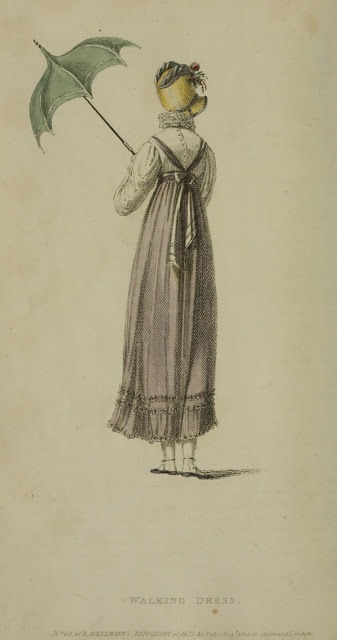
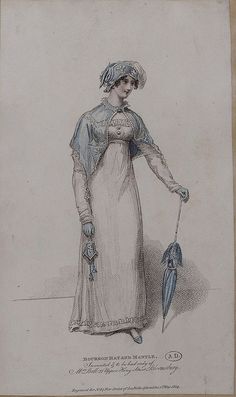
Regency fashion plate, parasolby Donna Hatch

Unlike the sun-kissed tans admired by some women today, (and let's face it, chalk-white legs just aren't coveted) a pale complexion was a fashion statement during much of England's history. Since laborers often worked long hours outside, their skins got tanned and weathered from exposure to the sun and the elements. A lady with a creamy complexion loudly proclaimed, without uttering a word, that she was wealthy enough not to have to spend a great deal of time out of doors. But since a lady's skin could become unfashionably brown simply by walking outside, even with the protection of a hat or bonnet, she had to take measures to protect her skin from the sun.

During previous eras, ladies and gentlemen of the upper classes powered their faces to maintain a pale complexion.  But by the Regency Era, people abandoned the powder, rouge, lipstick, and powered wigs, as well as ostentatiously ornate clothing, in favor of a more natural, comfortable look. They also started bathing on a regular basis, which I think is not a coincidence.

Regency fashion plate and parasol
What was a lady to do if she wanted to spend time outside but keep her skin alabaster white without the use of powder? Sunscreen, obviously, was not the answer, since it had yet to be invented. Bonnets and hats certainly helped but there were times when those failed to protect a lady's face from all angles of the sun.

Enter the parasol. Made of natural fabrics such as cotton and silk and often embellished with lace, these functional little beauties became so popular in England early in the 19th century that they became part of a fashionable ensemble.  Depending on how they were made, they could even protect a lady from a light rain.

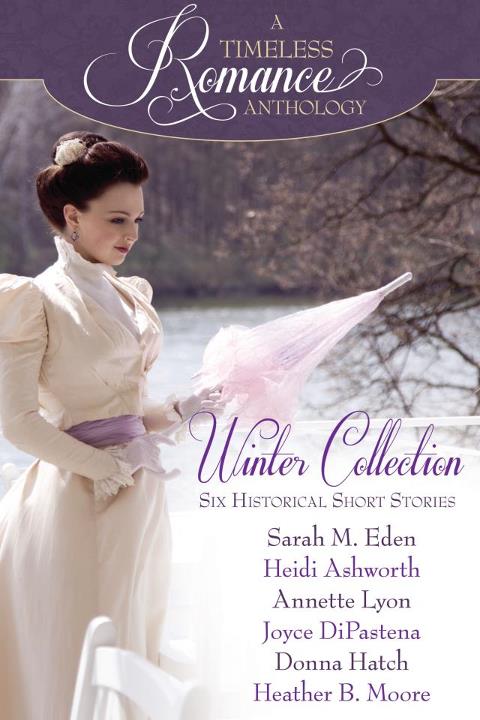
Winter Collection, 6 historical short storiesSo the next time your Regency lady goes for a walk, make sure she brings her bonnet and parasol to keep her face un-freckled and white, and her gloves to protect her hands, lest she fall under criticism of becoming "brown." Horrors!

For more pictures, feel free to check out  my Regency Accessories Pinterest Board with lots of images and fashion plates of parasols, fans, shoes, and other fun Regency accessories.

Laura Boyl on Jane Austen Center has some lovely pictures of ladies and children carrying parasols.

Louise Allen, on her blog, History of Costume, has a great collection of pictures as well as how the "correct" way to hold a parasol evolved.

Sources:
http://janeaustenslondon.com/tag/history-of-costume/
http://www.janeausten.co.uk/parasols/