Search This Blog

Showing posts with label Romance. Show all posts

Wednesday, June 21, 2017

Pirate Language in the Georgian Underworld by Katherine Bone!


Writing historical romance is a gratifying experience that can oftentimes be difficult too. An author makes choices that help modern readers understand the way people spoke in historical times, but must also season the story with historical words that transport readers to that era. Which words to use and when to use them? Well… that’s a talent every writer must master. Fortunately, several books are available to help authors achieve storyline Zen.

My go-to book for pirate jargon has always been THE PIRATE PRIMER by George Choundas. A fascinating book! A dash of ‘You’re wasting words’ and a smidgeon of ‘What maggot’s burrowing under your periwig?’ goes a long way. (Pirate!)

Most Regency authors tackle stories of the upper crust. Who doesn’t love daring and dashing dukes, marquises, or earls who champion the day? Even historical aristocrats spoke in gentleman’s code. Several of my favorites include ‘Banbury stories’ (falsehoods), ‘befogged’ (confused), ‘dicked in the nob’ (crazy), and ‘land a facer’ (punch in the face).

Word substitutes like these aren’t as difficult for the average reader to understand. But what happens when characters hail from the seedier side of society?

Enter the book CANT, A Gentleman’s Guide, The Language of Rogues in Georgian London. Love this introduction to the book!

“Planning to go to Georgian London? You’ve collected some period money, got yourself kitted out with the appropriate clothes and had your inoculations. If not, go and do it right now.”


In CANT, the language of the London Underworld, readers are taken to places where the poor, thieves, rogues, mayhap pirates and murderers roamed. If one couldn’t speak the speak, one might ‘Catch a Cold’ (get into trouble). Think Charles Dickens’s Oliver Twist, though it takes place 70 miles north of London in 1837, readers can relate to the characters’ accents and seedier environment.

Everyday words used in shabbier districts, not far from where aristocrats dwelt, are definitely contrary to the modern ear, confusing, strange, and oftentimes amusing. Used sparingly modern readers relate to the characters, setting, and plot.

Here are a few that my pirates would enjoy:

Rum Prancer Do you picture a dancing pirate on the deck with rum in hand? Get ready for this. Rum Prancer refers to a fine, beautiful horse.

Rum Kicks Sounds like something a pirate might do while hanging from a noose at Tilbury Point, but we’d be wrong. Rum Kicks refer to gold or silver-brocade breeches.

Rum Clout Something a pirate might have when the rum is never gone. Nope! Rum Clout means a fine silk handkerchief.

Rum Nab The old nab the rum and run trick, eh? Could work, except Rum Nab refers to a good hat.

Rum Nantz A man named Nantz who likes to drink rum? Wrong. Rum Nantz refers to good French brandy.

Words a pirate needs to know in a London Underworld tavern:

Taverns:

Tavern/Ale House: Bowsing Ken

Alehouse/Inn: Touting Ken

Obscure Tavern: Hedge Tavern

Rogue’s Tavern: Flash Ken; Flash Crib

Beggar’s Tavern: Mumpers’ Hall

Rendzvous Tavern: Stop Hole Abbey

Fleet Street: The Mitre

Covent Garden: The Rose Tavern

Whitehall and Charing Cross: The Rummer

Pall Mall: The Star and Garter

Tavern Drinks:

All Nations: Collection of leftovers collected from bottles and bowls

Bragget: Mead and ale sweetened with honey

Cobbler’s Punch: Treacle, vinegar, gin, and water

Grog: Rum and water

Huckle my Puff; Twist: Beer, eggs and brandy, served hot

Kill Devil: Rum

Punch: Spirits, water, lemon and sugar

Purl Royal: Canary wine with a dash of wormwood

Toddy: Rum, water, sugar, and nutmeg

Vessels and Quantities:

Pint or Quart: Gage

Half Pint: Nip; Size of Ale Cogue; Shove in the Mouth

Bottle: Bouncing Cheat

Small Bottle: Bawdy-House Bottle

Large Bottle: Soldier’s Bottle

Quart Bottle: Scotch pint

Drinking Glass: Flicker; Romer

Drinking Bowl: Bubber; Whiskin

Silver Tankard: Clank

Rum Clank: Large silver tankard

Clank Napper: Thief who runs away with tankard

Full glasses or bowls: Bumpers or Facers

Empty bottles: Dead Men or Marine Officers

Drunk much? Here are various ways to say it:

Lightly Intoxicated: Bit by a Barn Mouse; Chirping Merry; Hickey; Mellow; In a Merry Pin; Tipsy

Getting drunker: Drop in His Eye; Half Cut; Half Seas Over; Sucky Boosey;

Drunk: Been in the Sun; Corned; Got into the Crown Office; Cup-Shot; Cut; Disguised; Flawed, Flustered; Foxed; Hocus; In his Altitudes; In the Gun; Nazie; Pogy; Pot Valiant; Bought the Sack; Top Heavy

Drunk Man: Bingo Boy; Ensign Bearer; Guzzle Guts; Piss Maker, Swill Tub; Tickle Pitcher; Toss Pot; and Vice-Admiral of the Narrow Seas (‘a man who urinates under the table into his companion’s shoes’)

Drunk Woman: Mort

Very drunk: Top Heavy Clear; Deep Cut; cut in the Back Leg; Drunk as David’s Sow; Drunk as a Wheelbarrow; Drunk as an Emperor; Floored; Maudlin Drunk; Surveyor of the Highways; Swallowed a Hare

Sick: Cast you your accounts; Cat; Flash the Hash; Cascade; Shoot the Cat; Flay the Flea; Flay the Fox

Hung over: Crop Sick; Womble-Ty-Cropt

Rat: Someone who gets taken up by the Watch and forced into an overnight stay


And there you have it! Adding ‘cant’, ‘Flash Lingo’, ‘St. Giles’ Greek’, and ‘Pedlars’ French’, to stories provides that extra level of depth needed to help readers travel back in time. As a historical author, I’m grateful to George Chaundas, Stephen Hart, and many other researchers for their brilliant and thrilling books. Like good wine before its time, there’s nothing better than ‘Faking a Screen’ (writing) and ‘Snilching’ (learning to behave) in roguish circles.

Wednesday, December 14, 2016

The Mummer’s Play by guest author Jenna Jaxon plus an excerpt

by Guest Author Jenna Jaxon
The Mummer’s Play
Displaying mummers.jpgThe Mummer’s Play
The Middle Ages were a time of religious conviction in all facets of daily life. This included the theatre of the period, that was, at least in the early days, unhappy with theatrical performances. Once the Church discovered the teaching ability of theatre, however, they began to use dramatic performances to educate a mostly illiterate populace.
By the Late Medieval period, however, entertainers had strayed from the strictly religious performances, and troupes of entertainers, mummers as they were often called, traveled throughout Europe giving performances in town squares and noble households. These plays were often taken not only from Bible stories, but from legends and tales of heroes. One particular set of plays they undertook were called “guises” because the actors were disguised in often outlandish costumes. One play in particular, “St. George and the Dragon,” was immensely popular. (That is why I included it in Seduction at the Christmas Court.)
The costumes, as I noted above, could be very strange and fantastical. Men dressed as women and in some case animals. St. George traditionally wore “silver armor, helmet, sword and shield with St. George and the Dragon” on it. His adversary, the Turkish Knight, dressed in “red trousers, blue loose jacket, turban, sword, and a shield with crescent.” And the Doctor, the Prince of Quacks, is styled in a “black swallow-tail coat and knee breeches, white waistcoat, perruque [wig], long nose.”
The texts of the plays were mostly rhymes and could include songs and dances.

Displaying mummers.jpg
TURKISH KNIGHT
Here comes I, the Turkish knight
Just come from Turkey-land to fight
I’ll fight thee, St. George-St. George, though man of courage bold,
If thy blood be too hot, I’ll quickly fetch it cold.

TURKISH KNIGHT
Wo ho! my little fellow, thou talkest very bold,
Just like the little Turks, as I have been told;
Therefore, thou Turkish knight,    {Threatening him}
Pull out thy sword, and fight;
Pull out thy purse and pay;
I’ll have satisfaction ere thou goest away.

The major actors/entertainers were the hero (St. George, Robin Hood, or in Scotland Galoshin) and a quack doctor who miraculously brings the slain villains back to life by means of a magic potion. The plays were performed exclusively by men, who played the female roles as well. These entertainers needed to additional skills in entertaining, such as acrobatics, juggling, singing, and mimicry.
Christmas time was a great time for merriment, and the mummer’s play was a fun way to pass the long winter’s evening in rhyme, song, dance, and merriment.

Christmas tidings of comfort, joy, and temptation
BLURB:
Alyse and Geoffrey, Lord and Lady Longford, have journeyed to the glittering Christmas Court of King Edward III in the year 1349 to wait upon the king and take part in some Yuletide merriment. However, when Geoffrey is suddenly called into the king’s service again, Alyse must remain at court, attending the queen and persuading her rebellious sister to accept an unwanted betrothal. When rumors of Geoffrey’s death arise, Alyse fends off an old suitor who wants to renew their friendship. But how long will he take “No” for an answer?
Here is an excerpt from Jenna's book:
“This entertainment will be tedious. I would much rather retire for a good night’s bedding right now,” he whispered, the puff of his breath tickling her ear and sending prickles of excitement down her neck.
She laced their fingers together. “’Twill be finished ‘ere long, my love. Then you can wield your weapon with a vigor yon knights cannot.”
He laughed and drank deeply. “Aye, sweet Alyse. My skill with both weapons outshines any other knight.”
“As you will not want me to be judge of that, I think, I will demur to your claim, although I will test your skills again with the one blade ‘ere the night is done.”
At Geoffrey’s bark of laughter—so loud it turned heads on the dais their way—Alyse settled back to watch the mummers, her cheeks burning, but a pleasant anticipation building within as well.
The mummer playing St. George took the center spot in the Great Hall and began a sing-song rhyme that soon had the court laughing at its nonsense. A stream of knights—played in turn by the other mummers—approached, made their rhyming challenge, and were quickly slain by St. George, whose wielding of his sword became swifter and swifter. He slayed the knights in such short order that by the time he faced the final knight, he did no more than look at the Turkish knight than the man fell down, his toes jingling softly as he landed on the soft rushes covering the floor.
A burst of laughter and applause followed that performance as the quack Doctor shuffled forward, his “magic potion” in a large bottle, gripped in his hand.
Thoroughly engrossed, Alyse laughed and clapped her hands. She held her breath and leaned forward as the Doctor poured the potion down the throats of the slain knights, spoke his own rhyme over them, and one by one, they began to twitch and dance, the rush-strewn floor seeming to come alive as they did. The room resounded with merriment as all seven knights revived.
Loud applause burst out from the courtiers, many of whom threw gold and silver coins onto the floor. Geoffrey tossed a gold florin to the Turkish knight. “For my lady’s pleasure,” he called.
The man nimbly caught the coin and made a deep bow. “Thank you, my lord.”
With a lecherous grin, Geoffrey grasped Alyse’s arm and urged her to rise. “And now allow me to attend to my lady’s pleasure as well.”

Today, Jenna is giving away a copy of one of her backlist Christmas books. Winner may choose which one to receive.
AUTHOR BIO:
Jenna Jaxon is a multi-published author of historical in all time periods because passion is timeless.  She has been reading and writing historical romance since she was a teenager.  A romantic herself, she has always loved a dark side to the genre, a twist, suspense, a surprise.  She tries to incorporate all of these elements into her own stories. She’s a theatre director when she’s not writing and lives in Virginia with her family, including two very vocal cats.
Jenna is a PAN member of Romance Writers of America as well as Vice-President of Chesapeake Romance Writers, her local chapter of RWA. She has three series currently available: The House of Pleasure, set in Georgian England, Handful of Hearts, set in Regency England, and Time Enough to Love, set in medieval England and France.
She currently writes to support her chocolate habit.
Find Jenna Jaxon online:


Friday, December 18, 2015

The Cato Street Conspiracy, a Source of Inspiration


The Cato Street Conspiracy

The murder plot in my newest Regency Romance, The Suspect’s Daughter was inspired by a true event in England known as the Cato Street Conspiracy.

The early 1800’s in England was a time of social and economic upheaval. Upon the ending of the long-term Napoleonic wars, unemployed career soldiers and sailors flooded the workforce. Industrial change was taking England from a largely agricultural country to one of large industry. Many of the working class were hungry and feeling oppressed. Riots erupted which the government crushed. Laws grew more and more restrictive.

In 1820, a group of ten Londoners decided the government needed to be overhauled, and came up with a radical and brutal idea. They planned to storm a house where the prime minister and his cabinet would be having dinner, shoot and behead the leaders, and then parade around the slums with the heads.

Thankfully, this mass murder was averted largely in part due to an undercover government agent whom some believe was a Bow Street Runner. I never learned his name. Government agents stormed the meeting, which was held in a flat on Cato Street, and arrested the conspirators. But the radicals didn’t go peacefully. They fought back, killing one of the officers.
Newgate Prison

The conspirators were tried for high treason. Five were transported, and the rest were hanged at Newgate Prison (pictured) and then beheaded. I guess they authorities wanted to be thorough.

Though the events are different in my story, and the characters are fictitious, the case inspired the conspiracy plot (with my own spin, of course) in my newest Regency Romance, The Suspect’sDaughter, book 4 of the award-winning Rogue Hearts Series, with Grant Amesbury as the hero.


The Suspect’sDaughter, book 4 of the Rogue Hearts Series

Determined to help her father with his political career, Jocelyn sets aside dreams of love. When she meets the handsome and mysterious Grant Amesbury, her dreams of true love reawaken. But his secrets put her family in peril.

Grant goes undercover to capture conspirators avowed to murder the prime minister, but his only suspect is the father of a courageous lady who is growing increasingly hard to ignore. He can’t allow Jocelyn to distract him from the case, nor will he taint her with his war-darkened soul. She seems to see past the barriers surrounding his heart, which makes her all the more dangerous to his vow of remaining forever alone.

Jocelyn will do anything to clear her father’s name, even if that means working with Grant. Time is running out. The future of England hangs in the balance...and so does their love.
The Suspect’sDaughter, is available from Amazon

Friday, October 2, 2015

Carriage Accidents Cliche?


Throughout most of history, travelling, especially long distance, was a dangerous undertaking. Some of the many dangers a traveler in Regency England faced included highwaymen attacks, most of which only resulted in loss of valuables but often injury and death as well. To offset this risk, the wealthy generally had armed outriders who rode horseback in front and behind the carriage to guard and protect them but not everyone could afford that and sometimes highway men attacked in alarming numbers.

Travelers also faced broken down carriages which caused delays and inconveniences and injuries, especially if their coach traveled at high speeds at the time of the malfunction. In addition, weather accounted for difficulty and danger. There are accounts of passengers riding on the top of a mail coach arriving frozen to death. But by far the most dangerous part of travel came from carriage accidents.

Now, don't roll your eyes. I've heard readers complain that it's too easy to kill off a character by arranging a convenient carriage accident so that they have become cliché. However, as cliché as it may seem, carriage accidents were every bit as common as car accidents are today. And since I've been in seven car accidents, either as a passenger or as a driver, ranging from minor fender benders to car-totaling collisions, and several people I love have suffered life-threatening injuries as a result of car accidents, I'm painfully aware how frequently that happens.
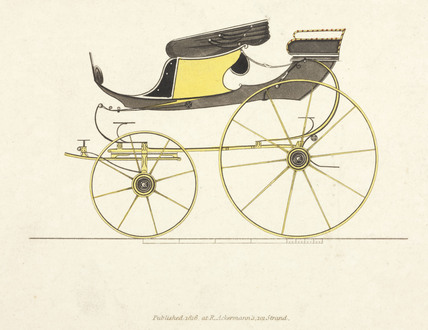
High_flyer_phaeton_carriage,_1816
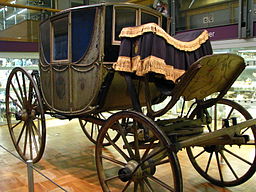
Just as there are many reasons for car accidents today, carriage accidents could be caused by any number of difficulties. Traveling at high speeds increased the likelihood of a major wipe out. (No, that’s not a Regency term J High-perched carriages such as the High-flyer phaeton were top heavy and easily overturned, especially in the hands of an unskilled driver. But carriages in general were subject to all kinds of problems and breakdowns. Maintenance was up to the coachman, but if he wasn’t especially diligent, there were any number of parts to a carriage that could break and cause accidents.

Roads were another cause of difficulty. They were poorly maintained, often muddy, rutted, narrow and windy. They were also snowy or icy. Toll roads usually fared better, but not always. Also, the horses themselves could throw a shoe or stumble over a rut or uneven ground which posed a threat to the carriage.

Other drivers were some of the greatest perils on the roads. There were no speed limits, and no driver’s licenses, and driving while intoxicated wasn’t policed. Drunk drivers or young dare devils careening around bends caused an alarming number of accidents. And since there were no seat belts or crash safety engineering, passengers could be thrown around or crushed or ejected.

It paints a terrifying picture, doesn’t it? The next time you read a book where the heroine’s parents died in a carriage accident, remember that they were an alarmingly common and therefore very realistic form of premature death. Instead of rolling your eyes and uttering the dreaded C word, nod sagely and applaud the author’s realism.

Friday, June 12, 2015

Pinterest and Regency England

I'm late to the party with Pinterest--but I am not generally an early adopter. I like to see if something's going to stay around before I invest time into it. But Pinterest is a great place to hang out--lots of great images, which is perfect for anyone who loves either research or Regency England. There's fashion (lots of it), images for personalities (with small bios), furniture, sports, food of the era, and lots more. But my favorite are actually prints of old London and England, and even some photos taken before both World War II bombing and the march of progress meant the end of many a beautiful inn or building. I also really, really like maps--any map. I have many books with maps of England, but there are always extra details that any writer needs.

Many of the images come with small bits of information--and, yes, it's a great consumer of time. But it's also great since a photo really can help you better "see" the world that once was. And it's not just the Regency that's covered--pick any era and you'll find cool stuff. As anyone who uses Pinterest knows, you can "pin" images to a board so you can more easily find them--great to help you stay organized--and you can follow other people's boards. A lot of writers post images useful for their books. I'm still uploading images I've found for horses, Regency portraits, and more.

Search works similar to any search engine--type in words, or put a plus sign between them if you want a phrase searched. The really nice part is that Pinterest brings up suggestions of things recently pinned that you might be interested in--they just show up on your home page.

I'm working now on a Pinterest for Paris 1814--I'm working on a Regency set there. It's a lot like having a ton of books open, or having a board with images set in place to inspire. It's also fun to create--so it's really important not to get too carried away.

But if you're on Pinterest, let me know--I'm always looking for new bits of research.


Friday, November 21, 2014

Regency Chocolate

by historical romance author, Donna Hatch

Today, people (at least in the US) use the terms hot chocolate and hot cocoa interchangeably. And most commercial mixes available in grocery stores taste pretty much the same. However, technically, hot cocoa is made with cocoa powder, the stuff you can buy in a metal container that comes unsweetened and has no cocoa butter.

Hot chocolate is actually made from melted chocolate, which includes cocoa butter. Because of its higher fat content, true hot chocolate is richer than the original hot cocoa recipe made from cocoa powder.

During the Regency, people drank hot chocolate too, but they drank it unsweetened the way people drink coffee black, and they often drank it in the morning as a way to begin the day rather than as a special treat. In books, I often have a maid bring the characters a breakfast tray with chocolate (they didn't add the word 'hot' as it was implied since that's the only way people drank it) and a pastry. After the heroine goes through the procedures of dressing and having her hair styled, she goes downstairs to the breakfast room and eats her breakfast buffet style, as was the custom in much of England during the Regency.

Since I like my hot chocolate and/or hot cocoa sweet and decadent, most of my heroines do too, but I have people comment on what a strange quirk that is.

Here is my favorite hot cocoa recipe. As you can see, even though it uses cocoa powder and not melted chocolate, it is not low fat :)

My oldest daughter found this recipe years ago here and we've been using it ever since when we want a special treat that tastes far better than instant mix.
Best Ever Decadent Hot Cocoa
Makes 4 servings
1/3 cup unsweetened cocoa powder
3/4 cup white sugar
1 pinch salt
1/3 cup boiling water
Then:
3 1/2 cups milk
3/4 teaspoon vanilla extract
1/2 cup half-and-half cream

Combine the cocoa, sugar and pinch of salt in a saucepan. Blend in the boiling water. Bring this mixture to an easy boil while you stir. Simmer and stir for about 2 minutes. Watch that it doesn't scorch.

Stir in 3 1/2 cups of milk and heat, stirring constantly, until very hot, but do not boil!

Remove from heat and add vanilla.
Divide between 4 mugs.
Add the cream to the mugs of cocoa to cool it to drinking temperature.

Yum!

Image downloaded from Wikimedia commons

Friday, March 1, 2013

The Language of Fans

by Historical Romanced Author Donna Hatch
www.donnahatch.com

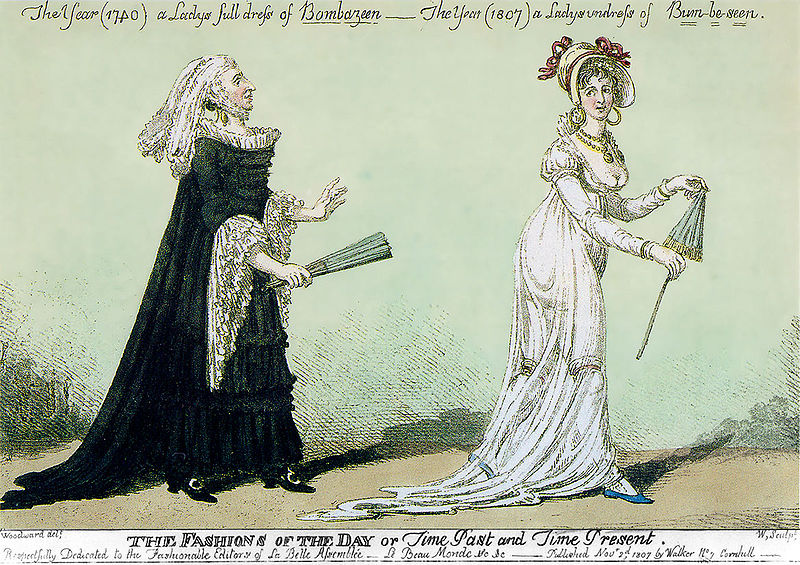
File:1807-pseudo1740 Fashion-contrast Bombazine-pun.jpgFans have been used as both a fashion accessory and a useful tool of staying comfortable for hundreds of years. Nearly every culture has a fan of some sort and the Regency Era, the time period in which I base all my romance novels, is no exception.


Unfortunately, the sources I read don't agree on what each action means. For example,  according to one source,* to fan slowly means "I am married." But according to another** to fan slowly means, "Don't waste your time; I'm not interested."

Likewise, according to one***, fanning oneself quickly means "I am married." But yet another ****says the same action means" I love you so much."

Shrug.

Also, the modern reader might wonder why go to all the trouble of learning such an elaborate language? But I think it might work well for the very shy, the very tongue-tied, or the person who needs to get the message across but fears coming on too strong. Also, telling a man she's not interested in him might be easier to say in fan language than in speaking. How many times have you told a guy who asked you out that you were busy when you really wanted to tell him to buzz off?

So, unless I can make friends with Dr. Who and jump into his time machine to find out what, exactly, these gestures really meant during the Regency Era, we may never know. Still, here are a few hand signals on which my sources seem to agree:

Touching right cheek: yes
Touching left cheek: no
Touching finger to tip of fan: I wish to speak with you.
Running fingers through the fan's ribs: I want to talk to  youResting the fan over the heart: my love for you is breaking my heart
Resting fan NEAR the heart: you have won my love
Resting fan on lips: I don't trust you.
Twirling in left hand: we are watched
Twirling in right hand: I love another
Open and shut: you are cruel
Open wide: wait for me
Presented shut: do you love me?
With handle to lip: Kiss me
In right hand in front of face: Follow me
Drawing across the cheek: I love you
Placing on left ear:  Leave me alone
Placing closed fan to the right eye: When may I see you?
Covering left ear with open fan: Do not betray our secret.
Changing fan to left hand: I love another.

So far, all the heroines in my Regency Romance novels have done with a fan is to keep cool or use it as a shield behind which they speak quietly to another. I admit, however I'm intrigued by the subtle, demure way a woman might have communicated to a man without speaking a word. She'd just have to time it when he's looking and not one else is, or her secret feelings would no longer be secret.


Sources:
*http://www.allhandfans.com/handfans/levels/language_of_the_fan.htm
**http://myhandfan.com/language.htm,
***Minute Company
****myhandfan.com

Monday, November 28, 2011

Guest Emery Lee: Georgian Gambling


Linda Banche here. My guest today is Emery Lee and her lush, exciting Georgian historical romance, Fortune's Son. Prequel and sequel to her previous book, The Highest Stakes, Fortune's Son is set in the London world of high stakes gambling. Here she talks about the types of gambling popular in the Georgian era.

Leave a comment with your email address for a chance to win the copy of Fortune's Son which Sourcebooks has generously provided. Emery will select the winner. Check the comments to see who won, and how to contact me to claim your book. If I cannot contact the winner within a week of selection, I will award the book to an alternate. Note, Sourcebooks can mail to USA and Canada addresses only.

And the winner Emery selected is christinebails! Congratulations, Christine, and thanks to all who came over.

Welcome Emery!

Emery Lee:


Gambling in all its various forms, from horseraces to cockfights, to cards and dice, and spinning wheels, reached a zenith of popularity in the Georgian age; but wherever large sums of money are staked, there are always those who prey on the unwary. In FORTUNE’S SON, Lady Susannah Messingham secretly believes the green tables are the answer to her financial woes and uses all her feminine wiles to persuade Philip Drake to teach her. In the following excerpt her extremely reluctant pedagogue endeavors in vain to open her eyes to the dangers.

(Excerpt from FORTUNE’S SON Chapter Six)

Are you not a professional gamester?” Lady Messingham asked.
Philip looked uncomfortable. “The question is not so easily answered. I don’t deny taking my living from the green tables but I assure you that I endeavor to maintain… certain standards… in my play.”
“Do you indeed?” Her half-smile bespoke disbelief.
“First of all, I endeavor never to sit down with a lady, or even with a man who has already over-imbibed. I find no allure in taking from those so disadvantaged.”
“So you deny that you win by cheating?”
He flushed. “’Tis such an unpalatable word, cheating, associated with swindlers, cutthroats, and highwaymen. By my troth, my lady, I have never marked a card, or rolled weighted dice. These are the trademarks of a cheat. I would merely say that I play with enhanced skill. I do not seek out victims to dupe, nor do I play intentionally to ruin any man. If, however, one has not the sense to know when to leave the tables, he deserves what he gets.”
“Are you not still a sharp, Philip?”
He paused to consider, “No. I do not say so. Not in the truest sense of the word. Besides, the term hardly encompasses the entire world of professional gamesters.”
“You speak almost as if it were a society in itself.”
“It is precisely that. Simply put, there are many types of players; varying degrees of Athenians, Captain Sharps, Amazons, blacklegs, tricksters, bamboozlers, and outright swindlers, inhabiting both the upper and the lower classes of society.”
“I have heard of the Greeks, but I don’t understand why the brethren of our much-venerated Aristotle are so vilified.”
“Ah,” Philip answered, “’tis a story that goes back to the days of Louis XIV, when a certain chevalier, A Greek named Apoulos, was admitted into the court. He was astonishingly adept at play and won a veritable fortune from the princes of the blood before his true methods were revealed.”
“What happened to him?”
“The king was much displeased and sentenced him to twenty years in the galleys. A true Greek tragedy,” he quipped.
“Thus, all players of his stamp are called Greeks?”
“Nay, only the select few. It is the name reserved for only those who play with great mastery. The Greek of the ton is by far the subtlest, most adroit, and the cleverest of creatures. He is accustomed to the best of company, and his deportment and manners are all that can be desired. He is capable of the most challenging conjuring feats—the partial shuffle, the false cut, the shift-pass, mucking, palming, pegging, and culling. No one surpasses his skill in drawing the ace, or breaking the cut, concealing cards or placing them. He raises the practice to an art.”
By now, Lady Messingham hung in rapt attention upon his every word.
“He is a master who lives for naught but the game, playing each one with unparalleled skill and equal perfection, yet plays only for others’ ultimate destruction. Attempts to hide emotion from him are in vain. He discerns the least movement or contraction of the features, peering with uncanny ability into his adversary’s very soul…”
“Lackaday! It sounds as if you describe Beelzebub, himself!”
“He is not far removed!” Philip laughed. “True vice, my lady, would frighten us all, if it did not wear the mask of virtue.”
“If that is so how does one evade a fate as his victim?”
“One can easily do so by avoiding deep play,” Philip answered “Since he is a master who only delights in high stakes, steer clear of his table, and you’ll never fall victim.”
“Do you not count yourself among those who are ‘equal in his talents’?” she asked.
“Not I, madam!” Philip barked. “I’d never make such a boast.” He paused with a thoughtful frown. “Nay, I do not endeavor to make my fortune so. I do not live for the play as others do.” His voice grew pensive. “I still have hope of something better.”
He met her quizzical look without further elaboration, and abruptly shifted back to their prior topic. “You have yet to learn of the wandering Greek—” He flashed a grin, breaking the solemn mood.
“Not to be confused with the wandering Jew?” she quipped back.
He laughed. “Indeed not. Although this manner of sharper does travel from place to place. He frequents the taverns, public assemblies, and pleasure gardens, seeking out the young and unwary, but rarely working alone.”
“He has an accomplice?”
“Yes, he employs a decoy, often an Amazon.”
“An Amazon? A woman? So there are, after all you said, women who are successful gamesters?” she remarked thoughtfully.
“I have never encountered one who does not act in conspiracy with a man. Her role is more to play the shepherdess to lure the hapless sheep to the wolf. Yet this is not even the worst type of sharp.”
Philip’s voice now took on a harsh, gritty quality. “The lowest sort of creature is the varlet who frequents the public gaming hells, and the low drinking dens. They are naught but evil wretches, wrought out of idleness and debauchery. After plying a victim with strong drink, their ‘games,’ involving any manner of trick or treachery, begin.”
“You speak as if you have fallen victim.”
“I was very young… and a fool. I am lucky to have escaped with my life.
She stared at him, stunned even more by what his words had not said than by what he had revealed.
Have I now opened your eyes?” he asked softly. “Or are you still bent on this inane gaming scheme?”
“It is only harmless diversion,” she lied. “It’s not as if I intend to make my living at the tables.” (end excerpt)

FORTUNE'S SON BY EMERY LEE
Philip Drake, an impoverished but titled gentleman, is forced to liquidate his assets and go back to his past gaming habits in an effort to right himself. Lady Susannah Messingham is a woman with a past and nearly ten years Philip's senior. After watching him at the tables, she propositions him to teach her to win at gaming. This fascinating and original look at an uncharted aspect of English life explores a gentleman snared by gambling, the threat of debtor's prison, and the wayward lady who redeems him.

About the Author
Emery Lee is a life-long equestrienne, a history buff, and a born romantic. A member of Romance Writers of America, she lives with her husband, sons, and two horses in upstate South Carolina. She is a self-professed “Georgian Junkie,” and is also the moderator for Goodreads Romantic Historical Fiction Lovers. Her first book is The Highest Stakes, which is the prequel to Fortune's Son.
http://authoremerylee.com
http://georgianjunkie.wordpress.com

Monday, June 14, 2010

Guest Shana Galen: Pushing the Envelope in THE MAKING OF A DUCHESS

Linda Banche here. Today I welcome Shana Galen and her latest Regency historical, The Making of a Duchess. Now, Duchess is not your ordinary Regency, and Shana will tell you why.

Leave a comment for a chance to win one of the two copies of The Making of a Duchess which Sourcebooks has generously provided. Shana will select the winners. Check the comments to see who won, and how to contact me to claim your book. If I cannot contact the winners within a week of their selection, I will award the books to alternates. Note, Sourcebooks can mail to USA and Canada addresses only.

The winners are Miss Quoted and Lois. I've sent you both emails, so look for them. Lois, I have your address. If I do not hear from you by June 22, I will award your prize to an alternate.

Welcome Shana!

Thanks so much for having me at Historical Hussies. I’ve enjoyed the blog for quite some time, and it’s an honor to be here discussing my new novel, The Making of a Duchess. I love history, especially the Regency period, but when I began writing The Making of a Duchess I decided to push the envelope just a bit.

I think there are times in our lives when we have nothing to lose. I was between publishing contracts when I started Duchess and didn’t know if anyone but me would ever read the novel. So why not write something a bit unconventional?

Or maybe even a lot unconventional. I have a French hero, a heroine who’s a governess, and part of the book is set in France—not your typical Regency romance. But it’s my heroine Sarah Smith who pushed the envelope the most.

Sarah is a governess for the children of a powerful man in England’s Foreign Office. She’s perfectly content in her position. An orphan who was raised by one of the numerous benevolent societies of the time, Sarah is happy to have such an important position, and she doesn’t understand what her employer is about when he calls her to his library and asks her to spy on Julien Harcourt, the influential duc de Valére. The duc is suspected of treason and considered a very real threat to England’s sovereignty.

But Sarah’s not a spy. She’s a governess and doesn’t know the first thing about spying. And, she argues, she’s a terrible actress. There’s no way she can pretend to be a French comtesse. She’s a lowly governess!

But the Foreign Office won’t take no for an answer. The spy they intended to send has been wounded, and their only option is Sarah. Why Sarah? She has no family, no connections, she’s a virtual unknown. She works with children, which requires patience and tenacity. And she lives among the aristocracy, which means she knows how they behave. Why not Sarah?

One of my favorite themes is the fish-out-of-water. In my novel Pride and Petticoats, Charlotte, an American, tries to fit in with the British ton. In No Man’s Bride, shy, reclusive Catie must become a political wife and hostess. In The Making of a Duchess, I gave Sarah the biggest challenge of all—she must pretend to be a French comtesse. And while she plays the comtesse, she must also play the spy. A single misstep could expose her to one of the most dangerous traitors in all of England.

What’s your favorite romance novel theme? Marriage of convenience? Secret baby? Enemies who fall in love? Fish-out-of-water? I’ll be checking in later to read your answers.


THE MAKING OF A DUCHESS by SHANA GALEN—IN STORES JUNE 2010

A very dangerous attraction…
Julien Harcourt, duc de Valère, is more than willing to marry the lovely young lady his mother has chosen. Little does he know, she’s been sent to prove him a spy and a traitor…

And an even more dangerous secret…
Sarah Smith’s mission is to find out whether the Duc’s trips to the Continent are as innocent as he claims, but the way he looks at her is far from innocent…

Their risky game of cat and mouse propels them from the ballrooms of London to the prisons of Paris, and into a fragile love that may not survive their deceptions…

About the Author
Shana Galen is the author of five Regency historicals, including the Rita-nominated Blackthorne’s Bride. Her books have been sold in Brazil, Russia, and the Netherlands and featured in the Rhapsody and Doubleday Book Clubs. A former English teacher in Houston’s inner city, Shana now writes full time. She is a happily married wife and mother of one daughter and two spoiled cats. She loves to hear from readers: visit her website at www.shanagalen.com.