Search This Blog

Showing posts with label American history. Show all posts

Friday, February 1, 2019

A Texas Woman

Watching The World Go By

The Wedding Photograph of James Lafayette Lary and Sallie Britton
(Check out that mustache! It was all the rage at the time this photograph was taken. Kissing would've been weird.)

It's interesting to think of how many Westerns I've read over the years, set in the 1880's and 1890's, that I never give much thought to what the characters would've seen if they lived to a healthy old age. Then I think back to actual family members who lived during that time period. For instance, the woman I am named after, Sallie Britton Lary. She's that pretty lady on the right. Aren't old pictures wonderful? You can see where the photographer went in and traced a few details to make the photograph look "better." 

I often wonder if I could write a story based on this woman's life. She was born in 1873, in the golden age of cowboys and train robberies. She married when she was in her twenties - and how many novels take place in the 1890's? Absolutely perfect. 

During this woman's childhood, her family picked up and moved from one side of Texas to another. They traveled by wagon train, and Sallie's family was at the back and fell behind. Which turned out to be a good thing, as the front of the train was attacked by Native Americans. 

Sallie lived to be 93 years old. That means she lived in an era of Native American wars all the way through watching on television as the first man went to the moon. She saw cattle lands turn to cities, buggies into cars, and planes. The miracle of television never ceased to hold wonder for her. 

Next time you read a novel based in the late 1800's, consider those characters and how the changing world would've impacted them. From horses to convertibles, from gramophones to the silver screen, and two World Wars. 

I hope you don't mind me sharing a piece of family history. Truthfully, my stories can be inspired by what little I know of these people who came before me. 

________

Sally Britton is the author of several Regency romance novels. Her work can be found at Amazon.com. 

Friday, August 3, 2018

When Your Town Needed a Library

The idea struck me, not long ago, to write a story about a town that wanted to build a library.
I wanted to set my tale in the early 1900’s, preferably in Texas, and so I started to research.
What did a town do to build a library? What did it cost? How did they afford it? And after only
a little digging, I discovered the history of public libraries in the United States.


Andrew Carnegie, National Archives


If you’re like me, when you hear the name Carnegie you mostly think of Carnegie Hall,
a historic theater in New York where you can attend shows by rockstars or grand orchestras.
Maybe you’ll actually think of Andrew Carnegie, one of the wealthiest businessmen of the
19th century. After researching the history of the public library system, I now think of
Carnegie Libraries.


Say what you will about the wealthy tycoons of centuries past, but a great debt is owed
to Andrew Carnegie for the emphasis and importance he put on libraries.


As a young working man, Carnegie knew the importance of books. During his days as a
journalist, he entered the home of a Mr. Stokes. In this man’s home, Carnegie read the words,


“He that cannot reason is a fool,He that will not a bigot,He that dare not a slave.”


At that moment, Carnegie said he promised to himself, “Some day, some day, I’ll have a
library and these words shall grace the mantel as here.”


He actually contributed a lot of his own success to having access to a private library.


“The treasures of the world which books contain were opened to me at the right moment. The fundamental advantage of a library is that it gives nothing for nothing. Youths must acquire knowledge themselves.” - Andrew Carnegie.


The original Dunfermline, Scotland, Carnegie Library. Beautiful.

This man, when he became a person of power, took to philanthropic work in regards
to cultivating a love for the arts and academics. He opened his first library in his hometown,
Dunfermline, Scotland. Then his foundation opened 2,508 more.


That’s right. There were 2,509 Carnegie libraries in the world. Only 1,689 were built in
the United States of America, where I live. But there were libraries in the UK, Ireland, Canada,
Australia, South African, Serbia, New Zealand, Belgium, France, Mauritius, Malaysia, and Fiji.


Carnegie didn’t believe in giving something for nothing. He wrote, “...an endowed institution
is liable to become the prey of a clique. The public ceases to take interest in it, or, rather,
never acquires interest in it.”


Carnegie came up with a formula for the building and endowment of libraries. If a small
town in the middle of nowhere wanted help building a public library, they could apply to
the Carnegie foundation and they were sent back what amounts to forms and paper interviews
with a list of questions and requirements. The town was required to show a need for a library
and that they would be able to maintain it after it was built. They also had to come up with
some of the funds, though there wasn’t a fixed amount. Perfect for my story.


Did you know that in the old days of libraries, if a patron wanted a book they would have to
ask a librarian to get it for them? People weren’t allowed to browse the stacks and find
whatever they wanted. Part of the reason you can wander library shelves freely today is
because Andrew Carnegie, ever the business man, instituted a new method in his
libraries - an open-shelf, self-service policy. It started in Pittsburgh and was so successful
he pretty much required it for the rest of them.


Carnegie libraries were also unique in that several of the larger ones had room specifically
for children’s books.

Tucson, Arizona Carnegie Library
Now a Children's Museum


So when I started digging in to small town libraries, I discovered that just about every
library built prior to 1930 was a Carnegie Library. Many of them are still in use today.
Some as libraries, but others as museums, community buildings, elementary schools,
and the like. The closest Carnegie Library to me is in Tucson, Arizona. It’s now in use
as a children’s museum. :-)


-


I’m still working on my Western American books. But I have several Regency-Era romances
available on Amazon. The Regency period is my first love, when it comes to historical novels,
but the growth of small towns in the United States is fast becoming a favorite place for me to play.


Links for Further Reading: 
Autobiography of Andrew Carnegie, by Andrew Carnegie


Friday, July 6, 2018

The Englishman’s Ranch in Arizona

Good afternoon to one and all! My name is Sally Britton and this is my first post on the blog! Yay! I'm really excited to be here with everyone, to share my research and talk about history.

While the Regency era is my first and greatest writing love, I’m gearing up for a series set entirely in the American West, specifically in the mining regions of Southern Arizona. I’m uniquely placed for researching the most amazing old towns, from Fort Huachuca with its history of the Buffalo Soldiers to Tombstone, made famous by a disagreement that wound up leading to that infamous gunfight.


As I’ve been studying Arizona history, one ranch has stood out again and again in the history books. The Empire Ranch, founded in the 1870’s by an Englishman and a Canadian who really had no idea what they were getting themselves into. Talk about a fish out of water story! We love the Old West, but how often do we think about Englishmen trying to take it on?


Herbert R. Hislop (now there’s a name for you) came to North America with one goal: to create a cattle empire. He wasn’t a rancher, he had no experience with cattle, but he was a young man with ambition and America was the land of opportunity, even for Englishmen.


Herbert took the rails out to California, then came back down to Tucson, which isn’t much to look at today but back then was even less impressive. There was one dirt road, with adobe houses lining either side of it. But Herbert and his partner were not daunted and they started riding around looking for land.


He got pretty discouraged at what the desert had to offer. In a letter home, he wrote, “I would sooner have Thames water at London Bridge than the finest water here.”


An excerpt from his letters: “Rested and just looked round the town for horses to buy, but did not succeed. Had more offers of ranches, it is astonishing how quickly one’s business is known in a small place like this. Everybody has the best to sell. It is quite amusing to hear them talk and hear them contradict each other, running down each other as thieves and rascals, but we have our money and intend to keep it unless we get a place suited to our requirements and on reasonable terms.”


But then, in a little piece of undiscovered paradise, Herbert found the perfect land. It had protective mountains around it, was at a higher elevation and stayed cooler morning and night, and beautiful green grass that stretched as far as the eye could see. They bought up the ranch and then some cattle, and Herbert was suddenly learning the business first hand.


Walter Vail, from Canada, wrote about his partner: “I think it is just beginning to dawn on Hislop what roughing it means but I am in hopes he will not give in if he should it would place me in an awkward position.”


This was the age of rustlers, of the western forts springing up, of the calvary riding across the desert after ne’er-do-wells! And Herbert was in the thick of things. He started a tradition at the ranch that held on for many generations, and kept him and those who came after out of harm’s way. The very first time Herbert had a gang of men ride in on one of his camps, instead of bristling up and getting defensive, he invited them all to dine with him. With his good English manners, Herbert charmed the group of men, fed them bread he’d baked himself, and they parted as friends. Later he learned he’d entertained one of the meanest group of rustlers around.


Herbert fed everyone, because his mother had taught him to be hospitable. Whether it was the Native Americans, Mexican vaqueros, or another rancher, they were treated to the best he had to offer. Because of that, the Empire was often spared when one group or another conducted raids.


What survives of Herbert’s experience is a wonderful wealth of letters he wrote back home to England. Those letters are a goldmine of information for researchers, a first-hand source of what life was like before the West was tamed. From adobe brick making to Decoration Day celebrations, Herbert recorded it all for his family living far from Arizona’s monsoon season and rattlesnakes.


Unfortunately, family business called Herbert home and he sold out to his partners. But with the fine start he helped them achieve, the Empire Ranch was founded and remains to this day a working ranch. I went out and toured the beautiful area, seeing the original house where Herbert lived with bats in his bedroom. And for decades after Herbert left, locals continued to call the Empire, “The English Boys’ Outfit.”


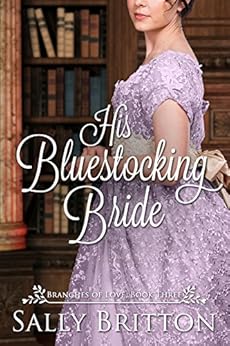
Until I can sink my teeth into these beautiful Arizona stories, I’m enjoying getting my Regency Romance series published. My latest novel, His Bluestocking Bride, spent a lot of time as a #1 New Release and Bestseller on Amazon.


It’s a story of a marriage of convenience that becomes so much more. But just you wait. My Arizona stories are a-comin’!

Wednesday, January 19, 2011

Cravats and Croates: History of Men's Ties


Although men may have worn neckwear since ancient times, probably for warmth, the first neckwear is generally traced to the period of the Thirty Years War in the 17th century. Croatian mercenaries, fighting alongside the French, wore small knotted neckerchiefs, like the one pictured to the right. The Croatian word for Crotes was Hrvati.
Parisiennes, enamored with this unfamiliar neckwear, combined the French word for the Croatian nationality, Croates, with Hrvati, and the neckwear became a cravat.
The cravats started a new craze in Europe, and soon both men and women were wearing cravats. Men’s frequently were made of lace, held in place with cravat strings tied in a bow.
During the 18th century, cravats briefly fell out of favor, replaced with a stock, a folded piece of muslin wrapped around a shirt collar. Men wore their hair long, below the shoulder, and tucked the ends into black silk bags worn at the nape of the neck. This was called the bag-wig hairstyle.
In the latter part of the century, cravats again became popular. Around the turn of the century, different methods of tying the cravat came into play, and a book was published, Neckclothitania, which illustrated fourteen ways to tie a cravat. This book was the first to use the word tie in association with neckwear.

Monday, November 15, 2010

The Lobsterman and the Burning of Portland

by Guest blogger, Marjorie Gilbert

Fifteen years ago, I was waylaid by a merman.

I wrote a treatment for a screenplay that never was, about a female lobsterman who was based in Portland, Maine. Late one unremarkable day, she pulled in a merman who promised her riches if she promised him his life. It was a good treatment, but the project languished and it got filed away.

Several years and several moves later, I happened to be going through a box of collected papers, pulled out the treatment, and could think of little else. I stopped writing the book I was working on and devoted my energies to turning the screenplay treatment into book.

Since my daughters and I toured the Tate House in Stroudwater, the home of a senior mast agent who was active from 1754 to 1775, a possible storyline began to form. What if an Irish sailor was a member of a crew sailing from England to Portland, then Falmouth Neck, in the course of mast trade? What if the ship should get caught in a storm and sink, leaving the Irish sailor the only survivor? What if, on the verge of death, a mermaid saved the Irish sailor and brought him safely to Falmouth Neck’s shore?

The book seemed to fall into place. I could alternate the chapters between the past and present, allowing the Irish sailor’s story to loosely follow the history of Portland while contrasting it with the very modern of story of the female lobsterman and her life on and off the sea. However, what parts of the history of should I include? Not only that, I needed events into which I could insert my Irish sailor without changing the course of the city’s history.

The first two times Portland burned had to be discarded, for they had happened in the 1600s, well before Captain Tate came to Stroudwater. Though it was tempting to have my character help in Peleg’s Great Escape, General Peleg Wadsworth, grandfather of Henry Wadsworth Longfellow, needed no assistance. After holding off British soldiers with a blunderbuss, getting thrown in prison by the British, then escaping with Major Benjamin Burtan by using of a spoon and an Indian birch-bark canoe, needed no embellishment. That left one of the most ground-shaking events of Portland’s history: the burning of Portland in 1775.

On 16 October 1775, the inhabitants of Falmouth Neck (Portland), saw a disturbing sight: two British ships named Canceau and Cat, two schooners and a bomb sloop at the mouth of the harbor. The fact that the Canceau was captained by Captain Henry Mowatt, RN raised some concern, thanks to the fact that he had been imprisoned in Falmouth Neck earlier that April. However, the assumption was made that Mowatt was there to requisition livestock and provisions for his ships. The residents of Falmouth Neck reacted quickly, loading their livestock into ships and sailing them across Casco Bay to what is now known as Peaks Island.

17 October 1775 brought worse news. The wind that had held the ships at bay at the mouth of the harbor abated and they formed a line in front of Falmouth Neck. A single British soldier delivered a letter from Mowatt to the courthouse. There, the residents of Falmouth Neck were informed that Mowatt intended to mete out “a just punishment on the town of Falmouth” and that they had two hours to clear the town before it was razed to the ground. General Preble and two other men managed to buy some time by requesting that Mowatt revisit the issue the following day. Until that time, the townspeople established camps in the woods on the back side of the peninsula on which Falmouth Neck is located in the event that these negotiations were not successful.

They were not.

Bombing commenced the following morning, at nine-thirty, and did not end until six o’clock that night. Those houses that survived the bombardment by the ships and were not owned by Torries were destroyed by British soldiers carrying torches. In all, 414 buildings burned.

Amazingly, no one died.

I owe much to the intrepid Widow Alice Greele. She kept a fashionable inn on Back or Queen Street (now Congress). During the bombing of Portland, she single-handedly defended her inn by dashing about the courtyard, throwing cannon balls into horse troughs with a shovel and putting out fires. Thanks to her, I was able to insert the Irish sailor as both a witness and participant in the burning of Portland by making him Alice Greele’s assistant. It sounds simple enough, but both doing a nearly blow-by-blow account of these three days took several tries, getting the balance between historic accuracy and narrative interest just right.

Writing historical fiction is challenging, for it takes both research and alchemy to recreate events as they happened without sounding like a history lesson. There is one thing for certain, it is never boring.


For Further Reading:

The Tate House Museum: http://www.tatehouse.org/
This site includes a history of the house and the Tates as well as a history of the mast trade.

Goold, William, The Burning of Falmouth (now Portland), by Captain Mowatt in 1775, http://www.archive.org/details/burningoffalmout00gool

Willis, William, The History of Portland, from 1632 to 1864: With a Notice of Previous Settlements, Colonial Grants, and Changes of Government in Maine, Portland: Bailey and Noyes, 1865
The Wadsworths, Peleg and Elizabeth, http://www.hwlongfellow.org/family_peleg.shtml

Marjorie Gilbert is a historical author who lives in Maine with her husband and two daughters. She is the author of two novels, The Return, which is set in Georgian England, and The Lobsterman, which is set in past and present Portland, Maine. Her third book, a work in progress set in Georgian England, won third prize in the 2009 Royal Ascot. In July of 2010, Gilbert signed a contract for publication of The Lobsterman.

Wednesday, July 14, 2010

He Called It Macaroni


Yankee Doodle went to town,
A-Riding on a pony;
Stuck a feather in his cap,
And called it macaroni.

Macaroni? He named his feather after pasta?

I'm American, and I've sung this song all my life. But I never understood what Yankee Doodle's feather had to do with spaghetti.

The verse sounds odd to our ears, but made perfect sense to English people in the mid 1700's, when the song was written.

At that time, a "Yankee", from the Dutch Jan Kees, or John Cheese (see dictionary.com definition here), was an inhabitant of New England, a pejorative name bestowed by the urbane New York Dutch on their rustic, Puritan Connecticut neighbors, and by extension, to all Americans.

The word "doodle" first appeared in the seventeenth century, from the German word for "simpleton" or "fool".

From my last post, "macaroni" was an extreme of English male dress, circa 1760. The style's most salient characteristic, a large, ungainly wig, caused "macaroni" to become a synonym for foppishness. Put the two words together, and "Yankee Doodle" was a derisive term for a backwoods American fool so unsophisticated he thought decorating his cap with a feather was the height of fashion.

Historians generally credit Doctor Richard Shuckburgh, a British Army surgeon, with creating the song sometime during the French and Indian War (1754-1763). The date is in dispute, given in various places as 1755, 1756 or 1758.

The New York State archeologist, Paul Huey, believes he has narrowed the date to June, 1758. At that time, a large British force had mustered at Fort Crailo near Albany, New York, to prepare for the attack on Fort Ticonderoga. The ragged, ill-equipped and ill-trained New England militiamen who joined the expedition provided a stark contrast to the well-dressed, well-drilled British soldiers. Dr. Shuckburgh wrote the first set of lyrics mocking these ragtag troops. The tune apparently comes from the nursery rhyme Lucy Locket.

Something about the song resonated in colonial America, and Yankee Doodle took on a life of its own. Many sets of lyrics exist. If you’re curious about all the verses (and there are a lot of them), you'll find a list here: http://en.wikipedia.org/wiki/Yankee_Doodle

Everyone sang Yankee Doodle. British soldiers often sang it as a marching song. The American colonists sang it, too, but with different lyrics.

As the tension between England and America escalated, the Americans took up the ditty, complete with feather and macaroni, as a badge of honor. By the time of the Battle of Concord and Lexington (1775), the Americans had claimed the song as their own.

Yankee Doodle lives on to this day.

Archibald MacNeal Willard's most famous painting, The Spirit of '76 (c. 1875), (picture above) is popularly called Yankee Doodle.

Yankee Doodle Dandy, a version of Yankee Doodle, is the tune to a famous song-and-dance sequence in the 1942 James Cagney film of the same name.

And last, but not least, Yankee Doodle is the state song of Connecticut. I'm from Connecticut (yup, a real Connecticut Yankee), and I didn't know that.

The Fourth of July is Independence Day in the United States. On that Yankee Doodle-est of days, here's one Yankee Doodle saying "Happy Fourth of July" to all my fellow Yankee Doodles.

Thank you all,
Linda

Wednesday, July 1, 2009

With the 4th of July coming up, I thought my readers may want to get a glimpse of 4th of July celebrations past. In browsing the internet, I ran across this picture taken in Ashville, Ohio. These men participated in a wrestling match during the town's 4th of July celebration.

Below is an excerpt from a letter written July 5th by John Adams to his daughter, Abigail, describing what he saw the very first 4th of July.

"I went on board the Delaware, with the President and several gentlemen of the Marine Committee, soon after which we were saluted with a discharge of thirteen guns, which was followed by thirteen others, from each other armed vessel in the river; then the gallies followed the fire, and after them the guard boats. Then the President and company returned in the barge to the shore, and were saluted with three cheers, from every ship, galley, and boat in the river. The wharves and shores, were lined with a vast concourse of people, all shouting and huzzaing, in a manner which gave great joy to every friend to this country, and the utmost terror and dismay to every lurking tory. At three we went to dinner, and were very agreeably entertained with excellent company, good cheer, fine music from the band of Hessians taken at Trenton, and continual vollies between every toast, from a company of soldiers drawn up in Second-street before the city tavern, where we dined. The toasts were in honour of our country, and the heroes who have fallen in their pious efforts to defend her. After this, two troops of light-horse, raised in Maryland, accidentally here in their way to camp, were paraded through Second-street, after them a train of artillery, and then about a thousand infantry, now in this city on their march to camp, from North Carolina. All these marched into the common, where they went through their firings and manoeuvres; but I did not follow them. In the evening, I was walking about the streets for a little fresh air and exercise, and was surprised to find the whole city lighting up their candles at the windows. I walked most of the evening, and I think it was the most splendid illumination I ever saw; a few surly houses were dark; but the lights were very universal. Considering the lateness of the design and the suddenness of the execution, I was amazed at the universal joy and alacrity that was discovered, and at the brilliancy and splendour of every part of this joyful exhibition. I had forgot the ringing of bells all day and evening, and the bonfires in the streets, and the fireworks played off. "

Hope all of you have a safe and happy 4th!