Search This Blog

Friday, June 21, 2019

Who Died and Made Alexandrina Queen?

While I was watching the first episode of Victoria  this week, it occurred to me that there's a lot of stuff going on in the background that's hinted at, but not clearly explained, especially with some of the characters, like the old duke with the gnarly scar. The show makes it clear that he's somehow related to Victoria and that he's not happy about her getting the throne.

So, first things first: Queen Victoria's name is actually Alexandrina Victoria. (British monarchs get to choose their regnal name and she opted to drop Alexandrina.) Now on to the murkier and more interesting topic: how'd she get to be the queen of England?

In 1817, George III was king and his eldest son, George IV, was Prince Regent. The Prince Regent's wife, Caroline, had been estranged from him for years. Their only child, Princess Charlotte of Wales, then died in childbirth that same year, leaving him without a legitimate heir.

This meant that his brother, Prince Frederick, the Duke of York and Albany, became his heir. However, Frederick and his wife also didn't have any children.

Several of George III's other children hurried to get married and produce heirs on the increasingly likely-chance that the succession came to them. William IV and Prince Edward, Duke of Kent and Strathern (George III's third and fifth children), both were married in 1818. Alexandrina Victoria was born the following year.

Both Prince Edward (Victoria's father) and George III (Victoria's grandfather) died in 1820. The Prince Regent became king.

In 1827, Prince Frederick, George IV's younger brother (George III's second child) and heir, died. Since Frederick never did have any children, their next brother, William (George III's third child) became George IV's new heir.

George IV died in 1830 and William IV became king. He was in his 60s by this point. William had several illegitimate children prior to his marriage to Princess Adelaide, but unfortunately they did not have any surviving children. Princess Charlotte (George III's fourth child) had died in 1828 without any living children, so as Prince Edward's daughter, Victoria became heiress presumptive to the crown.

And if you're still wondering about the old duke with the scar from the show? That's Ernest Augustus, George III's eighth child, making him Victoria's uncle. If it weren't for her, he would have been King of England. (He did, however, became King of Hanover* on William's death since they had a law preventing women from inheriting the throne.)

*This could be its own topic entirely, but essentially Hanover was a short-lived kingdom in the Prussia/Germany area created by the Congress of Vienna and given to George III.

Wednesday, June 12, 2019

Ninja–the stealth warrior of Medieval Japan and their female counterpart–the Kunoichi

A Ninja in action
Not a day goes by without I reading or hearing the word "ninja". This extremely skilled secret warrior of Medieval Japan is today a contemporary Joe Bloke, who has some physical abilities and wants to prove it in front of the cameras. It is an American Twitch streamer, that is, an internet personality, who draws fourteen million followers. It is how four anthropomorphic turtles with Italian names are presented to lovers of cartoons, and one of the names most used by companies who want to associate their products with positive connotations.
Ninja are also analogised with modern-day secret agents, such as, James Bond and Jason Bourne.
Scanty extant records tell us that ninja, also known as "shinobi" were initially farmers, who had to learn how to defend themselves in the very disturbed swath of Japanese history, called "Sengoku Jidai" or Warring State Period (1467 – 1600). Therefore, many of their arsenals were farming tools that had been adapted for the purpose of fighting.
A "kusarigama" (lit. sickle-chain) – a farm
tool adapted by the ninja as a weapon
Ninja's iconic contemporary heroes were the "Samurai". The samurai class was regulated by the "Bushido" –  an honorary code that forbid tactics of espionage, sneak attacks and poisoning, but these schemes were fair play for a ninja. Hence, where a samurai could not finish a job, a ninja was secretly hired by the daimyo (warlord) and shogun. Before long, the ninja got organised amongst themselves, developed and perfected their weapons, created sophisticated techniques and became masters of espionage and deceit. Apart from effective use of toxins extracted from plants and animals, one of their masterly techniques was "hensojutsu" (the mutation technique), that is, they observed the nobles and emulated their demeanour, learned dialects, acquired accents to convince and play the part of another person and move amongst social groups to gather information and not be detected.
However, the high demand for their services was not only due to their arsenal of weapons, techniques and skills, ninjas were highly effective agents and would finish a job, even if it meant losing their own lives.
Kunoichi
Their female counterparts – the "Kunoichi" – are lesser known historical characters. Yet, like the ninja, the kunoichi were secret agents who subjected themselves to a strenuous and long training (~6 years).  They conditioned their bodies to endure extreme heat or cold, dislocated bones to escape through narrow spaces and could sustain hunger and thirst for a length much longer than normal. They were also skilled martial artists, danced and sang to disguise themselves as geisha, were highly literate to be able to play any role the occasion demanded and practised seducers.
The most acclaimed group of kunoichi were trained by Mochizuki Chiyome. Chiyome was a kunoichi, turned aristocrat after marrying a samurai. She stemmed from the Koga Ninja clan, the pioneers of "kayakujutsu", the technique that used gunpowder to create explosives and smoke.
After the Second World War, the Ninjutsu, or the ninja's techniques were divulged world-wildly and foreign military institutions and secret services agents flocked to Japan to learn these millenary techniques.

Please visit my site to learn more about the history of the warriors of Medieval Japan–ninja, kunoichi, samurai, as well as the mythological Creation of the country and the long course of the legendary 2600 year old Yamato Dynasty.

The romanticised history of Japan, covering its Creation to its modernisation in the Nineteen Century can be read in my book "The Goddesses of Japan" sold on Amazon.


Facebook: https://www.facebook.com/thegoddessesofjapan/
Website: https://www.kazukonishimura.com/

Wednesday, June 5, 2019

Love Letters During the Regency by Jenna Jaxon


Letter writing was a very popular occupation during the Regency period. Everyone, it seems, corresponded with friends, relatives, business associates—just about anyone with whom one wished to communicate.

Of course, this includes young ladies and gentlemen in love. However, there were lots of rules to letter writing, as I found out when plotting my current WIP, It Happened at Christmas, which depends greatly on the correspondence between the hero and heroine—who do not know one another.
One of the biggest hurdles to my plot was the circumspection of letter writing between the sexes. A young lady simply could not write to someone of the opposite sex unless it was her betrothed, her husband, or a member of her immediate family to whom she could not be married (father, grandfather, uncle—cousins were eligible partis and therefore forbidden), and as all correspondence sent through the mail went through the lady of the house, it was difficult at best (and mostly impossible) for a young lady in love to write to a gentleman for whom she had affection. I managed to find a way around this, but it was not easy!

Once a young lady was betrothed, she could write to her intended and have the missive sent by a private carrier, such a s footman, or through the regular mail service. By the time of the Regency, the post was quite well regulated, with mail delivery within the city occurring up to twelve times a day, according to one source. Mail was delivered to the country outside of London three times a day. In outlying larger towns, like Bath, the post could be delivered two to three times a day.

As I have written about letter writing in an earlier post, I will simply remind you, gentle readers, that letters of the period usually had no
envelopes, were often cross-written (written down the page, then the page was turned and written across again) and were closed with sealing wax. The recipient of the letter would have to pay the postage, a small price (anywhere from 3 pence to 12 pence depending on the distance the letter had to travel) to receive word from the one you loved.

Photo Credits:
Cross Written letter attribution By Jag Films - Own work, CC BY-SA 4.0, https://commons.wikimedia.org/w/index.php?curid=40243234

Wax Seal attribution By User:Contrafool, CC BY-SA 3.0, https://commons.wikimedia.org/w/index.php?curid=42440377

Friday, May 17, 2019

Florence Nightingale and the Crimean War

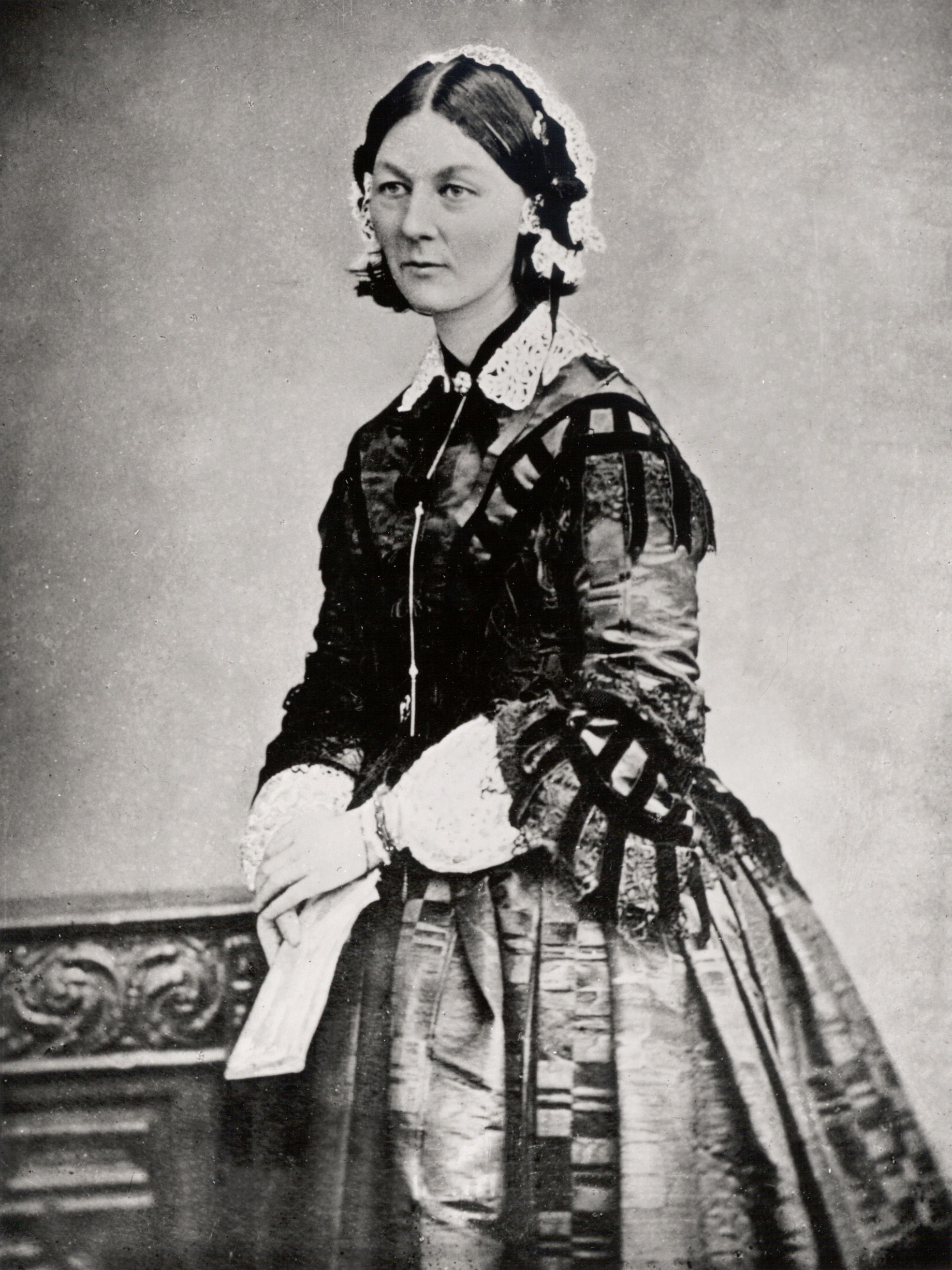
When I was 11 or 12, my grandparents asked me to help them sort all of their books in their dungeon of a basement. In the midst of the dusty stacks, I found a children's set of biographies, including one on Florence Nightingale. I remember sitting down and reading it right there. I loved the poetic beauty and ethereal image the nickname "The Lady with the Lamp" called up and fell in love with Florence.

Last year I was reading up on fox hunting and found a little book called "Fox-Hunting Recollections" by Sir Reginald Graham, Bart. He starts off with his younger years, including a couple of vignettes of his time in the Crimean War. This particular one jumped out at me.


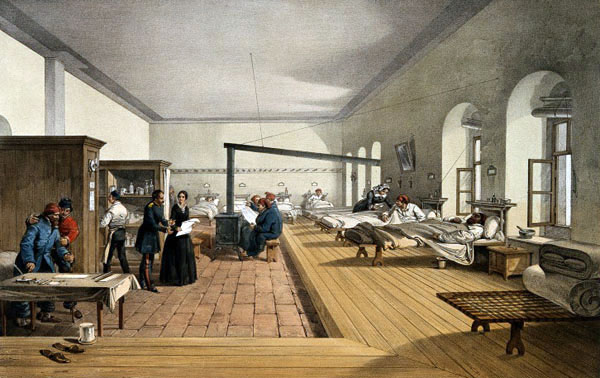
Ward at Scutari hospital
"Malta was but a brief halting-place on the way to the Crimea, and we landed at Balaclava the first week of November 1854. The 14th [Regiment] was soon moved to the front, and posted to the Third Division, commanded by General Sir Richard England. Our chief duty for many months to come was in the trenches day and night, and my most vivid recollection of that dreary time is snow, everlasting snow, throughout the bitterly severe winter of 1854-55. Owing to our hasty departure from Malta we, like the rest of the army, were ill-provided with suitable clothing, and I remember the joy with which I received at last a fur coat and a pair of long brown boots sent out from England, ready-made and not exactly a perfect fit; but to me at that time they were beyond all price. I kept well, and was as happy as the day was long (the days were rather long in the trenches); but soon after Sebastopol was evacuated by the Russians on the 8th September 1855, I had a very bad turn of Crimean fever, and was sent down to the hospital at Scutari, where my head was shaved, and for some weeks it seemed doubtful how matters would end for me. Our chief interest in hospital was to watch for Florence Nightingale as she passed through the wards with a gentle words for all,--a weary time until I improved and was invalided to England towards the end of 1855. My Crimean experience was at the age of from nineteen to twenty, and, looking back to such distant times, it seems to me nowadays as if those scenes had been in another world, and I feel myself a veritable Rip Van Winkle as I muse upon those far-off days and wonder how many officers still survive who landed at Balaclava with the old Fighting Fourteenth on that November day in 1854." 

Sadly, he didn't mention anything else about Florence.

Florence herself landed in Scutari in early November of 1854, and discovered that the medical conditions there were absolutely horrendous. The "hospital" of that time lacked many of the basics we consider integral to modern hospitals, including proper hygiene, medication, and bedding. "The hospital sat on top of a large cesspool, which contaminated the water and the building itself. Patients lay in their own excrement on stretchers strewn throughout the hallways. Rodents and bugs scurried past them. The most basic supplies, such as bandages and soap, grew increasingly scarce as the number of ill and wounded steadily increased. Even water needed to be rationed. More soldiers were dying from infectious diseases like typhoid and cholera than from injuries incurred in battle.(Florence Nightingale Biography) 


 It was Florence's responsibility to work with and oversee the 38 other nurses who arrived with her as they cleaned and dressed wounds, cooked and fed the soldiers in their wards, and in general, kept everything much more sanitary. In many ways, Florence and her nurses were expected to be glorified house maids.

"An article published about her in the Times newspaper on Thursday 8 February 1855, which reads: ‘She is a “ministering angel” without any exaggeration in these hospitals, and as her slender form glides quietly along each corridor every poor fellow’s face softens with gratitude at the sight of her. When all the medical officers have retired for the night, and silence and darkness have settled down upon these miles of prostrate sick, she may be observed alone, with a little lamp in her hand, making her solitary rounds.’ The mention of the miles of sick relates to contemporary reports that the wards at Scutari stretched for four miles." (National Archives)

While in Scutari, she began researching and advocating for reforming medical hospitals, particularly the living conditions of the soldiers. After she returned to England, she worked to improve sanitation in both hospitals and regular homes, and began the first modern nursing school.

Sources: 
"Fox-Hunting Recollections" Sir Reginald Graham, Bart. (available for free on Google Books)
http://www.nationalarchives.gov.uk/education/resources/florence-nightingale/
https://www.biography.com/scientist/florence-nightingale
https://www.britannica.com/biography/Florence-Nightingale
https://www.florence-nightingale.co.uk/?v=7516fd43adaa
https://en.wikipedia.org/wiki/Florence_Nightingale


Monday, May 6, 2019

Tying the Knot in Regency Scotland

By Guest Author, Karen Pierotti

Though Lydia’s short letter to Mrs. F. gave them to understand that they were going to Gretna Green, something was dropped by Denny expressing his belief that W. never intended to go there, or to marry Lydia at all, which was repeated to Colonel F. who instantly taking the alarm, set off from B, intending to trace their route. He did trace them easily to Clapham, but no further, for on entering that place they removed into a hackney coach, and dismissed the chaise that brought them from Epsom. (Austen, Pride and Prejudice)

What writer of Regency novels hasn’t read this letter to Lizzie? This scene of the notorious dash to Gretna Green to be married over the anvil and
the pursuit by outraged family members has made its way into many modern Regency novels.

But what if your novel was set in Scotland? What did a Scottish lassie do when she wanted to marry against her parents’ wishes? It was certainly not necessary to go to Gretna Green, Berwick-on-Tweed, or Lamberton, where marriages took place in the Toll House from 1798 to 1858.

A webpage through the University of Glasgow, The Scottish Way of Birth and Death explores the differences between English and Scottish marriage practices, both past and present. It is worth reading the whole page as it has many fascinating details about the social customs of not only marriage but birth and death in Scotland.

Scotland was famous for its distinctive marriage arrangements, which owed much to pre-Reformation canon law, and were based on principles of mutual consent rather than religious ceremony. Both 'regular' and 'irregular' marriages were recognised by the law. A 'regular' church marriage, requiring marriage banns to be read in the church some weeks in advance, was the usual practice, and from 1834 'priests and ministers not of the established church' were also allowed to conduct legal marriage ceremonies. In Scotland, regular marriages did not have to take place within a church building; indeed, they were more likely to take place in private homes.

There were three ways to perform a legal irregular marriage:

A couple were legally married if they declared themselves to be so in front of witnesses, regardless of whether this was followed by a sexual connection. Marriage contracted in this way without witnesses was also legal, but much harder to prove in court unless there was other evidence, such as letters that confirmed what the couple had done.

A promise of marriage, followed by a sexual relationship, was regarded as a legal marriage - but this had to be backed up by some kind of proof, such as a written promise of marriage, or an oath sworn before witnesses.

Marriages 'by habit and repute' were also legal if a couple usually presented themselves in public as husband and wife, even if no formal declaration of marriage was made.

One of the most important aspects of the irregular marriages was the necessity of recording the marriage with the sheriff to make it legal. And, there was the good possibility especially of the English who came across the border who’d forget or not complete this part of the marriage. Oftentimes a fine was extracted, but as it was cheaper than the fee for a church wedding, many more lower class couples entered into an irregular marriage but would marry in the kirk later. (The Scottish Way)

The Scottish Kirk or Presbyterian Church

Like England, banns were read over the pulpit three weeks in advance before the marriage ceremony took place. Oftentimes, you’ll see two dates in a parish record, the first being a marriage bann, the second when the actual marriage took place. However, the stern Presbyterian kirk frowned upon irregular marriages but recognized them so that the couple were not “living in sin.” An upper-class family would still find fault with such a marriage, especially if inheritances were involved, and would certainly do all in their power to avoid such a marriage or get it annulled. 

In spite of the loose nature of the marriage laws, children were still born out of wedlock and in order for the child to be legitimized and baptized the errant couple were brought before the Kirk Sessions, a meeting of the minister and appointed lay officers such as elders and deacons. The couple, or more frequently, the woman, was given the opportunity to confess her sin before the session and, in earlier times, had to sit in front of the congregation for three Sundays on the repentance stool. (I use such a scene in my novel, Joy to My Love and I also have an irregular wedding performed. I have elaborated a little more on the Kirk Sessions in my blog, https://www.karenmedwards.com/blog/ kirk-sessions-repentance-stool) Kirk Sessions seem to have taken place more frequently in the Lowlands where the Presbyterian church was stronger.

Handfasting and Betrothal Ceremonies

You may already have heard about handfasting that was quite common in earlier times in the Highlands of Scotland. This was a sort of irregular marriage which “allowed a couple to declare their intention at a simple formality that usually took place at the Lammas fair, then live together publicly for a year. If it all worked out favourably they were married a year and a day after they handfasted. (Bennett, p. 108). Lammas is a harvest fair usually held between 1 August and 1 September.

If a child was born of the handfasting and the parents went their separate ways, the father usually took the child into the household and it was not considered illegitimate. Handfasting seems to have taken place in the Highlands among the clan system there rather than the Lowlands. Bennett collected several accounts of this practice from Western Isles in 1695, Isle of Skye, 1774, and Perthshire, 1931. (Bennett, pp. 107-115)

An article, “Tying the Knot: Handfasting Through the Ages,” from the BBC Scotland website, has more information on handfasting and some facts and myths about it. And, if you google “handfasting,” you’ll find sites about how to do a modern handfasting. 

Betrothals were almost as binding as weddings. In the Highlands there was a réiteach (agreement)/wedding arrangement; it was sort of equivalent to an engagement party. According to one account it was a third party who asked for the interested groom, but they asked for the lassie’s hand obliquely. For example, in a farming community the speaker for the intended might ask to take a ewe lamb off the father’s hands, or in a fishing community, the father might reply that he was willing to give him “the boat that had never been used by anybody else . . . And that he was welcome to take her, and sail her in calm waters.” (Bennett, p. 111).

A 1774 account in Orkney reports that a couple would clasp each other’s right hands through a hole in a special stone (Stone of Odin) and they “swore to be constant and faithful to each other. . . . the person who dared to break the engagement made there was counted infamous, and excluded from all society.” (Bennett, p. 110).

Divorce or Annulment

Divorce even until the middle of the 20th century was unacceptable so once a person married it was for life until the partner died, especially in a regular marriage. There’s a saying that gives a warning about making a good marriage in the first place: “Ye hae tied a knot wi’ your tongue you winna loose wi’ your teeth.”(Bennett, p. 93).

Untying the knot was difficult but like the marriage laws, Scottish divorce and annulment laws were different from England.

The Church of Scotland had since the Reformation accepted divorce on the grounds of adultery, and later added the grounds of desertion for more than four years.  From 1830, Scottish divorces were decided by the Court of Session, like other cases in civil law.  Both men and women could seek divorce for adultery or desertion.  This was different from the law of England, where men could divorce their wives for adultery, but women did not have the same right until 1923, unless there were other serious offences involved.  Divorce for desertion was not possible in England until 1937.  (Scottish Way of Birth and Death)

For an irregular marriage, the main way the contract was annulled was by desertion.

Conclusion

If you have a Scottish Wickham-like character, do some research about how he can achieve his aims and can be thwarted according to Scottish marriage laws. If you are writing a book set in Scotland, learn about the different customs, and, as a side note, if your book is in the Highlands and you use Gaelic words or phrases, make sure it’s Scottish Gaelic (pronounced gallick) and not Irish Gaelic. Though they’re closely related, they are different.

I have only scratched the surface of information on marriage laws in Scotland and have included a bibliography of the sources I’ve referred to as well as additional links that might be useful.

Bennett’s book has a wealth of information with all kinds of local customs like jumping the besom (broom) and washing feet. I highly recommend buying it if your books are going to be set in Scotland; you may be able to find it in a library or at least through interlibrary loan at a university or local library.

Bibliography
Bennett, M. (2004) Scottish Customs from the Cradle to Grave. Edinburgh, Scotland: Birlinn Limited

Scottish Way of Birth and Death, University of Glasgow (https://www.gla.ac.uk/schools/socialpolitical/research/economicsocialhistory/historymedicine/scottishwayofbirthanddeath/marriage/)

“Tying the Knot: Handfasting Through the Ages” (April 2011) BBC: Scotland http://www.bbc.co.uk/scotland/history/tying_the_knot_handfasting_through_the_ages.shtml

Other Links

Gordon, E. (2013) “Irregular Marriage: Myth and Reality” Journal of Social History. https://academic.oup.com/jsh/article/47/2/507/1325355

Leneman, L. and R. Mitchison. (1993) Clandestine Marriage in the Scottish Cities 1660-1780 Journal of Social History Vol. 26, No. 4 (Summer, 1993), pp. 845-861 https://www.jstor.org/stable/3788783?seq=1#page_scan_tab_contents

Friday, April 19, 2019

Parliament and the Reform Act of 1832

We've all heard of Parliament--the House of Lords and the House of Commons. You'd think that the names of the two houses (roughly the equivalent of the US Senate/House), were fairly self-explanatory, but they're a bit of a misnomer.

The House of Lords (occasionally referred to as the House of Peers) is made of two parties - the Lords Spiritual and the Lords Temporal. The Lords Spiritual came from the Church of England and the Lords Temporal were both life peers and hereditary peers.

The House of Commons was comprised of both elected lords and commoners. Like the US House of Representatives, each borough (or district) had a set number of representatives to sit in Commons. By the early 1800s, many of the boroughs were no longer as populated or had even disappeared (one literally sunk), but still retained the same representation they had years before. Many of these boroughs sold their seat to the highest bidder, effectively giving those seats to one person, who then passed those seats to their cronies, or to the younger sons of lords.

By the late 1820s, early 1830s, the Whig party had managed to gain control of Commons, and attempted to pass a reform bill reorganizing representation to remove these "rotten" or "pocket" boroughs. The House of Lords (mostly from the Tory party) blocked this bill until King William threatened to create new peers and public riots broke out. The Representation of the People Act or the Reform Act finally passed in 1832.

This act not only removed representation from several of the older boroughs and gave representation to newer, larger boroughs (most notably in the industrial part of England), it also gave more people freedom to vote, including tradesmen and tenants-at-will.

Sources:
The Liberal Ascendancy, 1830-1886 by T.A. Jenkins
Party & Politics 1830-1852 by Robert Stewart
https://www.historyofparliamentonline.org/
https://en.wikipedia.org/wiki/Parliament_of_the_United_Kingdom
https://en.wikipedia.org/wiki/Reform_Act_1832


Wednesday, April 17, 2019

Bugs and Worms in Colonial Households


Housewives in Colonial America had to endure the same challenges that modern families face, but their methods for dealing with vermin were very different, indeed. There were no supermarkets stocked with traps and repellent in those days, so homemade solutions were the only option.

Any parent can relate to the dread of a bedbug infestation. So how did our ancestors tackle the problem? Homemakers would begin by distilling wine and mixing the result with turpentine and dried henna. This concoction would be spread around the entire room where an infestation is suspected, including the lacing on the beds and the folds of the curtains. The mixture, it is claimed, would not harm nor stain the finest silk or damask.

Any home that has suffered the invasion of other crawling bugs could be treated with a mixture of wormwood and mustard seed. A solution was created by bruising the wormwood leaves and boiling the two ingredients in water for fifteen minutes before adding salt.
House flies could be eliminated by steeping hellebore flower in cow’s milk and sprinkling the liquid around the home.

The destruction of clothing from and moths and worms was prevented by drying the herb botris and sprinkling the dust upon all garments.

But what if worms invade the children? A toxic mix of red seaweed, mercuric sulfide, ground savine, and saffron was said to do the trick. Sadly, the mixture was likely as damaging to the children as it was to the worms.

 Some of the information was adapted from The British jewel; or, Complete housewife's best companion, London, Printed and sold by J. Miller, 1769.