By Donna Hatch
People in Regency England depended heavily upon horseback and carriage to get around. Many of them traveled extensively from their country homes to London for the Season, which was both a social and political time of year while the House of Lords was in session. Many roads were terrible, and weather and highwaymen made travel uncomfortable as well as dangerous. To accommodate the Regency gentry or nobility, the styles, paint design and features of carriages were as varied as today’s automobiles, and many were also custom-made. Nobility had their family coat of arms painted on the side of their family coach. Image, status, and money, as well as personal taste, were all factors in choosing a carriage. A reader may come across a number of different names for conveyances. Unless one is willing to do research, these names may mean nothing. So, to help you visualize types of vehicles in historical novels, here are some more commonly used types:
- Barouche

Barouche (pictured): a very expensive and large four-passenger carriage pulled by four horses. Its folding hood could be raised but it only covered two of the passengers. This was viewed as a status symbol to own and provided a stylish way to be seen showing off wealth and clothing. It also allowed for unimpeded views, so they were ideal for sight-seeing.

- https://commons.wikimedia.org/wiki/File:Curricle.jpg
Curricle: (pictured) a vehicle meant for two horses, it was small and only had two wheels. Its hood folded down, like a convertible. Lightweight and very fast, it was a favorite of young men who wished to show off driving skills and a perfectly matched team. Thrill-seekers often used it in racing, but it tipped over easily, so it was dangerous, hence the challenge and allure.
Dog cart: named so because owners often used it for taking fox hounds to a hunt. It had a seat in front for one driver, and a seat facing the rear of the carriage that could fold down for two passengers. Originally named a dog cart due to the ventilated box under the seat to keep hunting dogs when they drove to the fox hunt, this box also created an ideal place to stow cargo. There were both two- and four-wheeled versions. Another vehicle called a dog cart was a small four-wheeled cart pulled by dogs, generally to transport containers of milk or other cargo.
Family coach: a closed carriage that comfortably seated four passengers. The driver sat up front, way up high. It had windows, curtains, lanterns and usually storage compartments for refreshments and supplies. They also normally featured small desks for writing the many extensive letters Regency people were so mad about sending and receiving.
Gig: much like the dog cart, often popular with country doctors, is a two-wheeled vehicle with a seat wide enough for one or two people.
Governess cart: also called a “jaunting cart,” sometimes driven by ladies but most often by children. It was small and light, and pulled by one pony or donkey.

- Hackney Coach 1800 @wikimedia commons
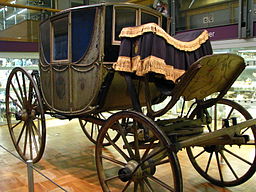
Hackney (pictured): like the modern day taxi cab, these could be carriages of any kind, but typically those that were closed, and driven by the cab driver, called a jarvey. They were most often used in London. One could hail them from the street, or go to a hackney stand where the jarveys hung out until they found a paying passenger.
Hansom: a two-wheeled carriage used as a cab. Most sources date its usage beginning with the Victorian Era. If this is true, it would not have been around during the Regency.
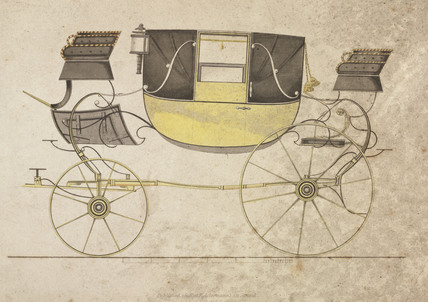
- en.wikipedia.org/wiki/Landau_(carriage)
Landau (pictured): an open carriage with folding hoods that could be raised to protect the passengers. Like the Barouche, it was ideal when one wanted to see and be seen. It, too, had a driver up front and was pulled by four horses. Cinderella's carriage reminds me of a Landau.

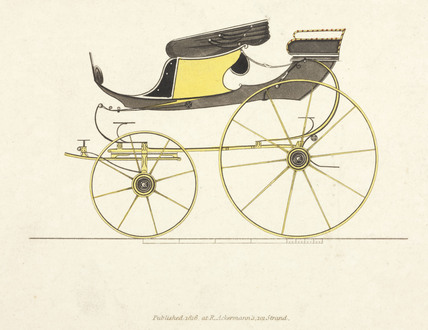
- https://en.wikipedia.org/wiki/Phaeton_(carriage)
Phaeton(pictured): a smaller two-seater used by owners who drove themselves. It had a roof, but the front and sides were open, although some pictures show it as having a folding hood. The front two wheels were smaller than the back wheels. Often the seat was very high, so much so that one required a ladder to reach it. It was also often referred to as the high-perch phaeton. It was considered stylish and rakish.
Post Chaise: technically any carriage that could be hired out by someone who wished to travel privately and not with a group of strangers such as a stage coach or mail coach. By the Regency it was usually small, chariot-style carriage which could be pulled by two or four horses, (but usually four) often painted yellow, and had one seat, which seated two. It also had an outside, rear facing seat for servants and a platform in front for luggage. The driver, called a postilion, rode on the backs of the left lead horse instead of on a bench on the carriage.
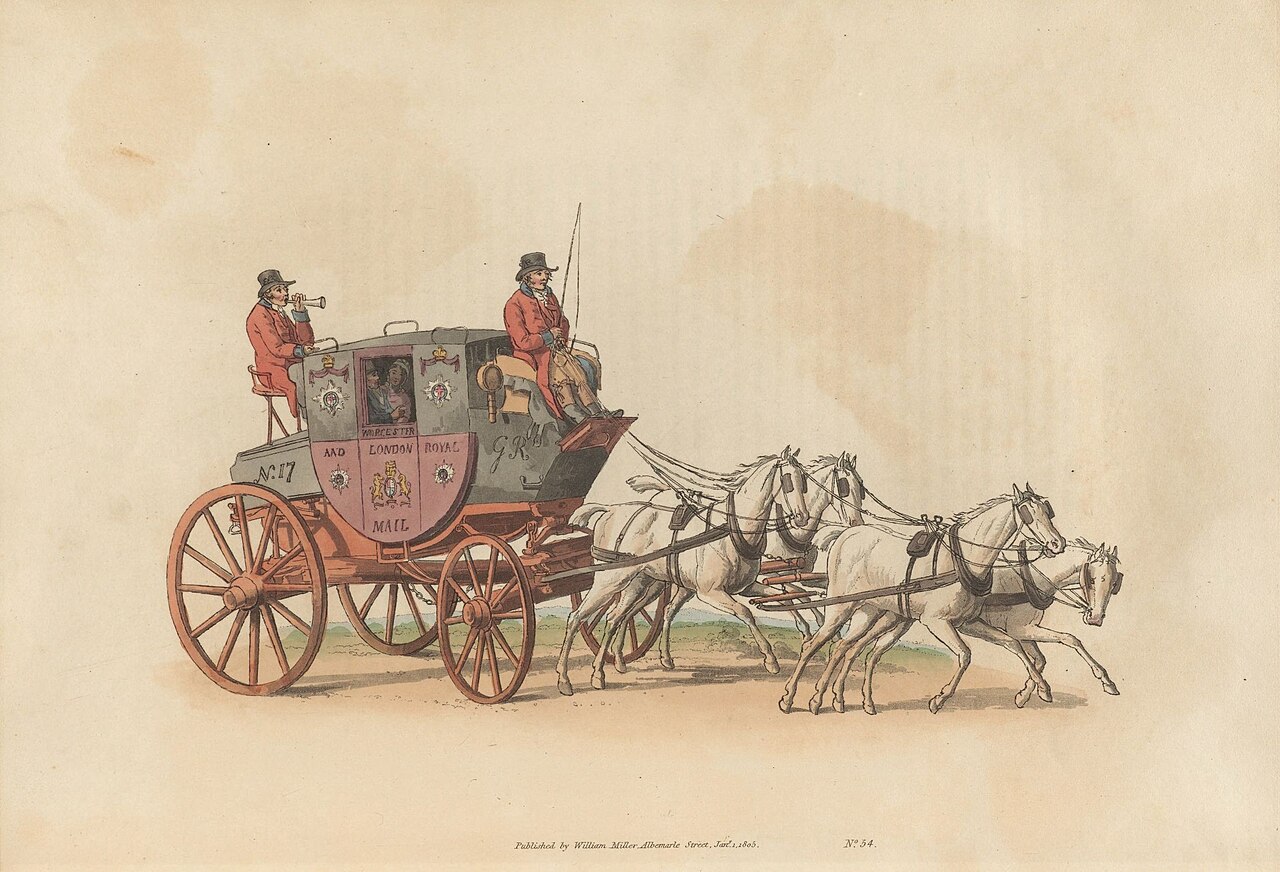
- https://en.wikipedia.org/wiki/Stagecoach
There were also stage coaches and mail coaches, which were public transportation for the person who didn’t mind (or were forced by the size of their purse) to travel with other passengers. They followed select routes and stopped at inns for food and for changing out the team of horses. The mail coach was the cheapest way to travel, and the most uncomfortable because its primary function was to carry mail rather than passengers. Sometimes, passengers were obliged to ride on top, and there are stories of that proving a fatal way to travel.
Traveling in Regency England was so difficult and dangerous, I'm honestly surprised people did it at all. But I suppose our ancestors will look back at us and how many car accidents and traffic jams occur in our era, and will wonder the same about us. It all boils down to a need to get somewhere, and the means at one's disposal for getting there.



 Posts
Posts


