Search This Blog

Showing posts with label historical bathing. Show all posts

Wednesday, September 7, 2022

Bathing in the Middle Ages by Jenna Jaxon

Last month I took a look at bathing and bathtubs in the Regency period. This month I’m going backward in time to examine bathing during the Middle Ages.

The first thing to affirm is that yes, people did bathe during the Medieval period, using several different methods.


A lot depended on your status in life as to how often you took a bath. The lowest classes who did manual labor likely bathed the least. They would probably not have had the means or money to fetch buckets of water, heat the water, and purchase a tub and then bathe in it. Such laborers and the poorer people would have availed themselves of a dip in a pond, lake, or stream during the warmer months. Otherwise, they may have taken wash pan baths, washing as best they could during the colder months.

Middle class people may have had enough money to own a tub and employ a servant to fetch and heat the water. They might also have had the fees to go to public bath houses (a holdover from Roman times). These houses were very popular but had a reputation for lewdness. The sexes weren’t always separated, and prostitutes were known to frequent them.

The nobility would have had a tub for the household to use (perhaps more than one, depending on the


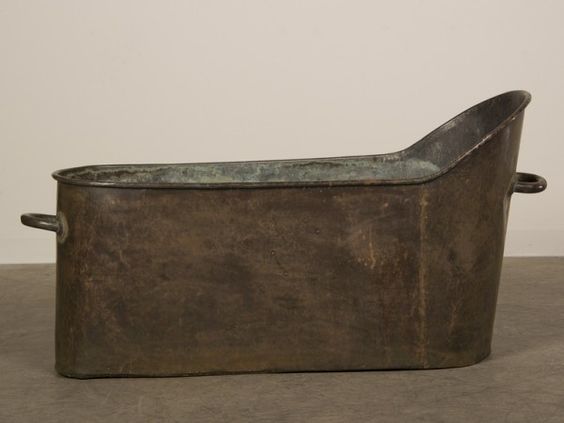
size of the family). Tubs were a status symbol for the wealthy. They would be lined with linen fabric to protect tender skin from splinters if the tub was wooden, or to protect it from seams if the tub was made of metal.

Royal households would certainly have availed themselves of the bath. Documents show that Charlemagne loved taking baths and not just alone. He’d invite relatives, guests, and sometimes servants and attendants to bathe with him. King John of England took a bathtub with him when he traveled.
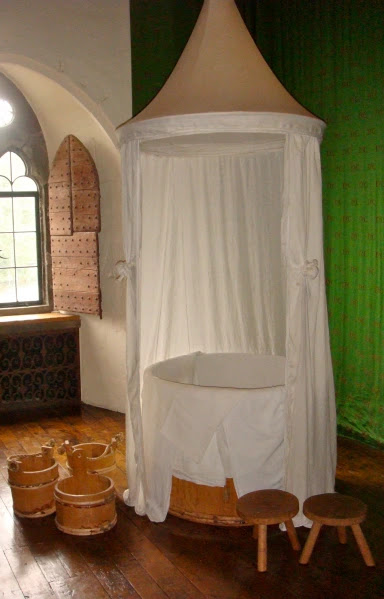

One additional note of interest: men usually bathed naked while women wore a shift or chemise, whether for warmth or modesty is difficult to tell.

So bathing, in all its various forms, was definitely a large part of life during the Middle Ages.


Resources:

Chase, Loretta. “Queen Caroline Takes a Bath.” Two Nerdy History Girls, July 11, 2011.

“Did People in the Middle Ages Take Baths?” Medievalists.net, April 2013.

Peardon, Keri. “Bathing in the Middle Ages.” Vampires, Ladies, and Potpourri, June 14, 2012.

Wednesday, August 3, 2022

Bathtubs in Regency England by Jenna Jaxon


At the end of the 18th century, attitudes toward bathing began to change. Beau Brummel, a Regency fashion plate, was an advocate of bathing often and he was a major Regency “influencer.” About that same time, in 1791, John Wesley gave a sermon “On Dress” in which he made the acclamation, “Cleanliness is next to Godliness.” People took these and other ideas on cleanliness into consideration, making the Regency period of transitioning into good bathing habits.


Basin and Ewer

Actual bathtubs seem to have been rare and in the lower classes--all but non-existent. Instead, they used a basin and  a ball of soap to clean themselves, rather than an immersion, although in summer lakes and ponds served as natural bathtubs. For the middle classes, the basin and ewer were also standard equipment, although the wealthier families who could afford a bathtub would likely have one of metal or wood.

The aristocracy would have certainly had bathtubs,

Shower-Bath at Scarborough

again of copper or wood, that could be set up in a chamber (often a bed chamber), filled by servants who would lug water from a well outside, into the kitchen to be heated, then lugged upstairs and poured into the bathtub. Little wonder none but the wealthiest could afford such a luxury. The tub was usually lined with linen fabric, to keep the bather from getting splinters from a wooden tub or keep from sticking to the surface of a metal tub. Water was often left near the fireplace to warm the water when it cooled or for rinsing off at the end of the bath.

Regency metal bathtub


Some members of the Regency upper classes actually possessed showers. The contraption was first noted around 1810, “around 12 feet high…a fancy bathing apparatus…[a] pump lifted water from tank

Regency Shower

at bottom through pipe to top tank, water could be used over and over again,” according to Life Magazine.

So during the Regency, people were beginning to take the business of cleanliness much more seriously and began to change their bathing habits accordingly.


RESOURCES:

Bourne, Joanna. “Keeping It Clean—Georgian and Regency Bathing Customs.” WordWenches Blog, August 3, 2011.

Chase, Loretta. “Taking a Shower in the 1800s.” Two Nerdy History Girls Blog, June 22, 2015.

Lahildin. “Staying Clean in Regency England.” October 17, 2014.

Life Magazine.

Vic. “A 19th Century Regency Era Shower.” Jane Austen’s World, November 11, 2010.


Wednesday, May 26, 2010

Regency Hygiene, or the Lack Thereof, Part II: Beau Brummell


George Bryan "Beau" Brummell (1778-1840) almost single-handedly brought frequent bathing into vogue in the Regency. The son of a clerk, he was not particularly distinguished for his good looks, education or connection. But he was always very neat, his clothes were a masterpiece of simple elegance, and both his garments and his body were always spotless.

Brummell insisted that a gentleman be clean--clean as in total body immersion in water. His efforts succeeded in part because he had gained the favor of the crown prince, George, later the prince regent. When Brummell converted the prince, the upper classes followed, with the lower orders not far behind.

Brummell turned personal hygiene into an art form. He was famous for his daily three-hour regimen of scrubbing every part of his body, removing all the hair from his face, and then wrapping himself in immaculate, simple clothes that were the antithesis of the male fashions of the previous fifty years. Although his manner of dress was at first called "dandyism", Brummell created the standard of masculine attire we still use today: shirt, tie, jacket and trousers, all well-tailored, on a meticulously clean body.

When he was born, the standard of male beauty consisted of a wardrobe of costly, brightly-colored fabrics, powdered hair or wig, makeup (yes the men wore makeup) and high-heeled shoes. All over a dirty body and filthy hair, both heavily doused with perfume in an attempt to mask, usually unsuccessfully, massive body odor due to infrequent bathing. See previous post.

As an example, these stills from the 2006 BBC production Beau Brummell: This Charming Man show (left), the Prince of Wales before Brummell's influence, and (right), afterwards.

Brummell was not the first proponent of cleanliness. The return to bathing had started before he was born. In the mid 1700's, Philip Stanhope, the fourth Earl of Chesterfield, wrote a famous series of letters to his son emphasizing personal hygiene. In France, Jean-Jacque Rousseau extolled cleanliness in his novel, Emile, or On Education (1762), although he personally was not that fastidious.

But the English considered anything French suspicious, and they turned to copious amounts of soap and water only when the consummately British Brummell arrived on the scene.

Brummell's story did not end happily. He fell out with his patron, the Prince of Wales. Afterwards, his gambling debts forced him to flee to France, where he spent the rest of his life. His gambling debts increased as his health declined. He died at sixty-two due to the complications of tertiary syphilis.

Today, we remember Brummell as a male fashion plate. In time, advances in science and the wider availability of soap and hot water cleaned up a world mired in dirt. But Beau Brummell hastened that day by making cleanliness fashionable.

Thank you all,
Linda

Wednesday, May 12, 2010

Regency Hygiene, or the Lack Thereof, Part I


Regency England was a dirty place--and not only because of the large amount of horse manure around. Although the proverb "cleanliness is next to godliness" was known at this time, its meaning was different from today's interpretation.

For most of the era, cleanliness meant the daily washing of hands, face, and neck and wearing a clean shirt (for men), or a clean chemise (for women). The notion of immersing the entire body in water was anathema in Western Europe, and had been for the previous several hundred years.

Such an attitude did not exist in the ancient world. In the days of the Roman Empire, everyone--men, women and children, free and enslaved--visited the public baths every day. The Romans built baths in every corner of their far-flung empire. Even chilly Britannia, at the outer edge of their rule, had baths. Aquae Sulis (The Waters of the Goddess Sulis), now known as Bath, received its Roman name from the hot springs located there.

As the Empire waned, so did its legacy, including baths and bathing. Public baths acquired the seedy reputation of encouraging licentiousness, although they remained fixtures in European life for centuries after Rome's demise.

The death of bathing occurred as a result of another death--the Black Death.

The Black Death (bubonic plague) was the worst pandemic the western world has ever seen. 30-60% of fourteenth-century Europe's population perished in agony due to this scourge. Panicked physicians, unaware that fleas transmitted the terrible disease, made a frantic search for any method of prevention.

The standard explanation blamed the planets for causing noxious vapors to rise from the earth and enter the body through the lungs. A new theory arose that skin softened by hot water became porous and provided the infection another entry. In terror for their lives, people stopped bathing. Bath houses fell into disrepair.

From the Black Death to the Regency, Western Europe grew dirtier and dirtier. Clothing, often tightly woven as another barrier to disease and made of hard-to-clean materials such as wool and silk, went unlaundered. The rich wore strong perfume to mask the often-overpowering stench of their neighbors' unwashed bodies. The poor just stank. Lice and fleas were rampant on everyone, regardless of class. The title of this 1638 Georges De La Tour painting is Woman Catching A Flea.

Dirtiness reached its peak--or nadir--in the Georgian era. By the time of the Regency, England had begun to clean up its act. The single person who was most influential in the resurgence of personal cleanliness was George "Beau" Brummell.

Next time—Beau Brummell.

Thank you all,
Linda