It was 1780 when Cornwallis gave the command to take the southern colonies. He appointed a handsome soldier by the name of Patrick Ferguson to march across Virginia toward North Carolina and meet him in Charlotte.
Ferguson was confident most settlers were loyalists anxious for peace to be restored to their chaotic towns. Some refer to this as the first civil war because politics began to divide the people so intensely that violence broke out on both sides, breaking up friends and families.
Loyalists wanted to keep England in power, while patriots wanted to break from the mother country, about a third of the populace really didn't care, they just wanted to be left alone. The British cause was hurt by the means some officers took to quell rebellion Resistance was met with brute force and no quarter was given, the patriots were hanged. Despite the stories of oppression, Ferguson was certain loyalists would flock under his banner as he made his way toward the small town of Kings Mountain.
While some loyalists followed him, resistors, called mountain men followed with the intent of attack. Ferguson sent a threat to the settlers of North Carolina to either sign an oath of allegiance to the crown or their land and homes would be laid to waste, while their leaders were hanged.
This did not promote loyalty.
As Ferguson made camp on the top of King's pinnacle, the towns people promised to bring him down and reclaim what was theirs. While it was assumed the mountain top would give an advantage in battle, the gun fire sailed over the heads of patriots charging the hill. The mountain men used "Indian tactics" instead of fighting out in the open, they hid behind trees and rocks, advancing the whole time.
Said George Hanger of Ferguson's Provincial Corps:
"This distinguished race of men are more savage than the Indians, and posses every one of the vices, but none of the virtues. I have known these fellows to travel 200 miles through the woods never keeping any road or path, guided by the sun by day, and stars by night, to kill a particular person of the opposite party."
True to the reputation, men flocked to unseat Ferguson's troops, coming from miles around. Some kept their horses a mile from the battle ground and walked toward the skirmish, gun in hand.
The mountain was surrounded, the battle raged for about an hour before the English tried to surrender. White flags were raised, but some ignored them, while others may not have understood its meaning. Most of the Loyalists were shot down.
Ferguson rode his horse issuing commands the whole time. He was shot nine times and fell from his horse. He is buried on the mountain to this day.
The battle was commemorated by Thomas Jefferson as the battle that turned the tide of war. In later years, a memorial stone was erected in Ferguson's memory. He was a man of honor and we remember those who fell. Glad to commemorate the battle and our lasting friendship with the British Empire. The monument was erected in 1930.
Monday, June 14, 2010


Guest Shana Galen: Pushing the Envelope in THE MAKING OF A DUCHESS
 Linda Banche here. Today I welcome Shana Galen and her latest Regency historical, The Making of a Duchess. Now, Duchess is not your ordinary Regency, and Shana will tell you why.
Leave a comment for a chance to win one of the two copies of The Making of a Duchess which Sourcebooks has generously provided. Shana will select the winners. Check the comments to see who won, and how to contact me to claim your book. If I cannot contact the winners within a week of their selection, I will award the books to alternates. Note, Sourcebooks can mail to USA and Canada addresses only.
The winners are Miss Quoted and Lois. I've sent you both emails, so look for them. Lois, I have your address. If I do not hear from you by June 22, I will award your prize to an alternate.
Welcome Shana!
Thanks so much for having me at Historical Hussies. I’ve enjoyed the blog for quite some time, and it’s an honor to be here discussing my new novel, The Making of a Duchess. I love history, especially the Regency period, but when I began writing The Making of a Duchess I decided to push the envelope just a bit.
I think there are times in our lives when we have nothing to lose. I was between publishing contracts when I started Duchess and didn’t know if anyone but me would ever read the novel. So why not write something a bit unconventional?
Or maybe even a lot unconventional. I have a French hero, a heroine who’s a governess, and part of the book is set in France—not your typical Regency romance. But it’s my heroine Sarah Smith who pushed the envelope the most.

Sarah is a governess for the children of a powerful man in England’s Foreign Office. She’s perfectly content in her position. An orphan who was raised by one of the numerous benevolent societies of the time, Sarah is happy to have such an important position, and she doesn’t understand what her employer is about when he calls her to his library and asks her to spy on Julien Harcourt, the influential duc de Valére. The duc is suspected of treason and considered a very real threat to England’s sovereignty.
But Sarah’s not a spy. She’s a governess and doesn’t know the first thing about spying. And, she argues, she’s a terrible actress. There’s no way she can pretend to be a French comtesse. She’s a lowly governess!
But the Foreign Office won’t take no for an answer. The spy they intended to send has been wounded, and their only option is Sarah. Why Sarah? She has no family, no connections, she’s a virtual unknown. She works with children, which requires patience and tenacity. And she lives among the aristocracy, which means she knows how they behave. Why not Sarah?
One of my favorite themes is the fish-out-of-water. In my novel Pride and Petticoats, Charlotte, an American, tries to fit in with the British ton. In No Man’s Bride, shy, reclusive Catie must become a political wife and hostess. In The Making of a Duchess, I gave Sarah the biggest challenge of all—she must pretend to be a French comtesse. And while she plays the comtesse, she must also play the spy. A single misstep could expose her to one of the most dangerous traitors in all of England.
What’s your favorite romance novel theme? Marriage of convenience? Secret baby? Enemies who fall in love? Fish-out-of-water? I’ll be checking in later to read your answers.
THE MAKING OF A DUCHESS by SHANA GALEN—IN STORES JUNE 2010
A very dangerous attraction…
Julien Harcourt, duc de Valère, is more than willing to marry the lovely young lady his mother has chosen. Little does he know, she’s been sent to prove him a spy and a traitor…
And an even more dangerous secret…
Sarah Smith’s mission is to find out whether the Duc’s trips to the Continent are as innocent as he claims, but the way he looks at her is far from innocent…
Their risky game of cat and mouse propels them from the ballrooms of London to the prisons of Paris, and into a fragile love that may not survive their deceptions…
About the Author
Shana Galen is the author of five Regency historicals, including the Rita-nominated Blackthorne’s Bride. Her books have been sold in Brazil, Russia, and the Netherlands and featured in the Rhapsody and Doubleday Book Clubs. A former English teacher in Houston’s inner city, Shana now writes full time. She is a happily married wife and mother of one daughter and two spoiled cats. She loves to hear from readers: visit her website at www.shanagalen.com.
Wednesday, June 9, 2010
Medieval People and Their Pets
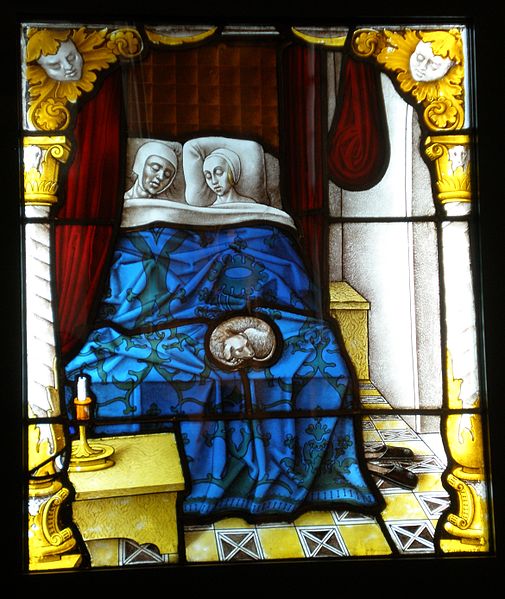 Today I welcome my friend, historical and contemporary romance author, Lindsay Townsend. Lindsay writes in a variety of eras, from ancient Crete and Egypt, to Roman and medieval Britain and up to the present.
Lindsay found me on the loops when we both had author days on the same day. That was when my first book came out, and I had no idea what I was doing. Lindsay has been very nice to newbie me, and I'm delighted to host her here.
And now for Lindsay's wonderful post.
In the Middle Ages women and men often doted on their pets. In York Minster, there is a portrait of the lap dog of Lady Margaret Roos, rendered in stained glass. The dog looks happy and sleek, with a belled collar. In the picture here of Tobias and Sara, a window of about 1520 from Cologne, the couple's pet dog is a sleepy symbol of wedded tranquillity.
In other drawings of medieval pets, the British Library has a manuscript showing a woman with a pet squirrel while the Luttrell Psalter shows a collared pet squirrel as a sign of status.
Birds were also popular. Jays and magpies - called 'pies' - were kept in cages and taught to copy speech. Larks and nightingales were kept for their sweet songs.
 Cats in the Middle Ages were kept mainly as mousers, and also, more grimly, for their fur and skins. Yet cats were also treasured. Exeter Cathedral lists in its accounts from 1305 to 1467 the sum of a penny a week to feed the cathedral cats if the animals did not catch many mice in the main church.
Dogs remained a favourite - so much so that nunneries tried and failed to ban the keeping of dogs as pets in various convents. Nuns were warned not to bring their pets into church and the pets included dogs, hunting dogs, rabbits, squirrels, birds and even monkeys.
Hunting dogs and hawks were not officially pets, being used to hunt and bring extra food for the table and to provide sport and entertainment to their lords and ladies. However, hawks were also massive status symbols, given as kingly gifts and well-known as signs of wealth and power. As such they were pampered and displayed - so much so that perches were even brought indoors to their owners could have their falcons with them. In 1368 the Abbot of Westminster, Nicholas de Litlington, bought a wax image of a falcon to offer at the altar to help a sick falcon recover. Lay men and women often brought their pets into church - the men with hawks on their wrists and women with lap-dogs.
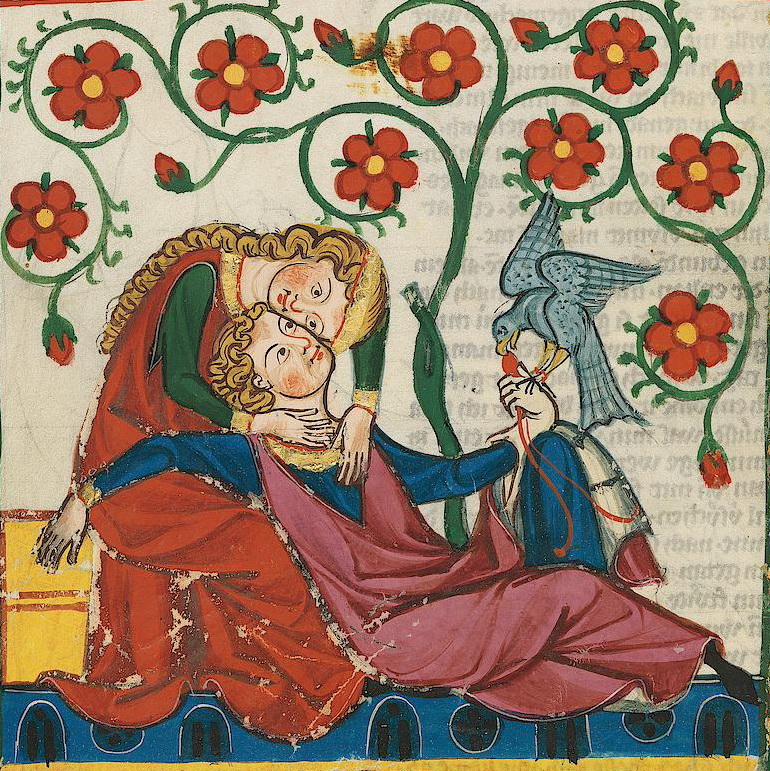 Breeds of pets changed over time and some are unknown to us now. Medieval man in particular had a passion for hunting and bred horses and dogs for that activity. There were horses bred for stamina and long chases through woodland after quarry, sturdy beasts called coursers (chasers) And as a hunting dog, the big, deep-chested, long-legged alaunt was much prized.
The alaunt makes an appearance in my third knight book, A Knight's Enchantment, out on June 1. You can read an excerpt here.
Thank you, Historical Hussies, for having me as a guest!
Best wishes, Lindsay
www.lindsaytownsend.net
Wednesday, June 2, 2010
Research for Historicals

When crafting historical novels, a writer must first feel grounded in the period, and confidant with the setting and what the characters wear, eat, see, and how they live. That’s a tall order, and takes a lot of time.
In thinking about my upcoming workshop at RWA National in July, where I’ll be getting specific about Researching for Historicals, I realized it could have been a one-day workshop instead of only several minutes. In researching for my October release, The Tapestry Shop, I visited museums in France, where I found artifacts that enriched my novel, set in the thirteenth century. In a museum I saw some of the tools they used in the Middle Ages, as well as everyday items like a lady’s comb. What fascinated me about the comb was that the upper part, where the teeth were attached, was made of tin. This was their mirror. This same comb plays a part in my novel, when Catherine sees her mother’s face in the tin reflection.
Fine, you say. But I can’t make it to London to research my Regency! Not to worry. You can browse parts of the Smithsonian, even online. I keep a list of online sites, set down as to category and time period. When I’m in a hurry, I just throw them in my Favorites folder and sort them later.
Aside from the internet, SCA events, like reenactments, are great places to see what life was really like before modern times. Best of all, keep reading books written by authors who write in your time period. Chances are they have done their homework, and can save you a lot of time, but it never hurts to double-check the facts before sending your book out into the world.
Wednesday, May 26, 2010
Regency Hygiene, or the Lack Thereof, Part II: Beau Brummell

George Bryan "Beau" Brummell (1778-1840) almost single-handedly brought frequent bathing into vogue in the Regency. The son of a clerk, he was not particularly distinguished for his good looks, education or connection. But he was always very neat, his clothes were a masterpiece of simple elegance, and both his garments and his body were always spotless.
Brummell insisted that a gentleman be clean--clean as in total body immersion in water. His efforts succeeded in part because he had gained the favor of the crown prince, George, later the prince regent. When Brummell converted the prince, the upper classes followed, with the lower orders not far behind.
Brummell turned personal hygiene into an art form. He was famous for his daily three-hour regimen of scrubbing every part of his body, removing all the hair from his face, and then wrapping himself in
 immaculate, simple clothes that were the antithesis of the male fashions of the previous fifty years. Although his manner of dress was at first called "dandyism", Brummell created the standard of masculine attire we still use today: shirt, tie, jacket and trousers, all well-tailored, on a meticulously clean body.
When he was born, the standard of male beauty consisted of a wardrobe of costly, brightly-colored fabrics, powdered hair or wig, makeup (yes the men wore makeup) and high-heeled shoes. All over a dirty body and filthy hair, both heavily doused with perfume in an attempt to mask, usually unsuccessfully, massive body odor due to infrequent bathing. See previous post.
As an example, these stills from the 2006 BBC production Beau Brummell: This Charming Man show (left), the Prince of Wales before Brummell's influence, and (right), afterwards.

Brummell was not the first proponent of cleanliness. The return to bathing had started before he was born. In the mid 1700's, Philip Stan
 hope, the fourth Earl of Chesterfield, wrote a famous series of letters to his son emphasizing personal hygiene. In France, Jean-Jacque Rousseau extolled cleanliness in his novel, Emile, or On Education (1762), although he personally was not that fastidious.
But the English considered anything French suspicious, and they turned to copious amounts of soap and water only when the consummately British Brummell arrived on the scene.
Brummell's story did not end happily. He fell out with his patron, the Prince of Wales. Afterwards, his gambling debts forced him to flee to France, where he spent the rest of his life. His gambling debts increased as his health declined. He died at sixty-two due to the complications of tertiary syphilis.
Today, we remember Brummell as a male fashion plate. In time, advances in science and the wider availability of soap and hot water cleaned up a world mired in dirt. But Beau Brummell hastened that day by making cleanliness fashionable.
Thank you all,
Linda
Wednesday, May 19, 2010
Medieval Trade Fairs
The European trade fairs, which thrived in the 12th and 13th centuries, linked the economies of the north with those of the Mediterranean. Especially popular in France, these fairs were held annually, in cities located along ancient land routes, and were governed by an established set of rules known as “merchant laws”.
Textiles, leather, furs, and spices were sold at the fairs, and traders came from all over Europe to display their wares. There were six fairs throughout the year. Each fair lasted six weeks. The schedule, while not firm, generally reserved the first eight days for vendors to set up their sites. The final days, about four, were needed to settle accounts.
From Genoa, it took a month to reach the fair cities. Pack mules crossed the Alps loaded with wares. From Spain, merchants traveled the well-worn pilgrim route from Santiago de Compostela. Well-to-do merchants might hire freight handlers to move the goods to the fair location.
In my October release from Five Star, titled The Tapestry Shop, Catherine visits the Colde Fair in Troyes, where she shops for household goods and visits a fortune teller.
One of the images (above) is of the lower floor of a medieval warehouse in Provins which was rented by merchants during the faire. Goods were stored here, and the displays would have been on the upper floor. In Provins, visitors can see a permanent exhibition (top image) depicting a medieval market.
Saturday, May 15, 2010
Ersebeth (Elizabeth) Bathory
Mirror mirror on the wall...
We wonder how old time story tellers got their ideas. When the Brother's Grimm told the story of snow white the nemesis was a beautiful queen with a vanity issue. Determined to be the most beautiful in the land, the queen consulted her magic mirror to confirm her status. If the mirror gave another name, the girl was history, even when the girl was her own step daughter.
The queen ordered the murder of snow white and wanted her heart in a box.
In a time where the misspoken word could be your last, could the brothers have used stories to hide the truths about current rulers?
The Countess Bathory (born in 1560) was not your typical renaissance woman. She was engaged at age 11 and married to Fenrec Nadasdy at age 15.
She was a tomboy, she insisted on the same education given her male cousins.
She spoke several languages: Latin, German, Hungarian among them and she was well read. Highly intelligent she maintained seven castles while her husband was away at war.
Violence was an everyday part of her life. She witnessed the rape and murder of her sisters, and she witnessed a peasant sewn into the body of a horse as punishment for stealing children. ( no trial just an accusation). The nobles meted out harsh treatment and peasants had no recourse. In order to bring a noble to trial, you had to be a noble yourself.
Her husband was known as the black knight for his ruthlessness in battle. It is rumored he had a whip with steel hooks embedded into the leather, he brought it home one day and decided the hateful weapon was too cruel for his use. The countess adopted it as her own. He was gone for the first ten years of her marriage, when he died in 1605, she became prolific at torture and murder.
Her sadism is verified in court documents with tales of flagellation. Some say she derived sexual pleasure from sadism, while others maintain she held orgies where violent sex play took place. Like snow White's queen, Bathory was vain, prone to temper tantrums, and willing to resort to cruelty and murder.
Despite being considered one of the most beautiful women in the land, or perhaps because of it, Bahtory grew terrified of losing her beauty. She felt her beauty would allow her into the good graces of men while her superior intellect would defeat any opposition to her eventually sitting on the throne of Poland. When her cousin was put on the throne instead of her, she flew into a rage. Certain she must maintain her beauty to regain power, she consulted witchcraft to assure her youth would stay intact.
Peasant girls by the score were found dumped along the roads and in the forests. After a while, she saw no change in her appearance. Legend has it her advisor told her the blood of peasants was no longer potent enough. she must have the blood of virgin noble women.
Bathory started a finishing school for young girls to lure them to her castle. here, they were tortured and bled for Bathory's youth elixir.
The legend of bathing in blood originated 100 years after her death, but it is believed she rubbed the blood of victims over her body and face like lotion. When she was arrested she was found hovering over the body of a dead girl frantically rubbing the girls' blood into her skin.
80 deaths are confirmed, but legend has it she killed 650. At trial there was mention of a journal where the countess kept the names of her victims, but no journal was ever found. One servant girl questioned in court was asked why no harm came to her. She explained that she was not attractive enough to use for the ritual. The trial is reported to have been a chaotic mess, notes taken are confusing as dozens of witnesses testified against the Countess and her three henchmen.
Bathory never stood trial herself, though she asked to take the stand. Her lackeys were burned at the stake after having their fingers ripped from the hands. the youngest lackey, the only male, was beheaded.
Bathory was walled up in her bedroom only a hole in the wall so food could be passed was provided. she died five years later, and was buried in Cachtice.
We wonder how old time story tellers got their ideas. When the Brother's Grimm told the story of snow white the nemesis was a beautiful queen with a vanity issue. Determined to be the most beautiful in the land, the queen consulted her magic mirror to confirm her status. If the mirror gave another name, the girl was history, even when the girl was her own step daughter.
The queen ordered the murder of snow white and wanted her heart in a box.
In a time where the misspoken word could be your last, could the brothers have used stories to hide the truths about current rulers?
The Countess Bathory (born in 1560) was not your typical renaissance woman. She was engaged at age 11 and married to Fenrec Nadasdy at age 15.
She was a tomboy, she insisted on the same education given her male cousins.
She spoke several languages: Latin, German, Hungarian among them and she was well read. Highly intelligent she maintained seven castles while her husband was away at war.
Violence was an everyday part of her life. She witnessed the rape and murder of her sisters, and she witnessed a peasant sewn into the body of a horse as punishment for stealing children. ( no trial just an accusation). The nobles meted out harsh treatment and peasants had no recourse. In order to bring a noble to trial, you had to be a noble yourself.
Her husband was known as the black knight for his ruthlessness in battle. It is rumored he had a whip with steel hooks embedded into the leather, he brought it home one day and decided the hateful weapon was too cruel for his use. The countess adopted it as her own. He was gone for the first ten years of her marriage, when he died in 1605, she became prolific at torture and murder.
Her sadism is verified in court documents with tales of flagellation. Some say she derived sexual pleasure from sadism, while others maintain she held orgies where violent sex play took place. Like snow White's queen, Bathory was vain, prone to temper tantrums, and willing to resort to cruelty and murder.
Despite being considered one of the most beautiful women in the land, or perhaps because of it, Bahtory grew terrified of losing her beauty. She felt her beauty would allow her into the good graces of men while her superior intellect would defeat any opposition to her eventually sitting on the throne of Poland. When her cousin was put on the throne instead of her, she flew into a rage. Certain she must maintain her beauty to regain power, she consulted witchcraft to assure her youth would stay intact.
Peasant girls by the score were found dumped along the roads and in the forests. After a while, she saw no change in her appearance. Legend has it her advisor told her the blood of peasants was no longer potent enough. she must have the blood of virgin noble women.
Bathory started a finishing school for young girls to lure them to her castle. here, they were tortured and bled for Bathory's youth elixir.
The legend of bathing in blood originated 100 years after her death, but it is believed she rubbed the blood of victims over her body and face like lotion. When she was arrested she was found hovering over the body of a dead girl frantically rubbing the girls' blood into her skin.
80 deaths are confirmed, but legend has it she killed 650. At trial there was mention of a journal where the countess kept the names of her victims, but no journal was ever found. One servant girl questioned in court was asked why no harm came to her. She explained that she was not attractive enough to use for the ritual. The trial is reported to have been a chaotic mess, notes taken are confusing as dozens of witnesses testified against the Countess and her three henchmen.
Bathory never stood trial herself, though she asked to take the stand. Her lackeys were burned at the stake after having their fingers ripped from the hands. the youngest lackey, the only male, was beheaded.
Bathory was walled up in her bedroom only a hole in the wall so food could be passed was provided. she died five years later, and was buried in Cachtice.
Subscribe to:
Posts (Atom)

 Posts
Posts


